Exploring the Harmony of History and Nature in Fenyuan
Popular Ancient Trails
Popular Ancient Trails
In today's fast-paced world, many people long to immerse themselves in nature, seeking a slower rhythm and a moment of inner peace. Located in Fenyuan Township, Changhua County, the Tiaoshui Ancient Trail is a hidden gem that combines natural beauty with rich cultural history, making it well worth a deep exploration. This trail connects Dazhu Village at the hilltop with Xitou Village at the foot of the mountain. In the past, residents trekked along these stone paths daily, carrying water buckets on shoulder poles to fetch mountain spring water, creating a unique scene of local life. The Longfeng Springs beside the trail remain clear and sweet to this day, serving as a landmark of collective memory for the locals.
Our research motivation is to use words and imagery to guide travelers in rediscovering this trail, which has been gently preserved by time. Visitors can not only experience the footsteps of ancestors fetching water but also admire the natural scenery of Mt. Bagua and feel the rustic charm of Fenyuan Township. The Tiaoshui Ancient Trail is more than just a path; it is a living historical track, a perfect destination for modern people to explore local stories and enjoy "slow travel." Through this report, we hope to attract more people to visit Fenyuan and discover a different side of the travel landscape.
2025 Tung Blossom Festival Poster
The Tiaoshui Ancient Trail
The Tiaoshui Ancient Trail
About the Tiaoshui Ancient Trail
Located in Fenyuan Township, Changhua County, the Tiaoshui Ancient Trail is a mountain path rich in historical and cultural significance, connecting Dazhu Village on the hilltop with Xitou Village at the base. More than just a route carved out by ancestors to overcome water scarcity, it stands as a testament to their diligence, wisdom, and enduring spirit.
During the Qing Dynasty, transportation infrastructure in central Taiwan was still in its infancy. Villages atop the Bagua Plateau relied heavily on primitive mountain paths. For the residents of Dazhu Village, securing the most basic necessity—clean drinking water—was a monumental challenge. With no stable water source on the plateau, villagers had to trek down the mountain daily to fetch water for their survival, a journey that was both grueling and long.
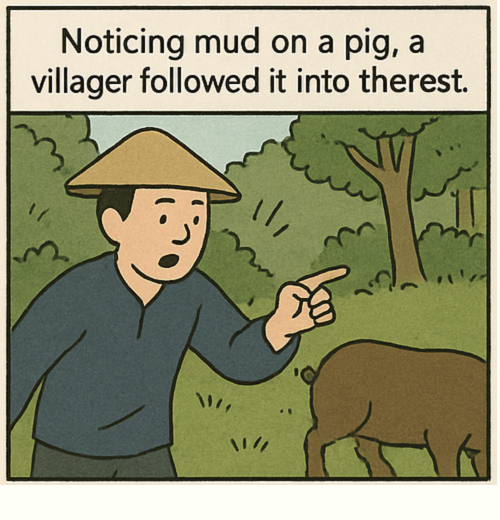
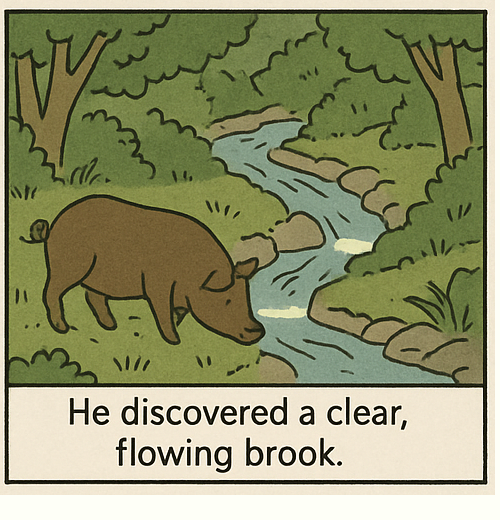
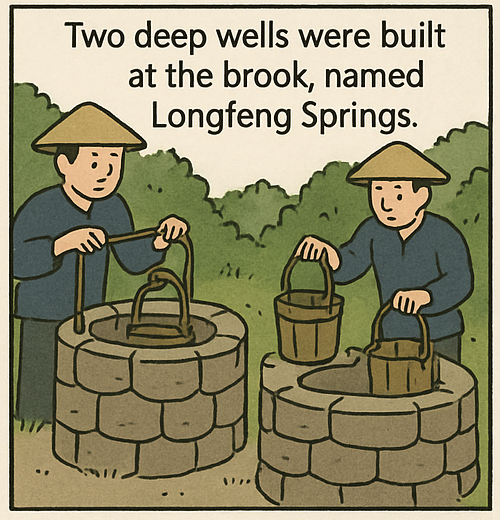
Legend has it that one day, a villager noticed their free-roaming pigs returning home covered in fresh mud. Intrigued, they followed the animals' tracks deep into the forest and discovered a babbling mountain stream. The water was crystal clear and flowed year-round, likely formed by an underground spring. This unexpected discovery brought hope to the village. Together, the community excavated two ten-meter-deep wells at the source to collect and store the spring water for daily use.
These two wells were later named the "Longfeng (Dragon and Phoenix) Springs," symbolizing auspiciousness and longevity. The water remained cool and pure throughout the seasons, and buckets were often kept nearby for washing and fetching. These springs became a vital lifeline for both Dazhu and Xitou villages, symbolizing the bond of mutual trust and prosperity between the two communities.
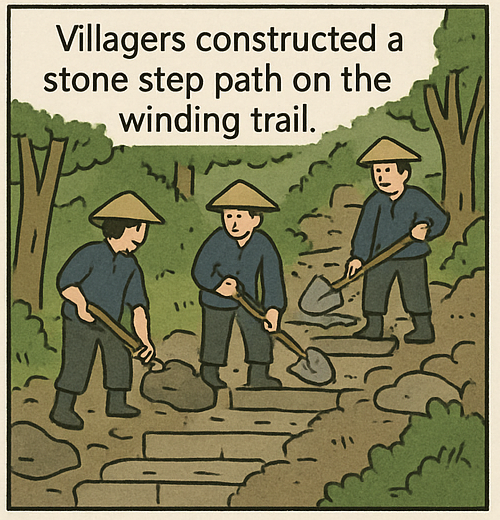
To make the journey safer and more stable, villagers worked together to pave the winding path with stones and earth, creating a terraced walkway that eased the burden of carrying heavy water buckets on shoulder poles. Over time, this path to the springs became known as the "Tiaoshui (Water-Carrying) Ancient Trail." It carries the memories of ancestors toiling under heavy loads and records an era defined by material scarcity but immense willpower.
With the advent of modern water infrastructure, residents no longer need to carry water by hand, but the historical significance of the trail and the Longfeng Springs remains. Today, the trail has transformed into an important cultural landmark and a popular hiking route. Walking along the stone steps, visitors are surrounded by lush forests and vibrant ecosystems, with the sound of birds and flowing water offering a sense of harmony with nature.
For the modern traveler, the Tiaoshui Ancient Trail is not just a place for exercise, but a cultural journey to be savored. It tells the story of the hardships endured by villagers and reminds us to cherish the conveniences of modern life. The Longfeng Springs continue to flow quietly, like a silent guardian witnessing the passage of time and the unfolding of history.
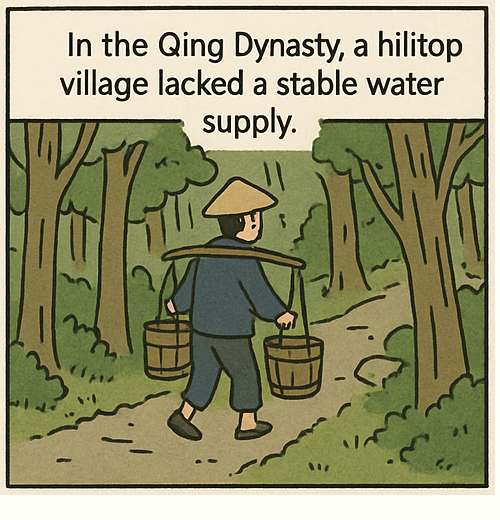
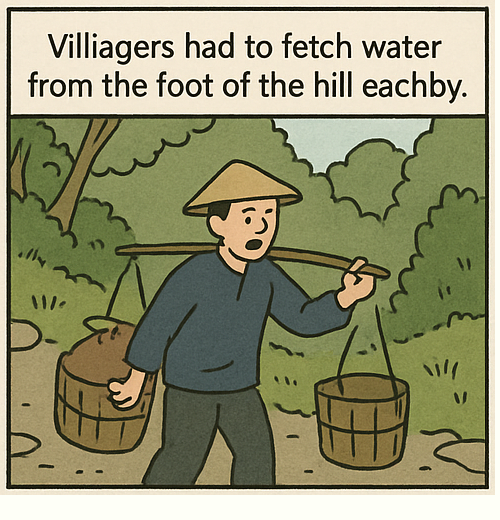
During the Qing Dynasty, a hilltop village lacked a stable water supply. Every day, villagers had to fetch water from the foot of the hill.
Carrying buckets on shoulder poles, they walked along rough, winding mountain paths just to meet their daily needs.
One day, a villager noticed that a free-roaming pig came back covered in mud. Curious, he decided to follow it into the forest.
The pig led him to a clear, flowing brook deep in the woods. It appeared to be fed by an underground spring.
The villagers dug two deep wells at the brook and named them LongFeng Springs. The water was pure, cold, and flowed year-round.
To make the journey safer, the villagers built a stone step path along the trail. This route to LongFeng Springs became known as the "The Tiaoshui ancient trail"
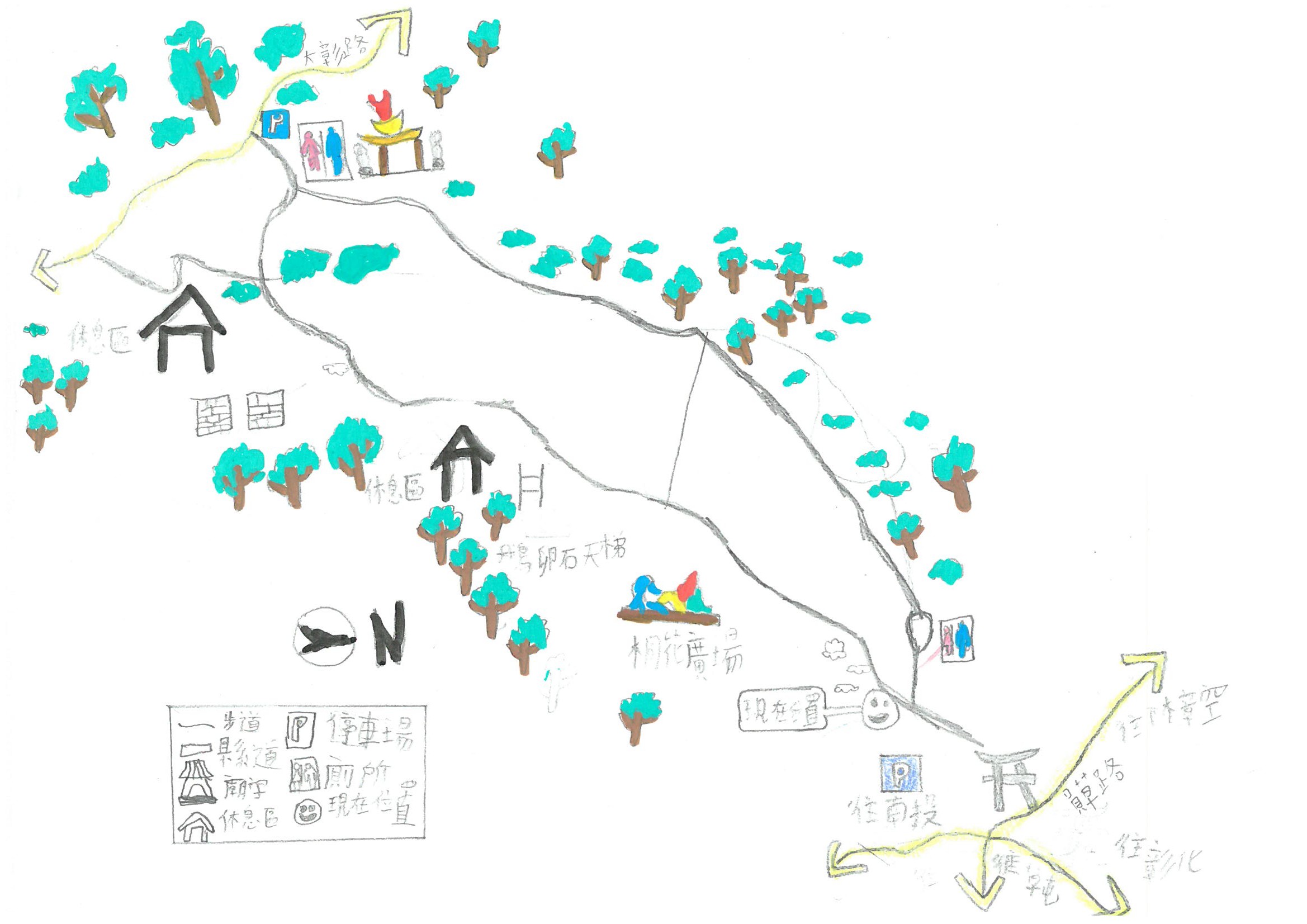
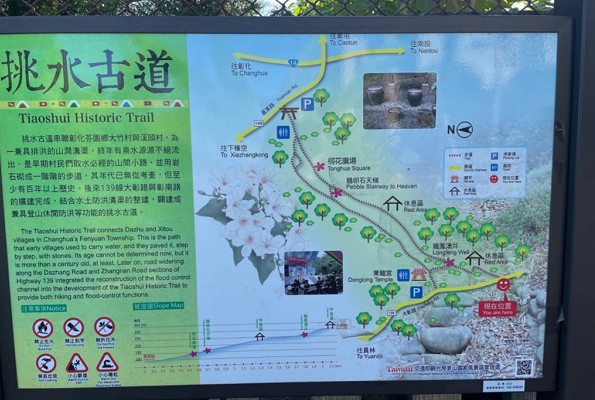
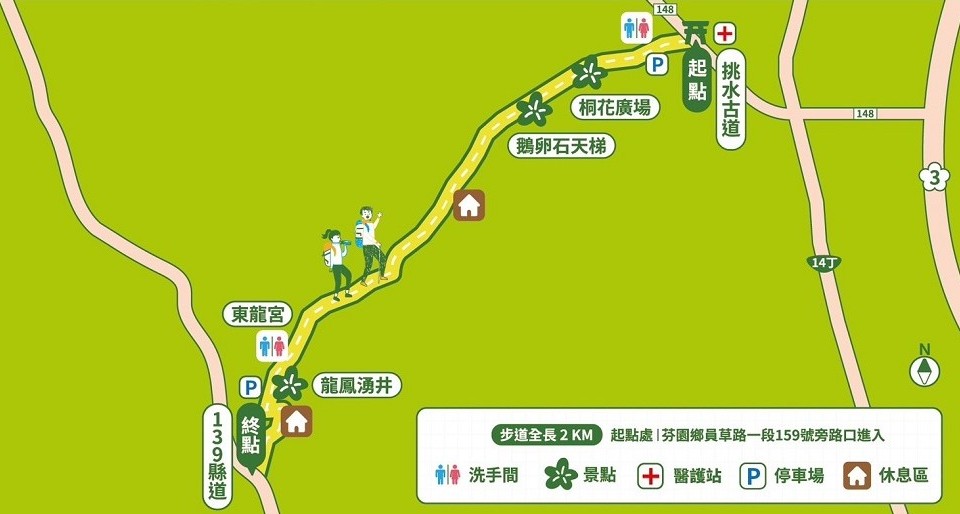
Trail map
Trail map
How to get there
Trail Features
On a serene morning with sunlight filtering through the bamboo groves, we arrived at the Tiaoshui Ancient Trail in Fenyuan Township, Changhua County, to begin a slow-travel journey that blends natural scenery with cultural history. This trail was once the essential path for early residents to fetch spring water; today, it has transformed into a tranquil sanctuary for those seeking to escape the bustle of city life and reconnect with nature. Carrying light gear and a cheerful spirit, we set off from the "You Are Here" starting point, embarking on this small path gently touched by the passage of time.
Guide Map
Entrance of Tiaoshui Ancient Trail
I. Starting Point: Yuancao Road Parking Lot → Tung Blossom Square
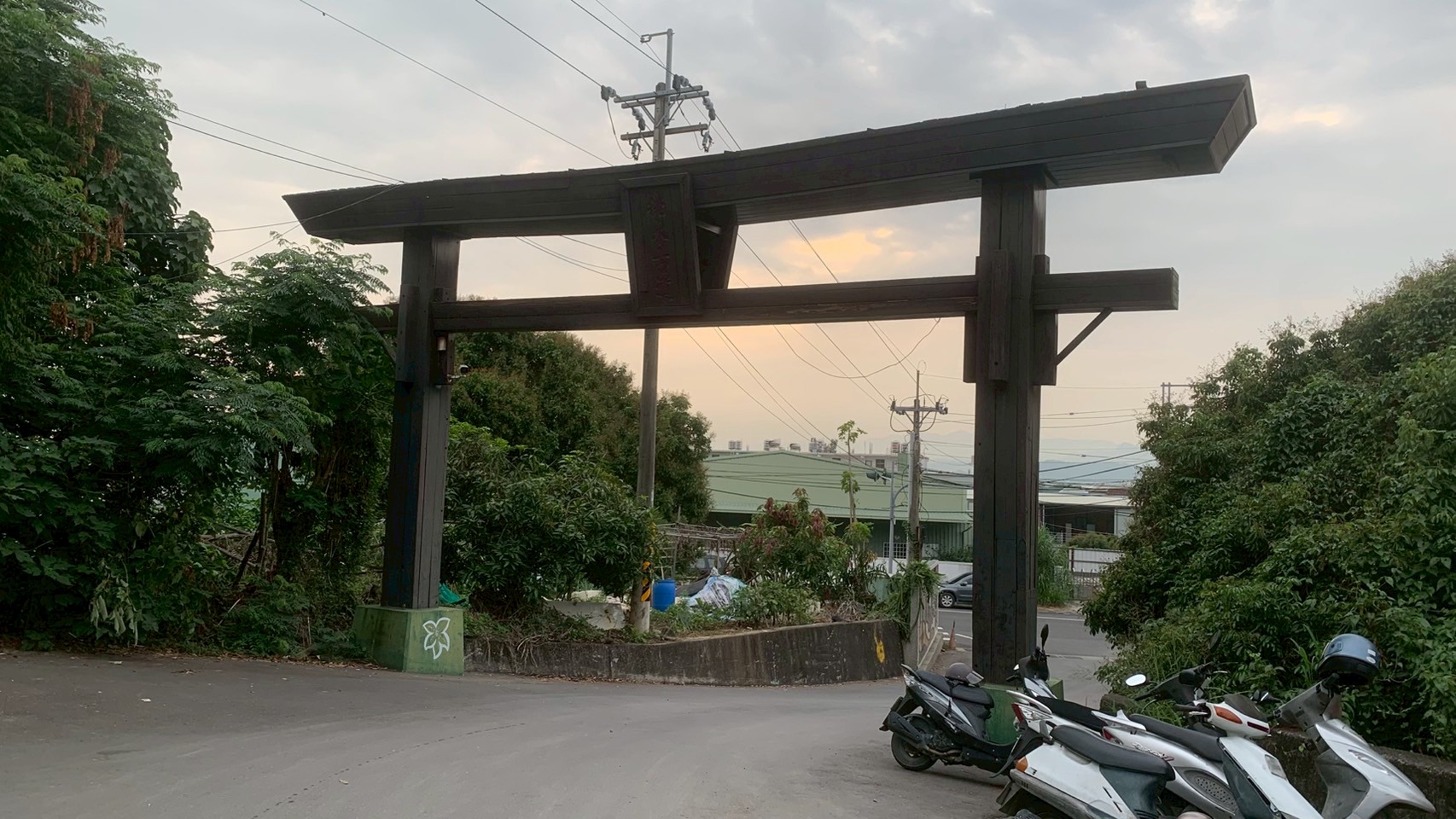
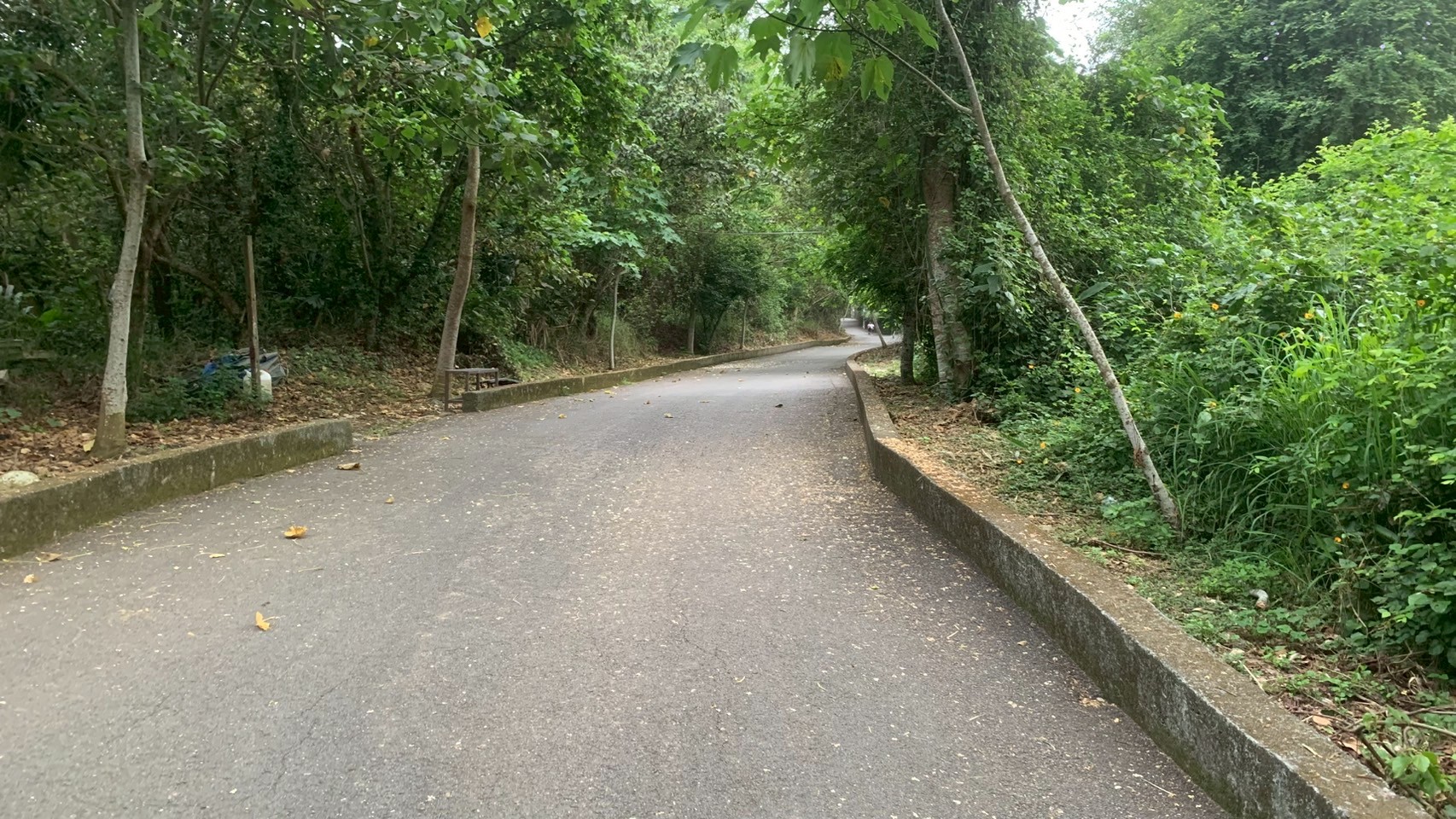
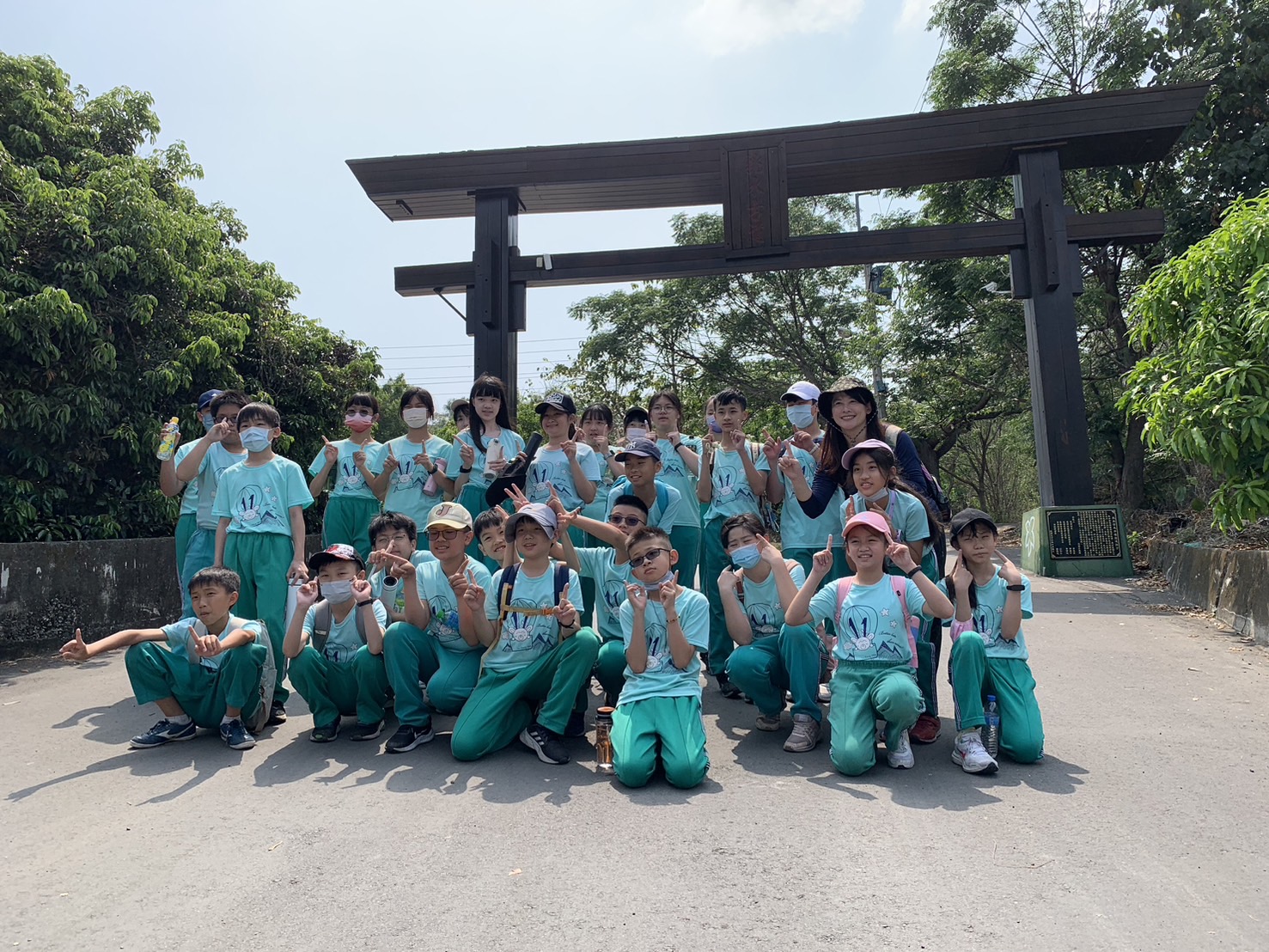
Upon arriving at the parking lot along Yuancao Road, the first thing that catches your eye is a Japanese-style wooden Torii gate. Shortly after passing through the gate, you will find a clear guide map and restroom facilities, allowing visitors to prepare for their hike with ease. The trail begins with a smooth asphalt surface; although there is a slight incline, it is not tiring to walk.
As you walk toward the ancient trail, you will encounter several simple stalls along the way. These are "unmanned stores" where local farmers sell their produce. Buyers are expected to place their payment into money boxes prepared by the farmers, a practice affectionately known as the "Honesty Shop." Continuing on, you will reach "Tung Blossom Square." This area is named for the blooming Tung blossoms in May, which blanket the ground like "May Snow," creating a breathtaking scene. Even outside the flowering season, the square remains filled with a leisurely atmosphere—elders chatting under the pavilions while children run and play, making for a warm and lovely sight.
Japanese-style wooden Torii gate
Smooth asphalt road surface
The Honesty Shop
Tung Blossom Square
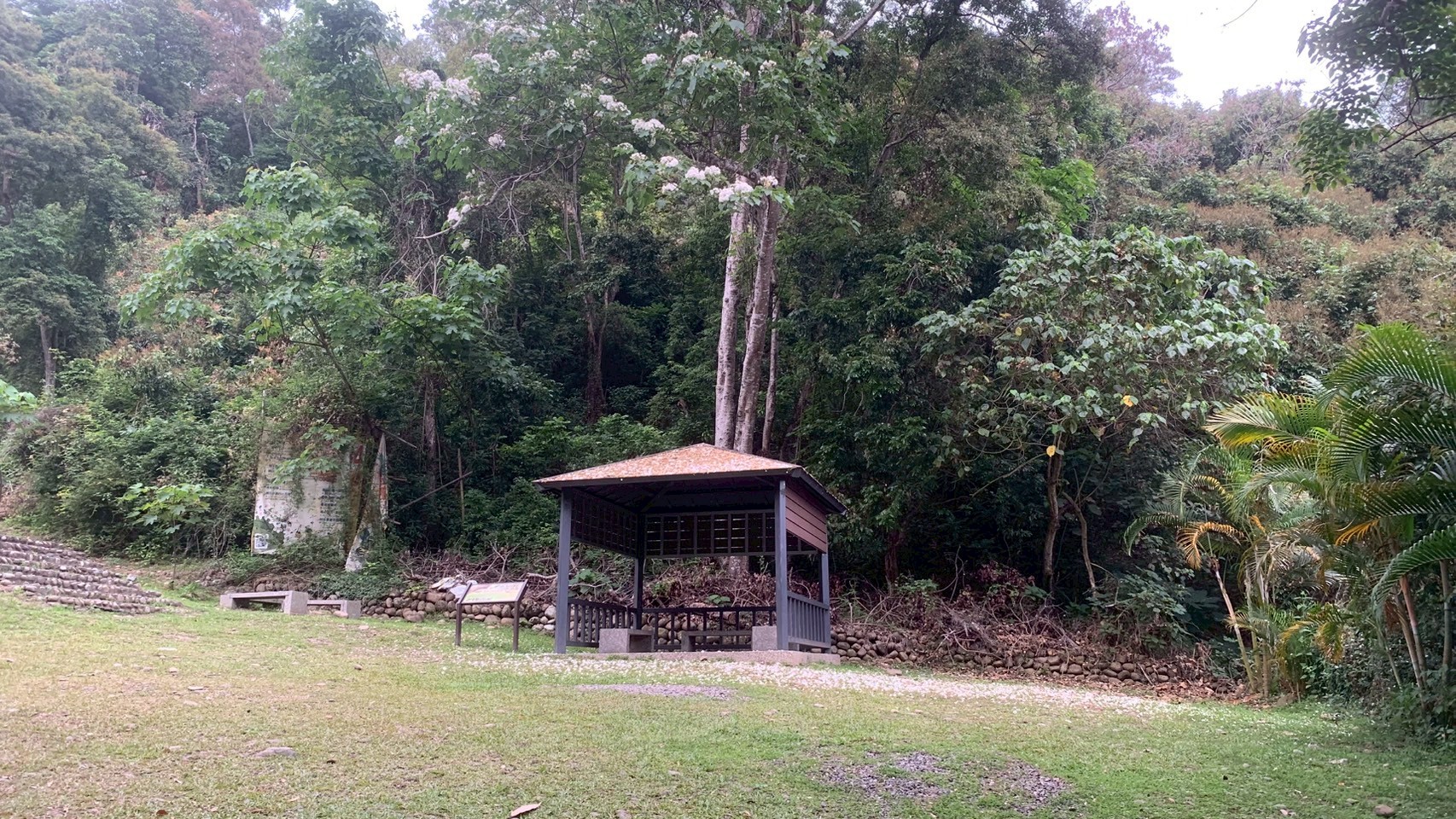
The pavilion at Tung Blossom Square
The pavilion at Tung Blossom Square
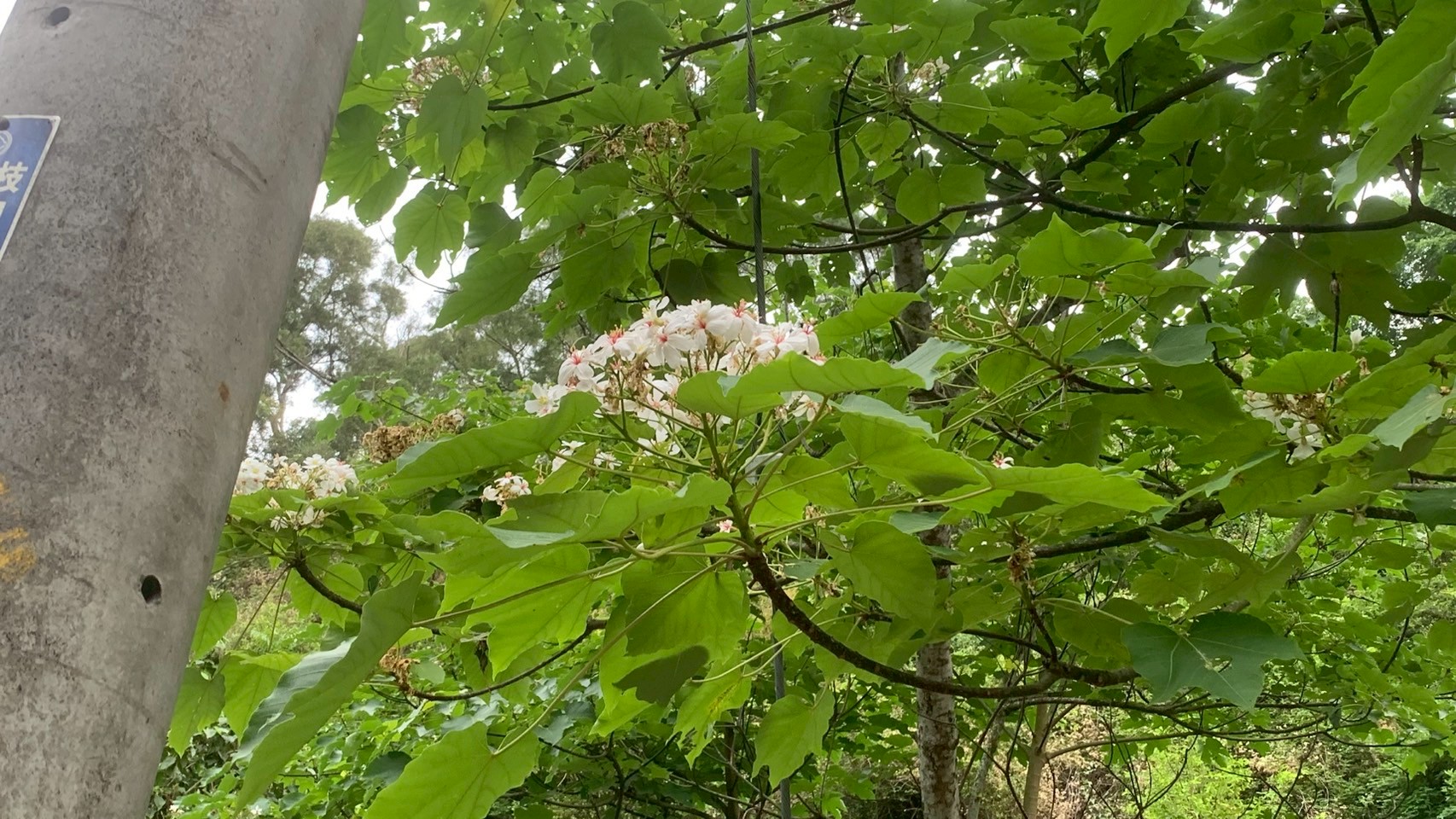
Tung blossoms blooming on the trees
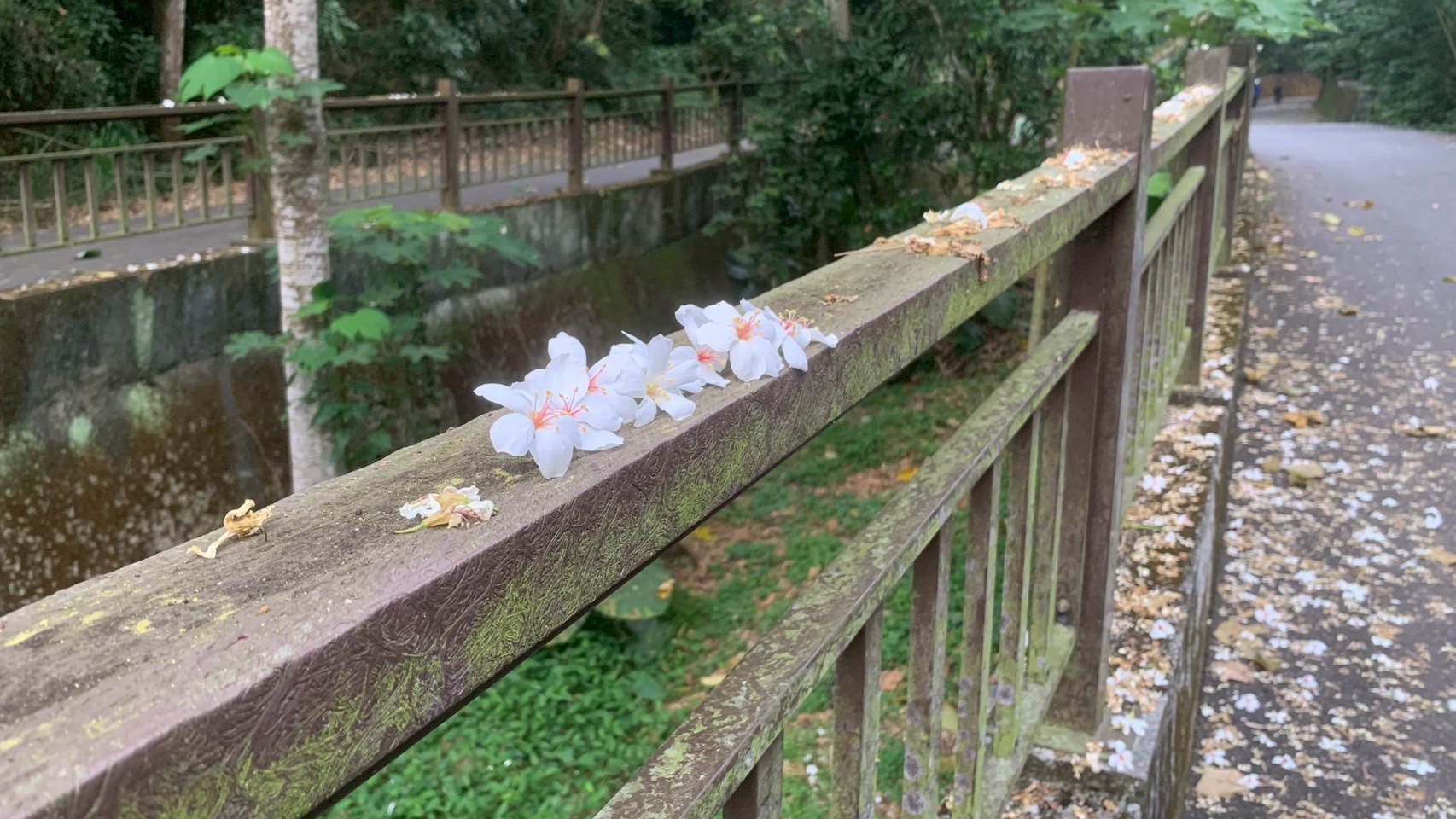
Close-up of a Tung blossom
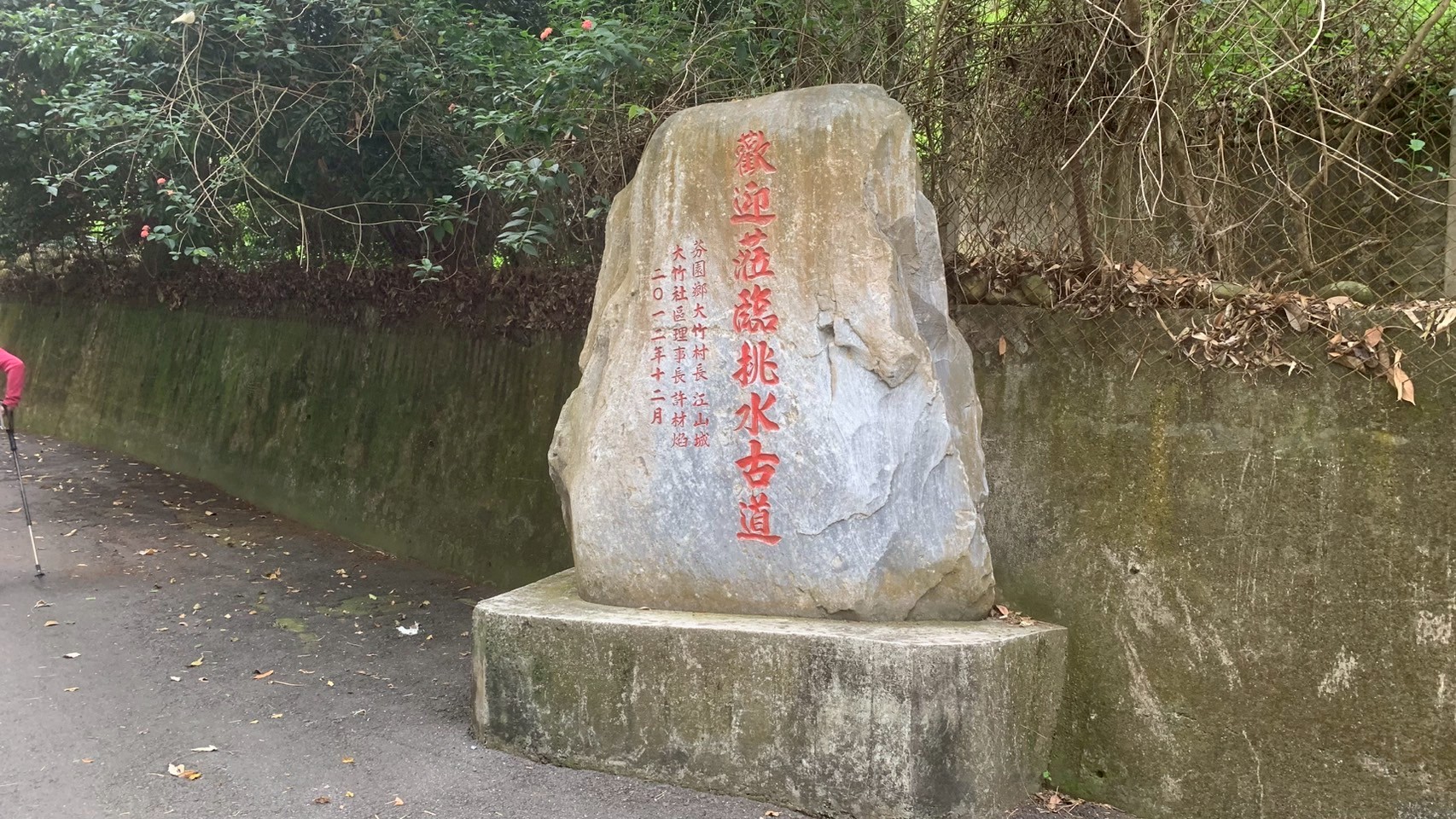
Stone monument along the ancient trail
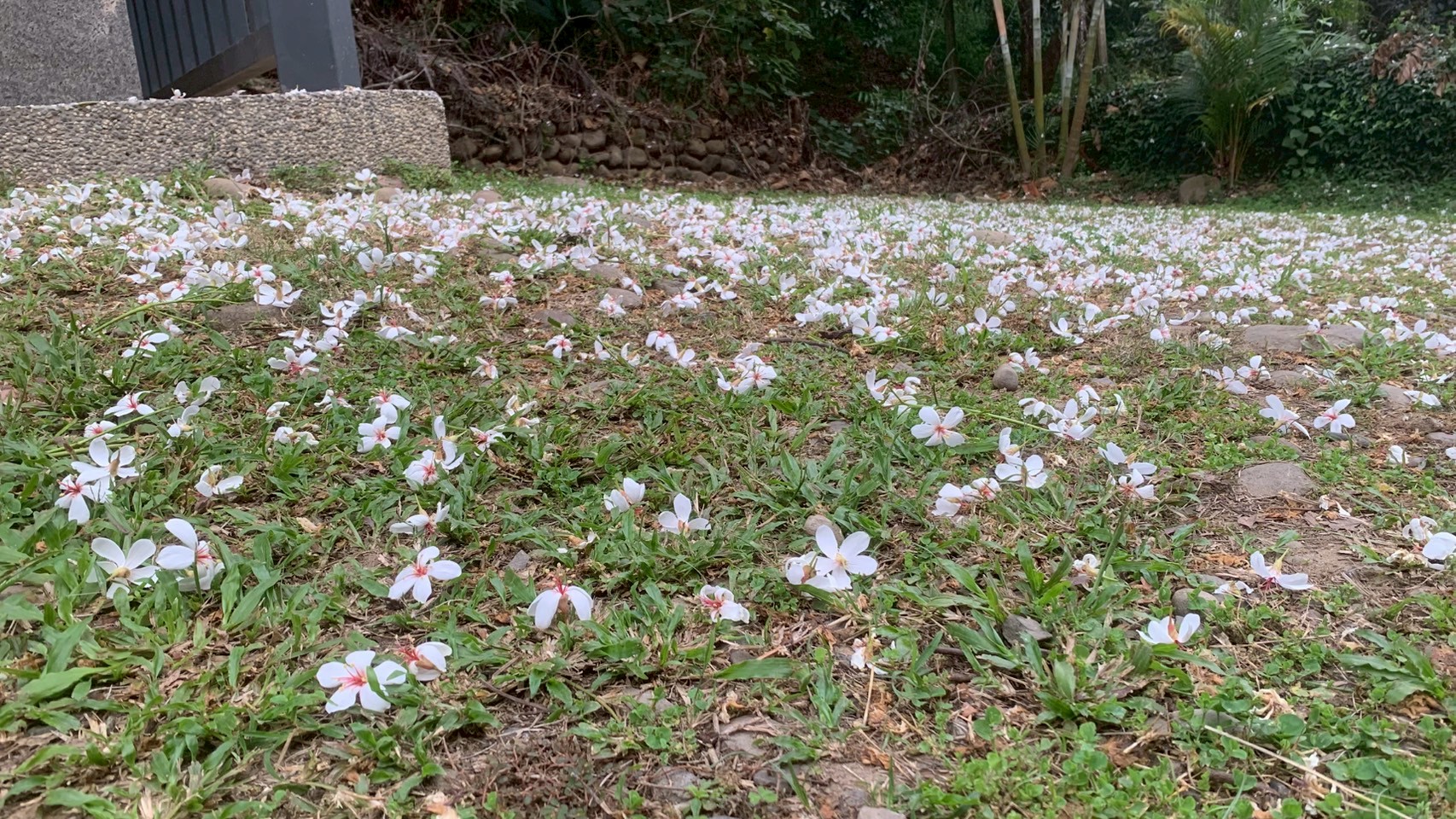
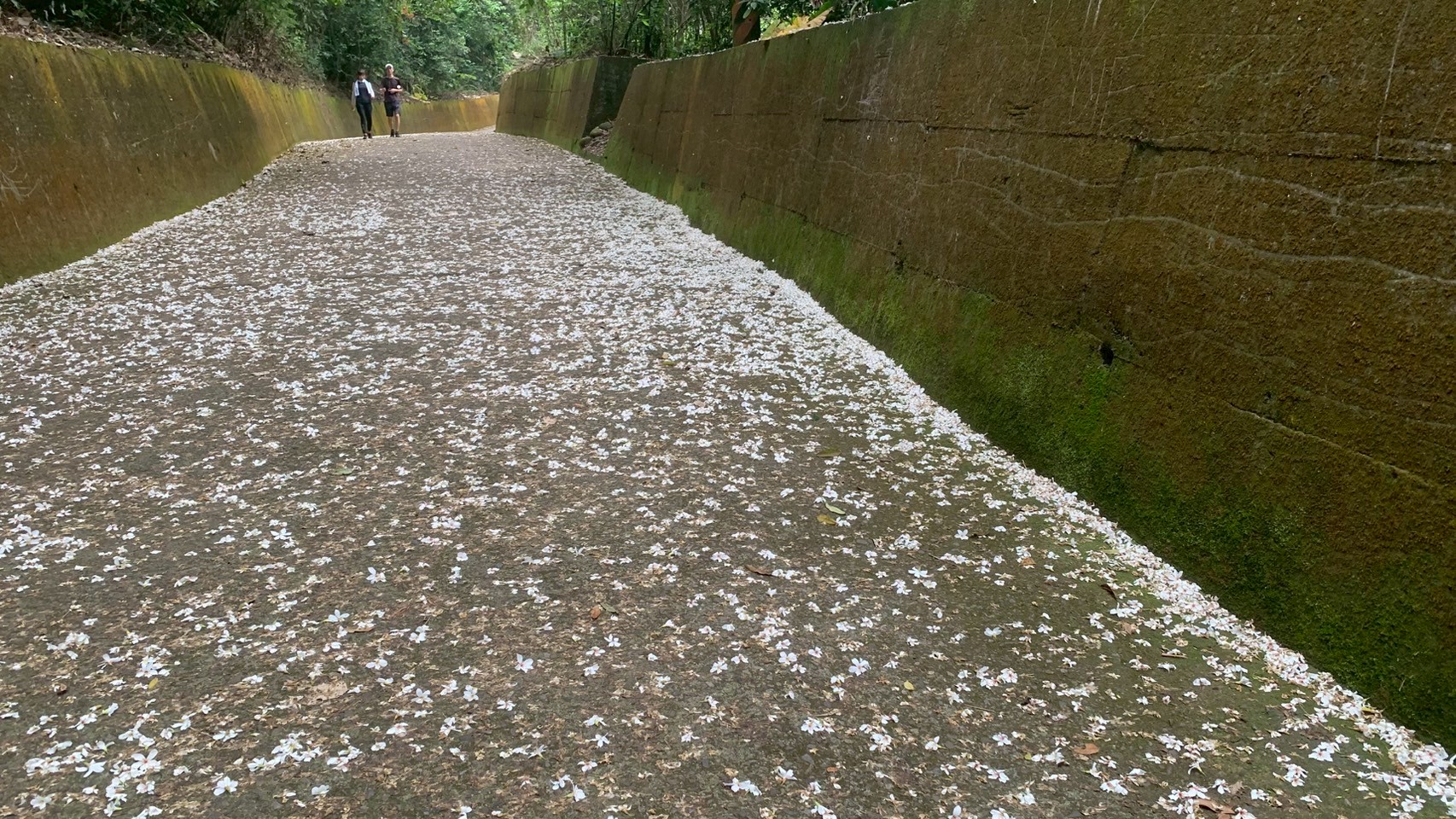
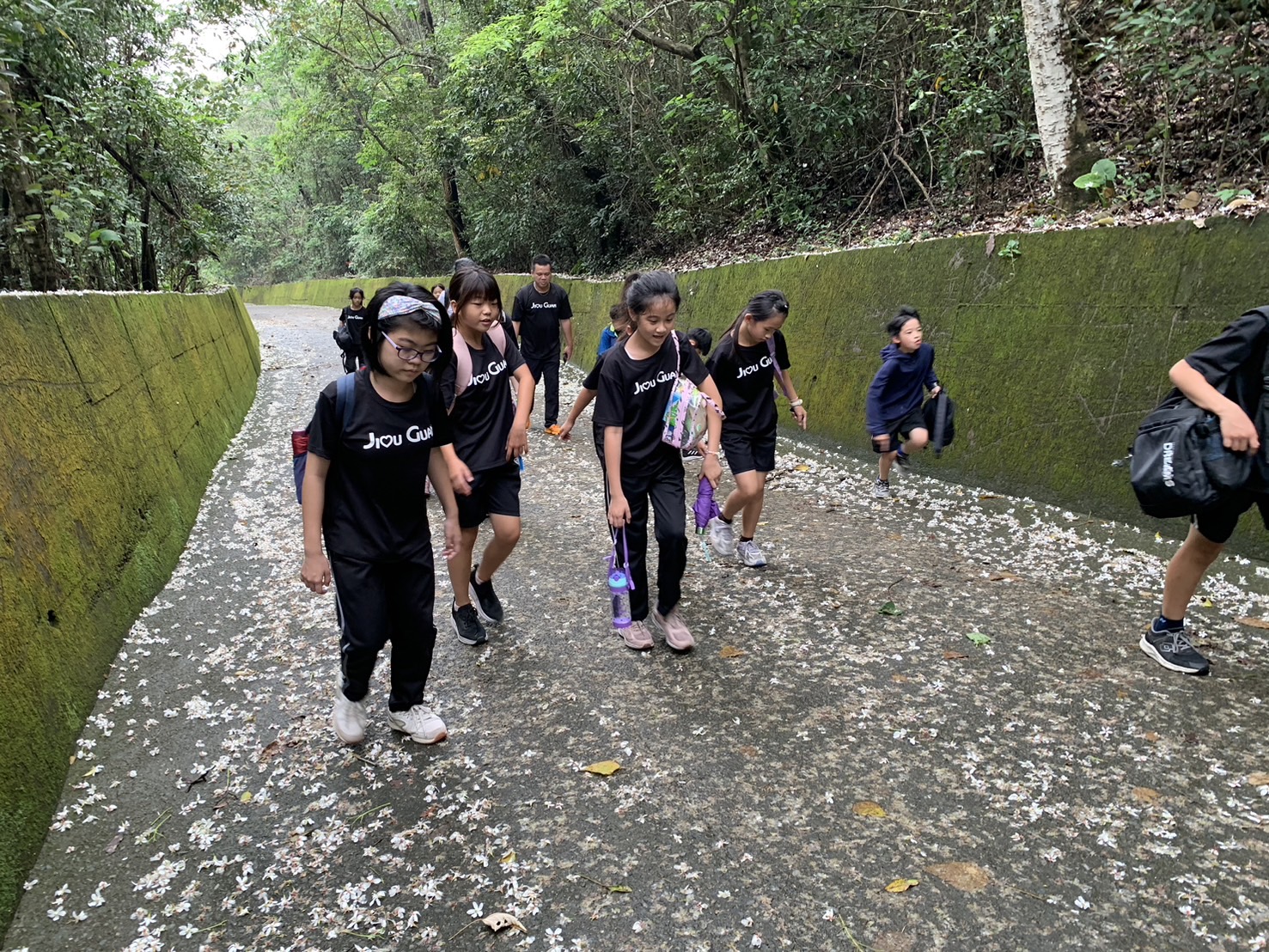
Tung blossoms on the ground like fallen snow
The falling Tung blossoms are like drifting snow.
The falling Tung blossoms are like drifting snow.
II. Pebble Sky Stairs: The "Stairway to Heaven" Where Challenge Meets Beauty
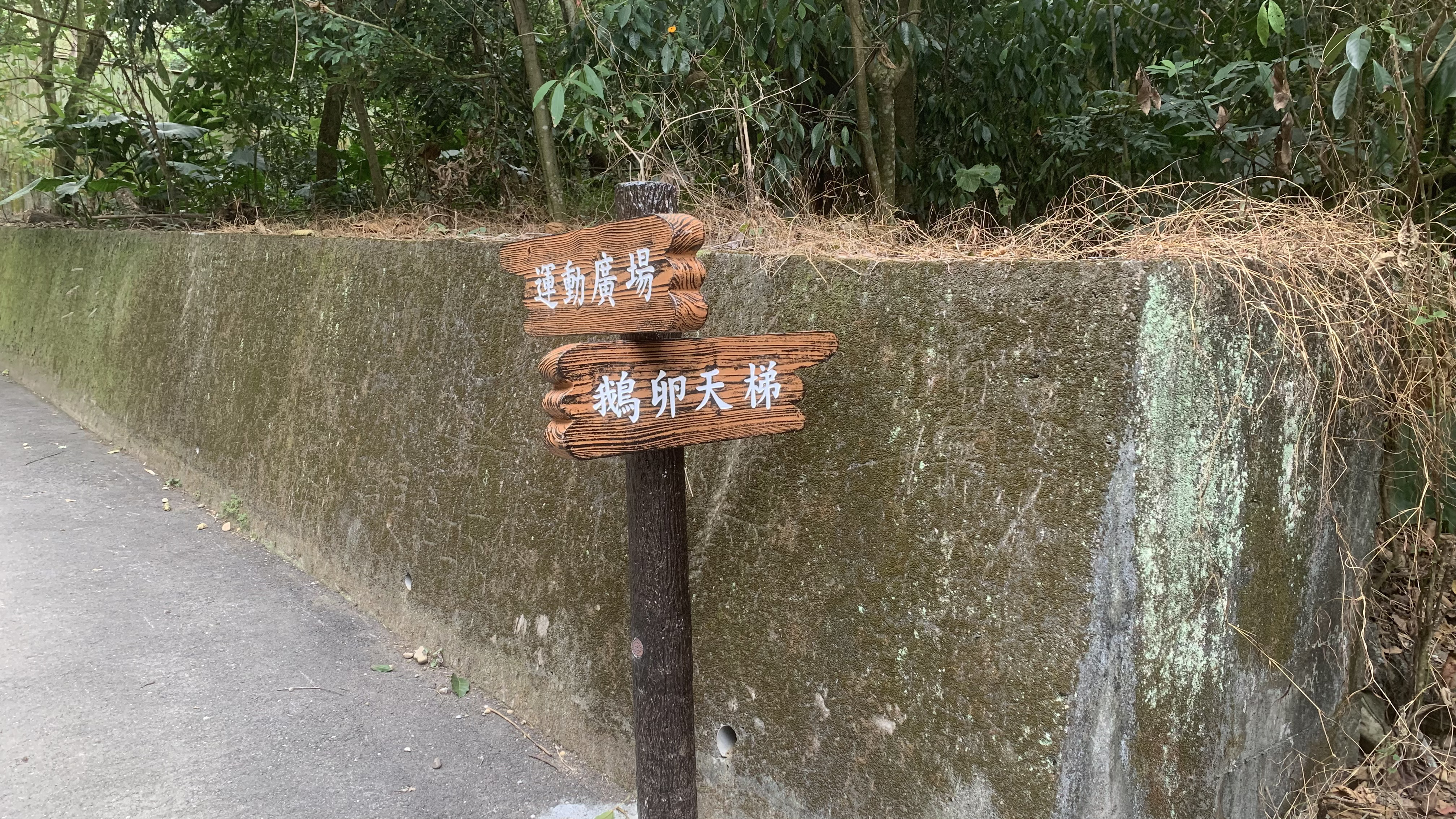
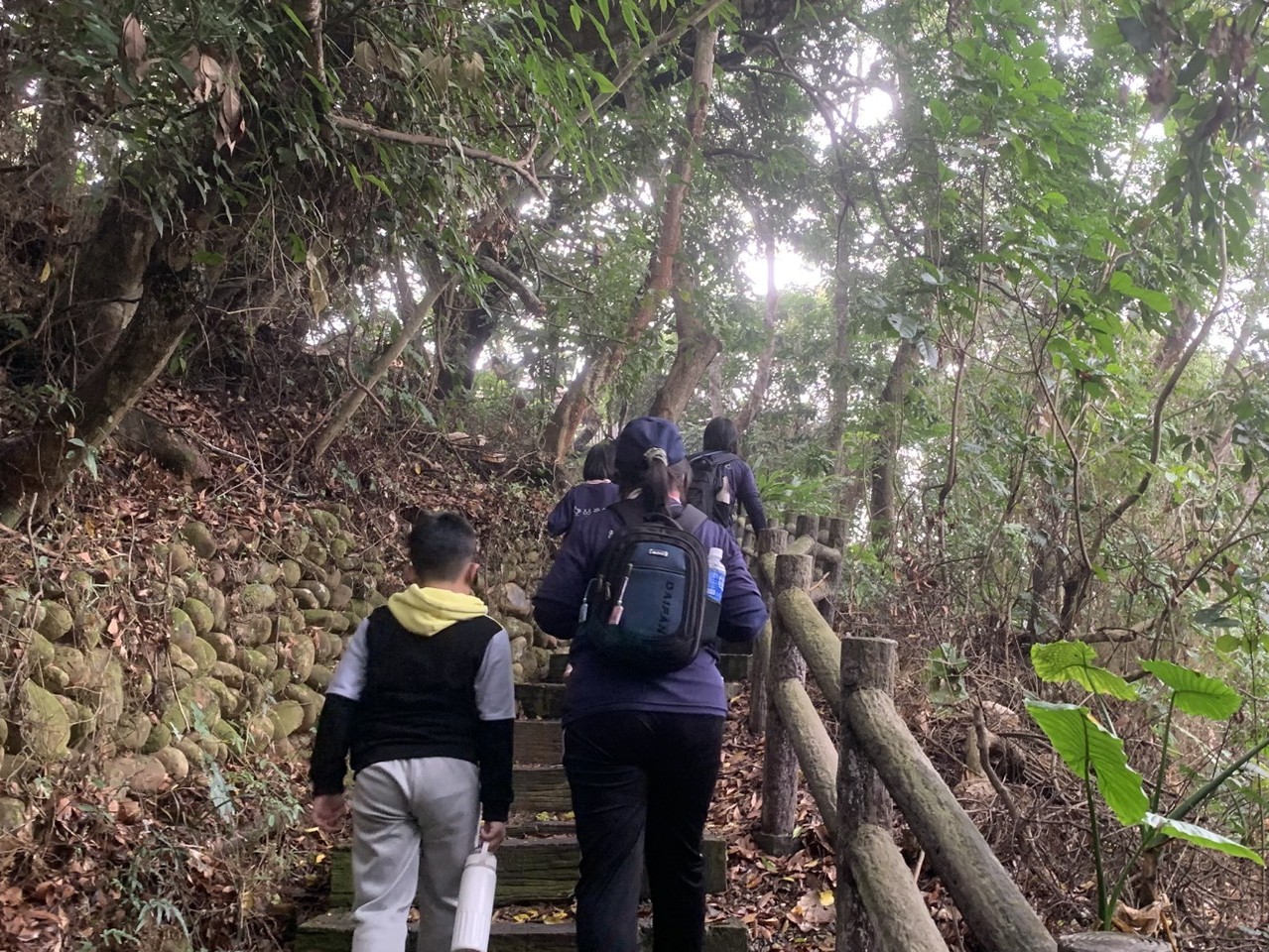
After leaving Tung Blossom Square, you enter the most challenging section of this journey—the "Pebble Sky Stairs," also known as the "Stairway to Heaven." In ancient times, women carrying water climbed these stairs, which were painstakingly built from smooth, rounded stones. Today, it has become a must-visit path for hiking enthusiasts to test their endurance. Although the continuous ascent can be physically demanding, the lush green trees on both sides provide ample shade for travelers. The melodious bird calls echoing with every step add a touch of poetry to this strenuous yet rewarding journey.
Signpost for the Pebble Sky Stairs
Steps paved with pebbles
III. Midway Rest Stop and Shaded Woodland Path
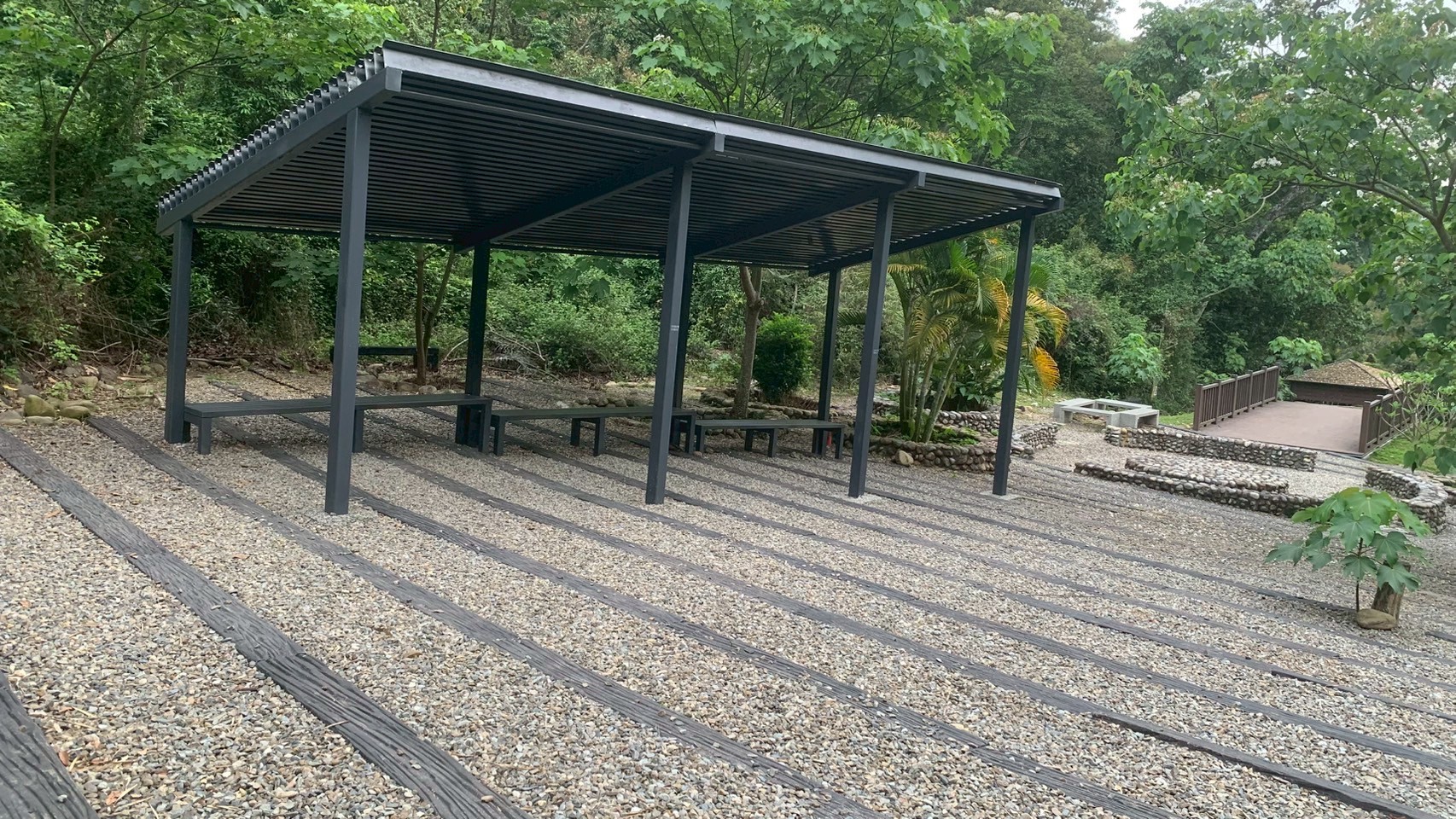
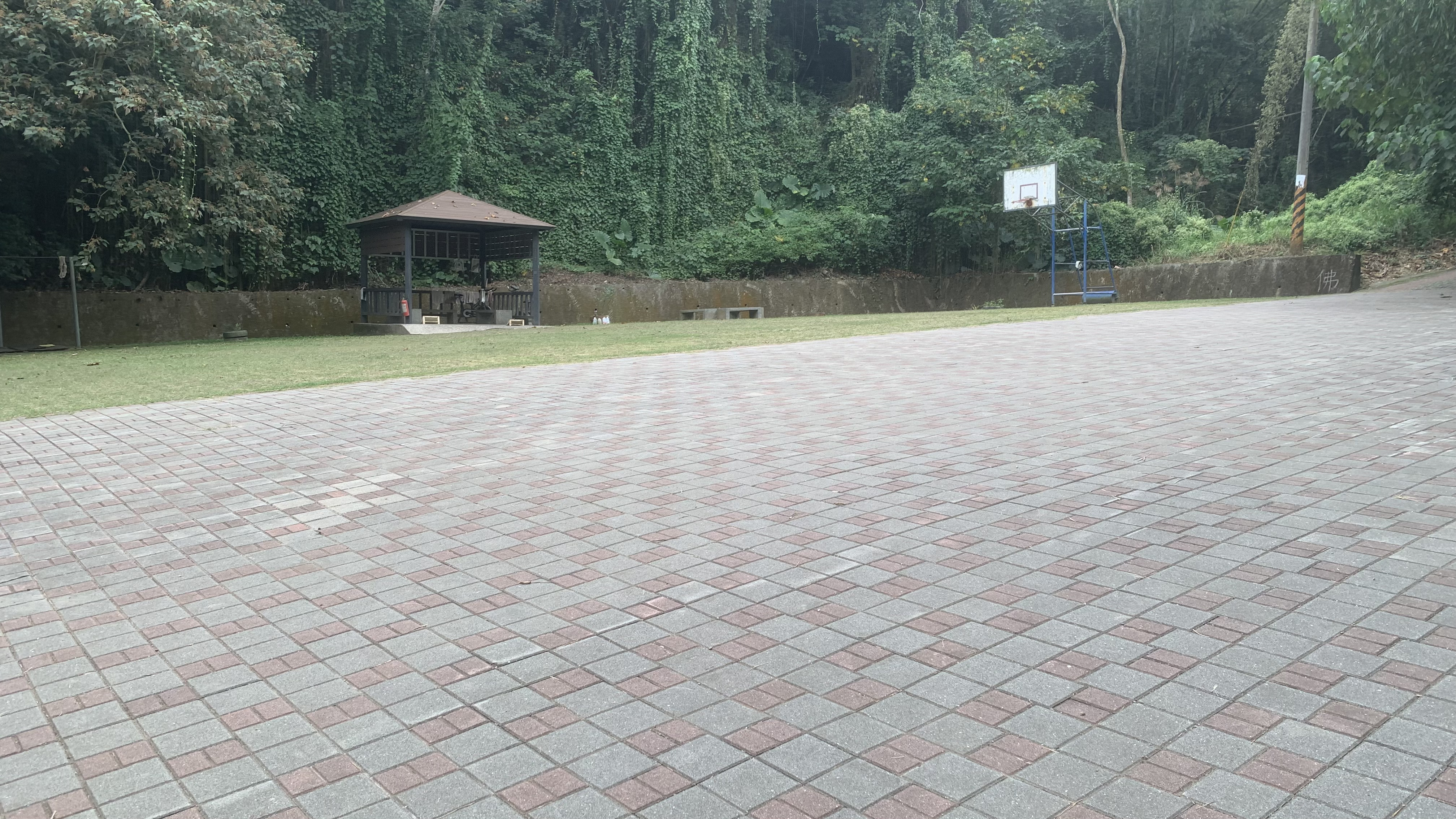
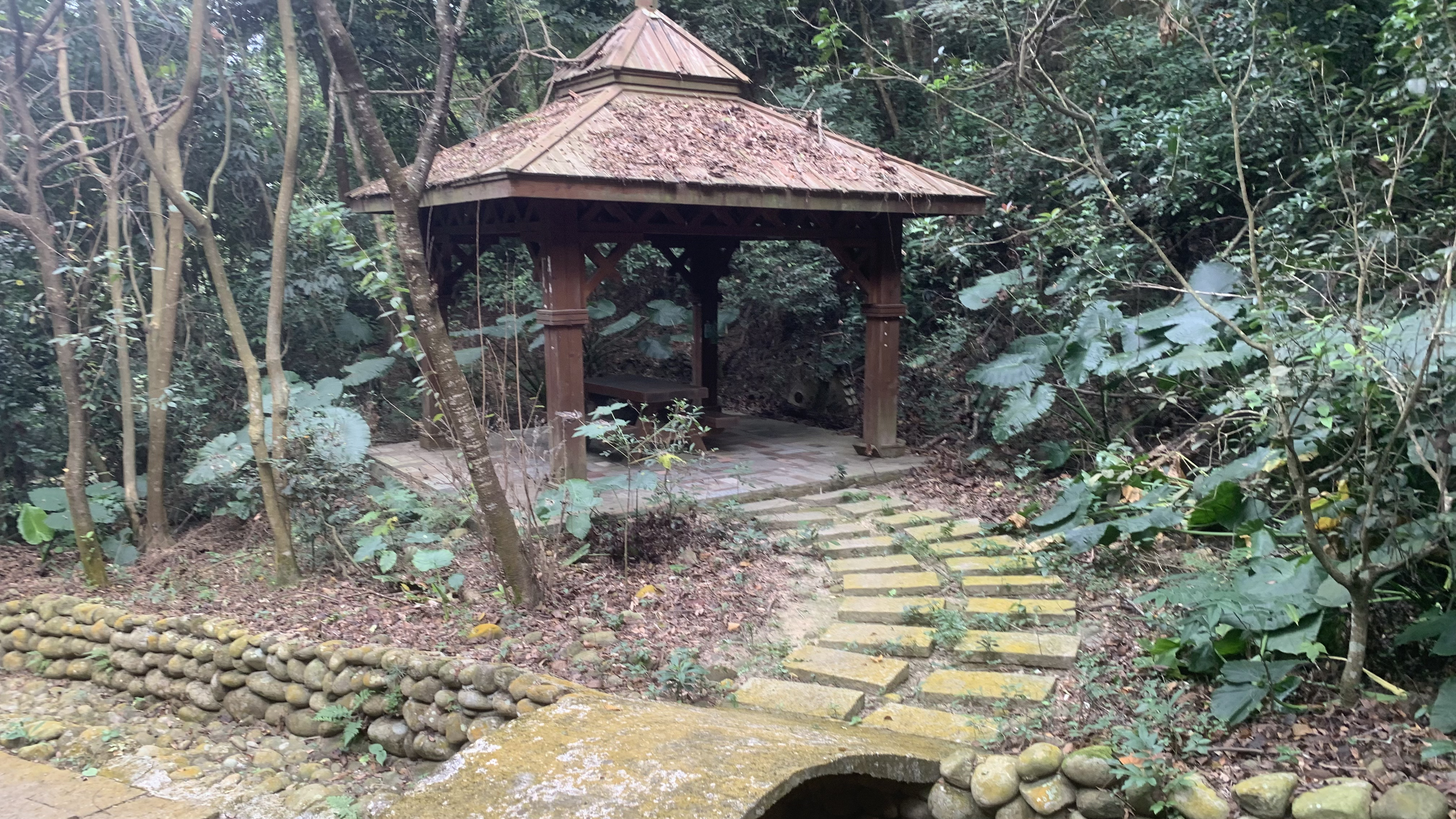
The middle section of the ancient trail opens up into a large square, locally known as Exercise Square. This area serves as a hub for local events and a place for travelers to take a break. Following the square, the trail transitions into a shaded path paved with bricks, which can be slightly damp and slippery. Along this stretch, there are several rest areas equipped with pavilions and wooden benches.
At one of these rest stops, we took out our water bottles and light snacks, sitting down to listen to the wind rustling through the treetops and watching the dappled sunlight fall upon the stone path. That sense of serenity and peace allowed us to completely let go of the hectic pace of city life.
Exercise Square
Quaint wooden pavilion
IV. Longfeng Springs: A Living Fountain of History
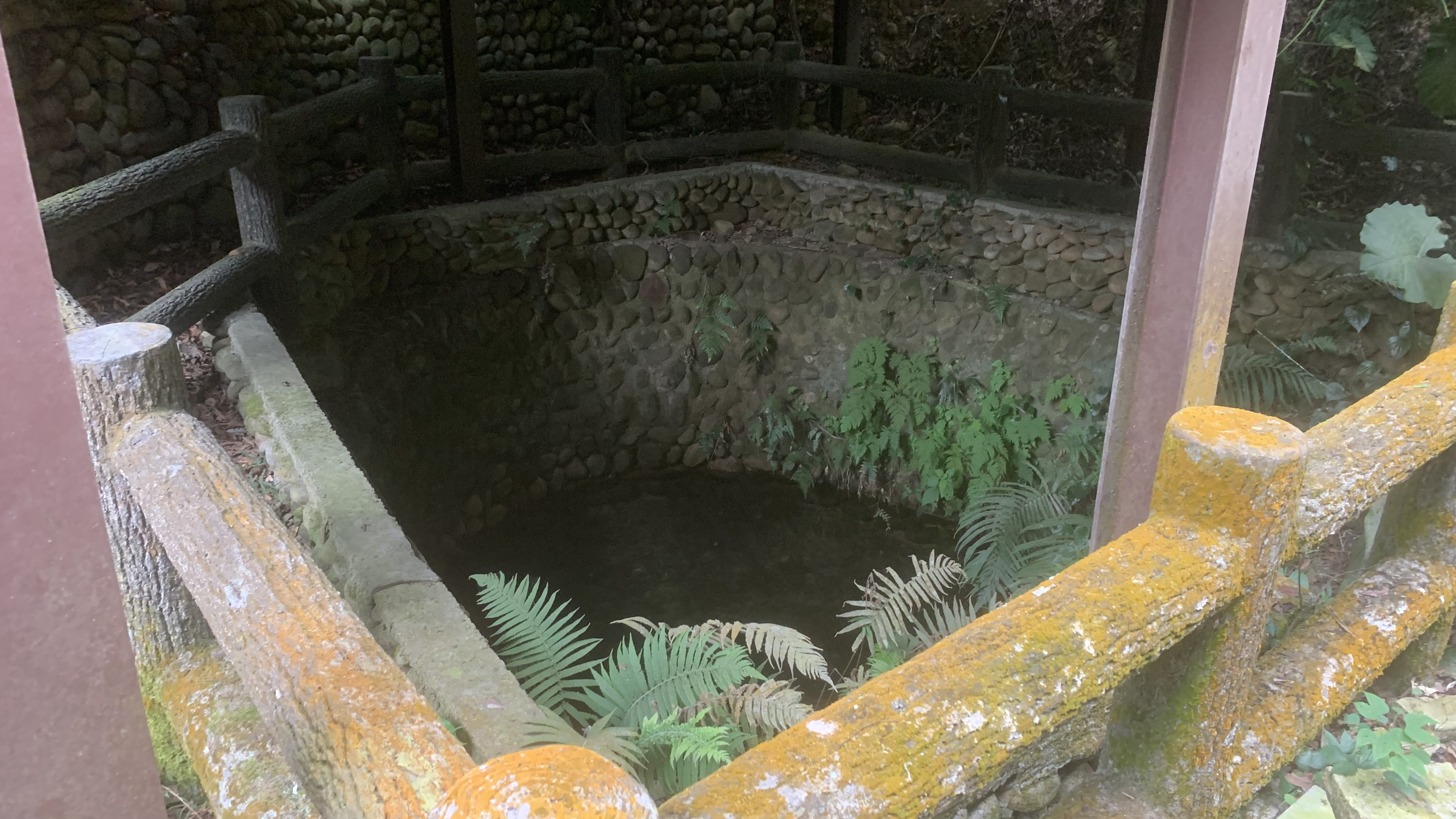
Continuing a short distance further, we arrive at the highlight of this journey—the "Longfeng Springs" (Dragon and Phoenix Springs). Located on the mountainside, these ancient wells are whispered to be the primary water source for early local residents and the final destination for village women on their daily treks to fetch water.
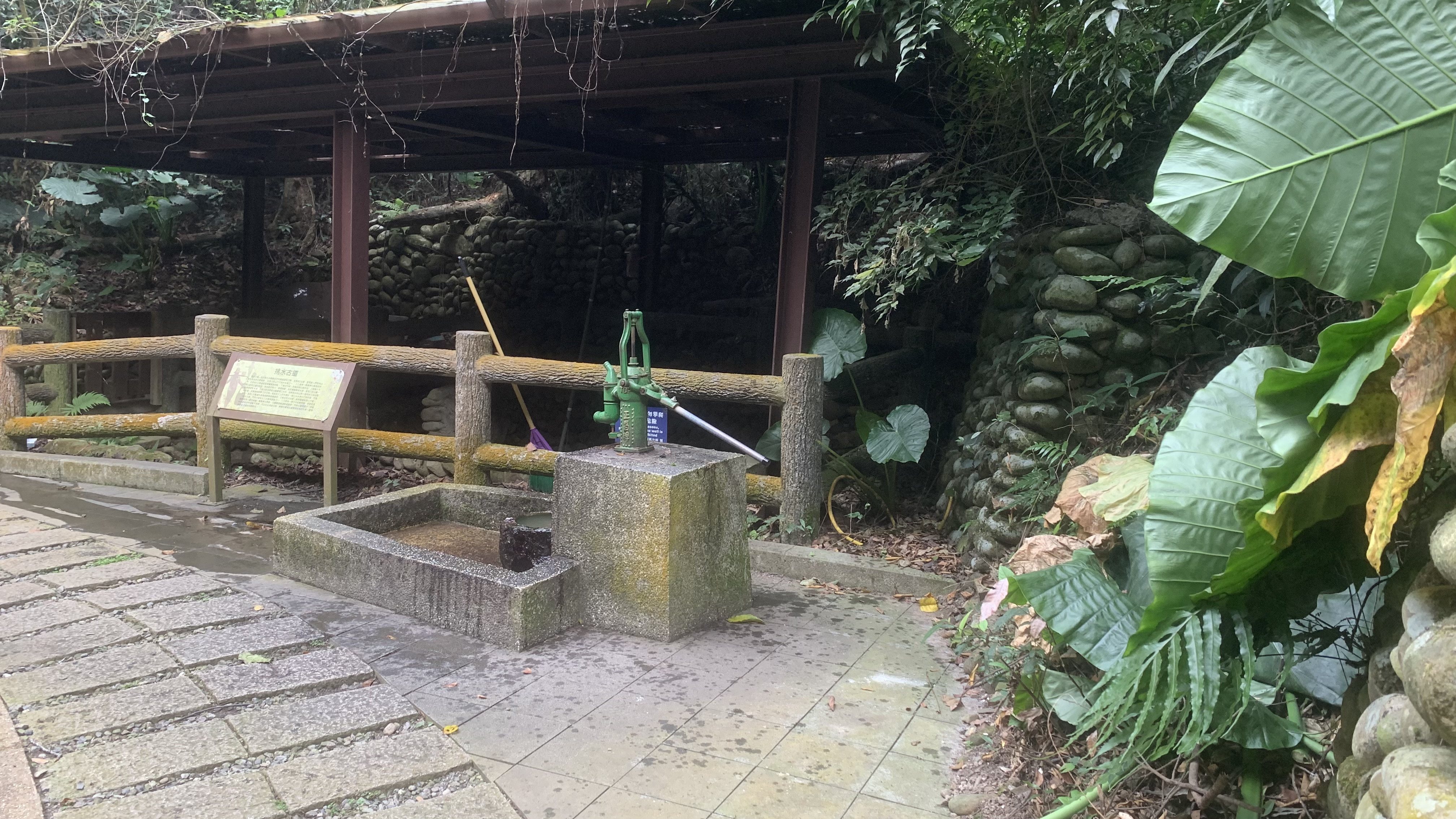
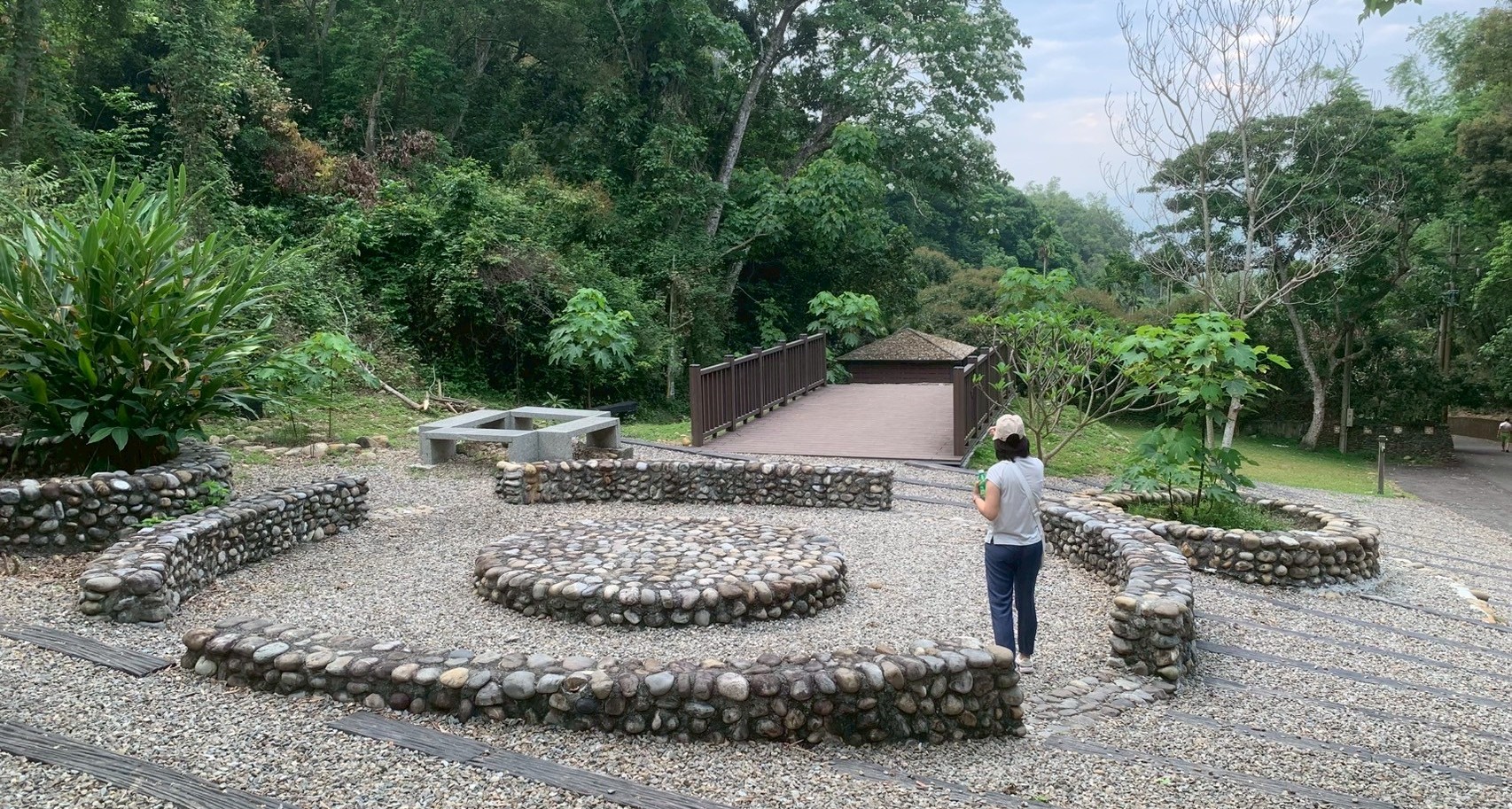
Beside the ancient wells, the original water pumps and storage tanks remain. Although no longer in use, the traces of stone masonry and the patches of moss tell the silent stories of years gone by. Standing by the wells, one can almost envision the ancestors gathering here, chatting and laughing while fetching water. These history-rich moments, woven from daily life and honest sweat, are truly precious.
Longfeng Springs
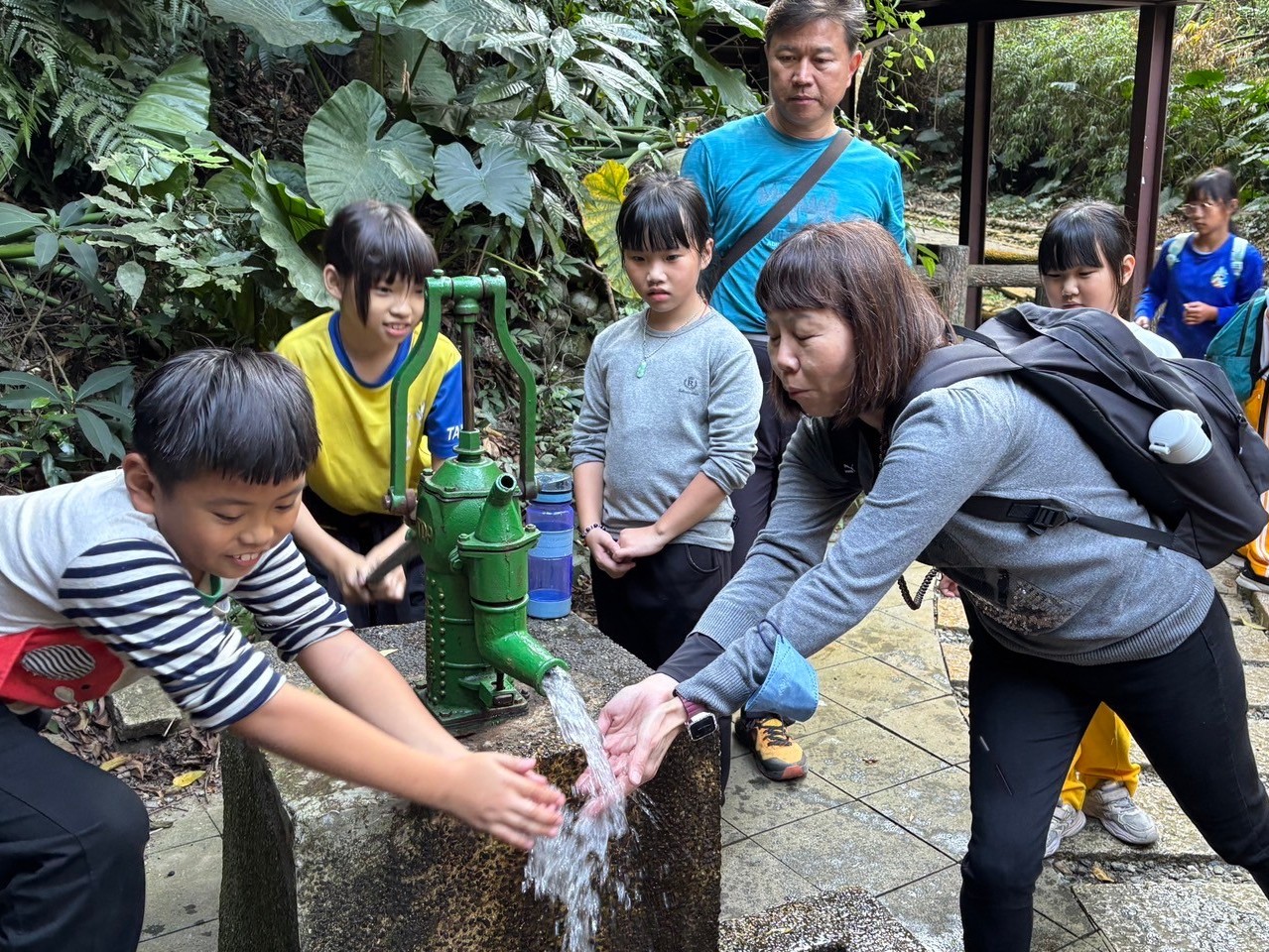
Manual water pump
V. Donglong Temple: The Intersection of Faith and Culture
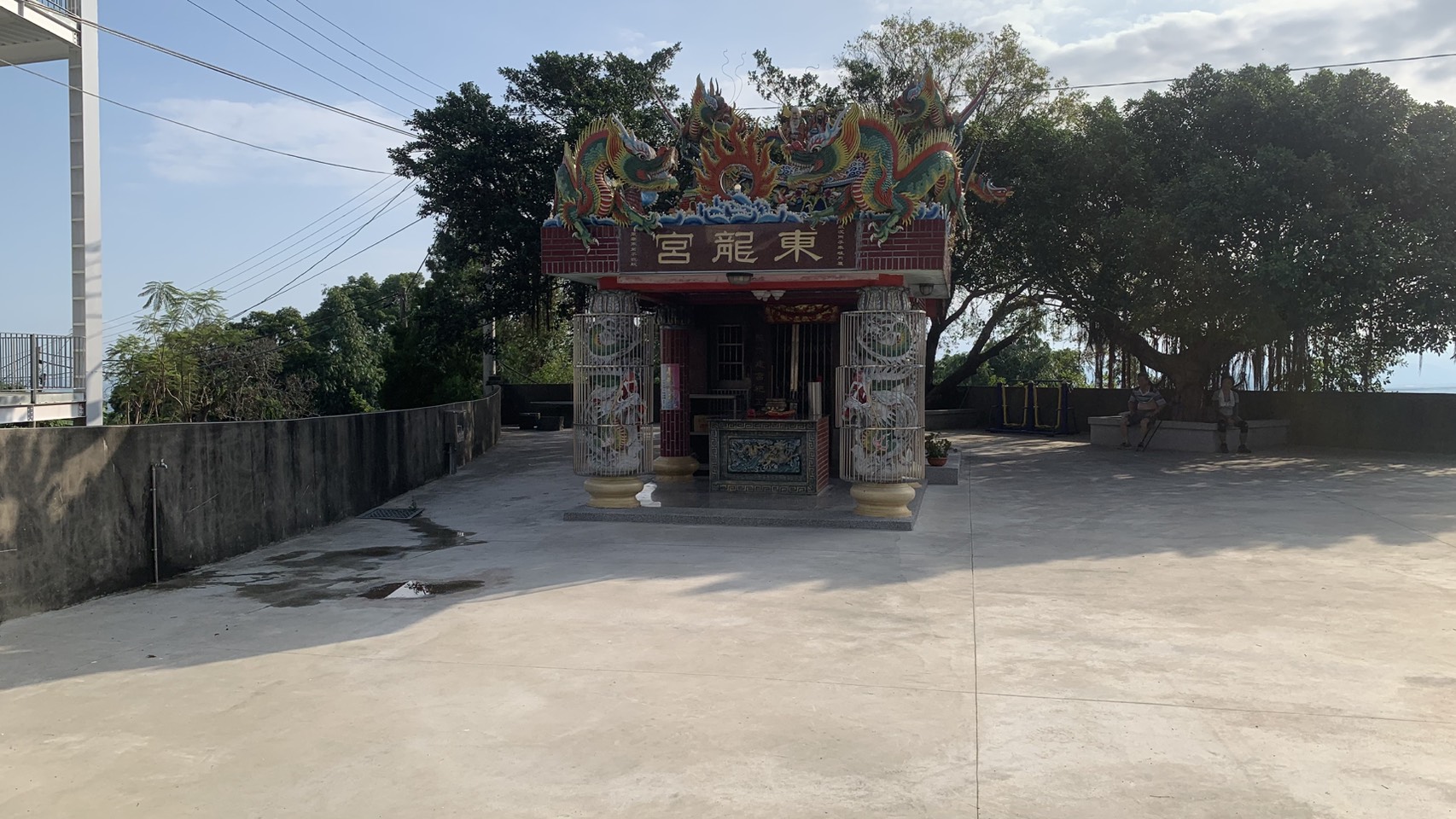
Continuing upward, you will soon arrive at the other end of the trail—Donglong Temple. Nestled within the mountain forest, this small temple is dedicated to the local guardian deity and serves as an important sanctuary where villagers pray for peace and safety. In front of the temple, restroom facilities and a small parking lot are available, making it an excellent spot for hikers to rest and regroup after completing the trail.
The Tiaoshui Ancient Trail is rich with diverse landscapes, flora, and fauna, making it a destination well worth visiting. Come and walk this path—let your footsteps travel alongside history, and let your soul resonate with nature.
Donglong Temple - The other end of the trail
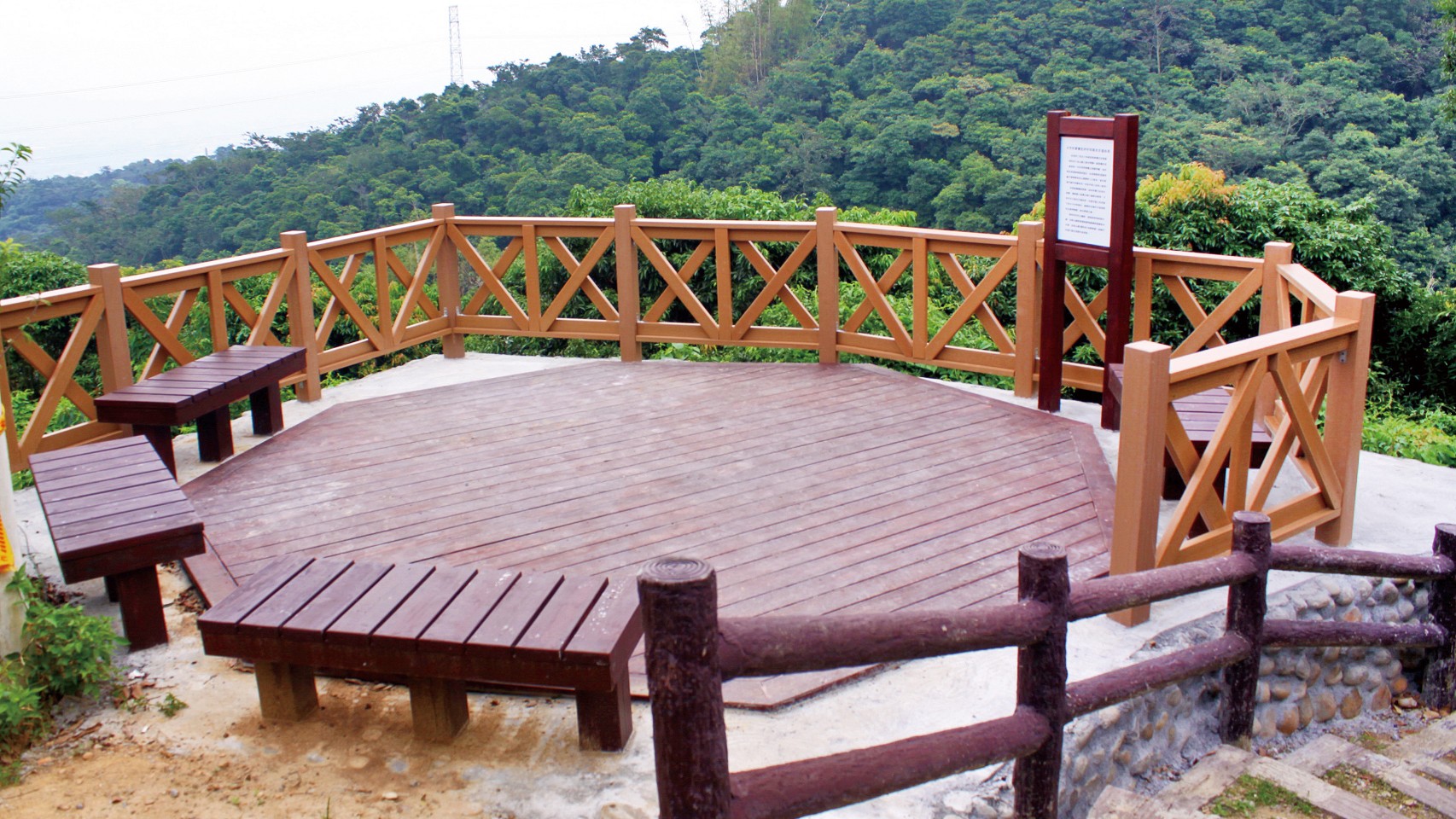
Eagle Watching Platform
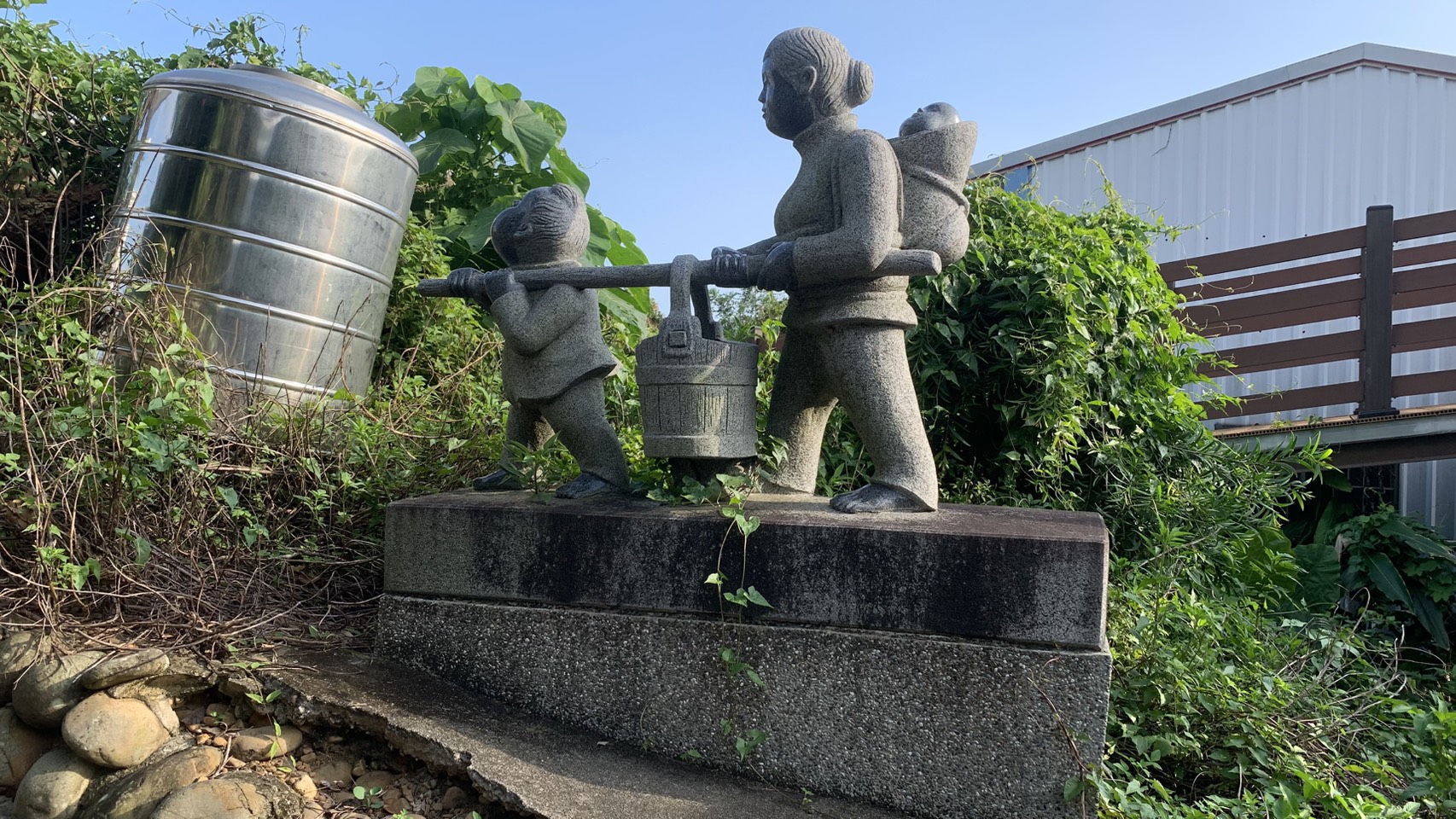
Sculpture symbolizing ancestors carrying water
County Highway 139
Animals
Grey-faced Buzzard
The Grey-faced Buzzard, affectionately known locally as the "Southern Road Eagle" or "Qingming Bird," is the star of the ecological show on the Bagua Mountain Range every spring. Between March and April, tens of thousands of these raptors migrate northward from their wintering grounds. Thanks to its unique geography and favorable thermals (rising warm air), the Bagua Mountains serve as a vital "rest area" and refueling station on their long journey.
At dawn along the trails of Fenyuan, visitors can witness hundreds of eagles spiraling upward, creating a magnificent spectacle known as the "Rising Eagles" vortex. By dusk, they dive low into the forests to roost, a phenomenon called "Setting Eagles." For the people of Fenyuan, these birds of prey are not just visitors but environmental indicators. Our research highlights that preserving the pristine forests of the Bagua Mountains is essential to safeguarding this thousand-year-old Asian migratory lifeline.
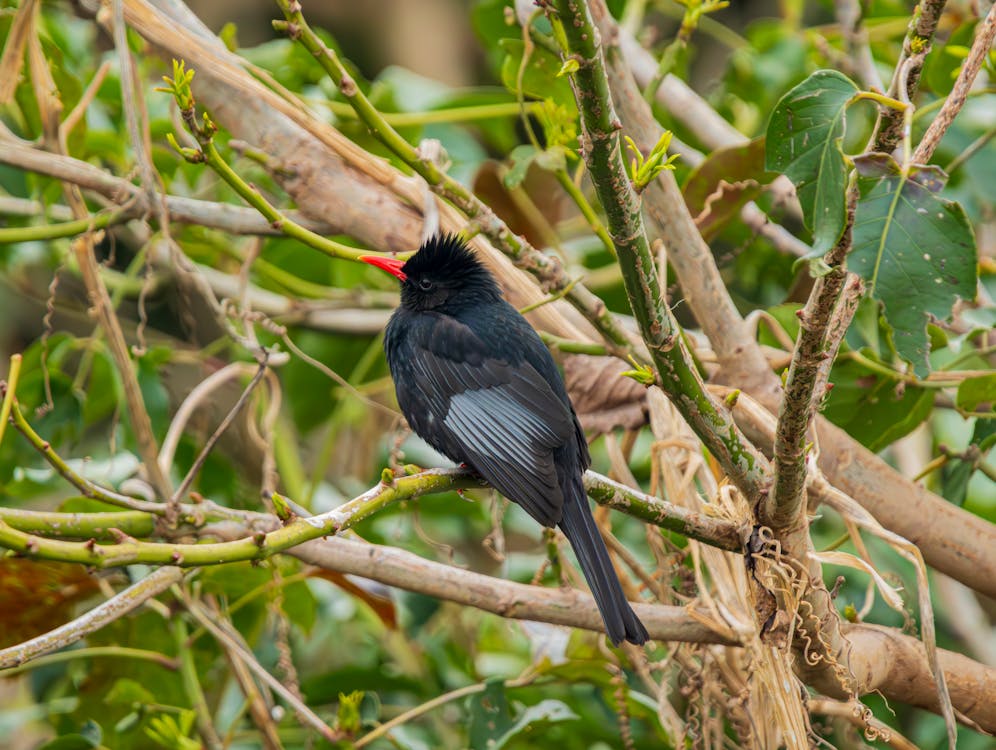
The Black Bulbul is one of the most recognizable resident birds along the Tiaoshui Ancient Trail. Characterized by its velvet-black plumage, the bird’s most striking features are its vibrant red beak and feet, complemented by a distinctive "punk-style" crest on its head. Within the lush canopies of the trail, one can often hear their raspy, cat-like calls—a unique "meow"—echoing through the trees.
As guardians of the forest, Black Bulbuls are particularly fond of the berries and nectar found along the trail. During the spring Tung blossom season, they can be seen darting between branches, playing a crucial role in pollination and seed dispersal. For us, the Black Bulbul is more than just a local inhabitant; it is an ecological partner that has coexisted with this land for generations. Documenting their presence in our project symbolizes the rich biodiversity that the historic Tiaoshui Ancient Trail continues to sustain.
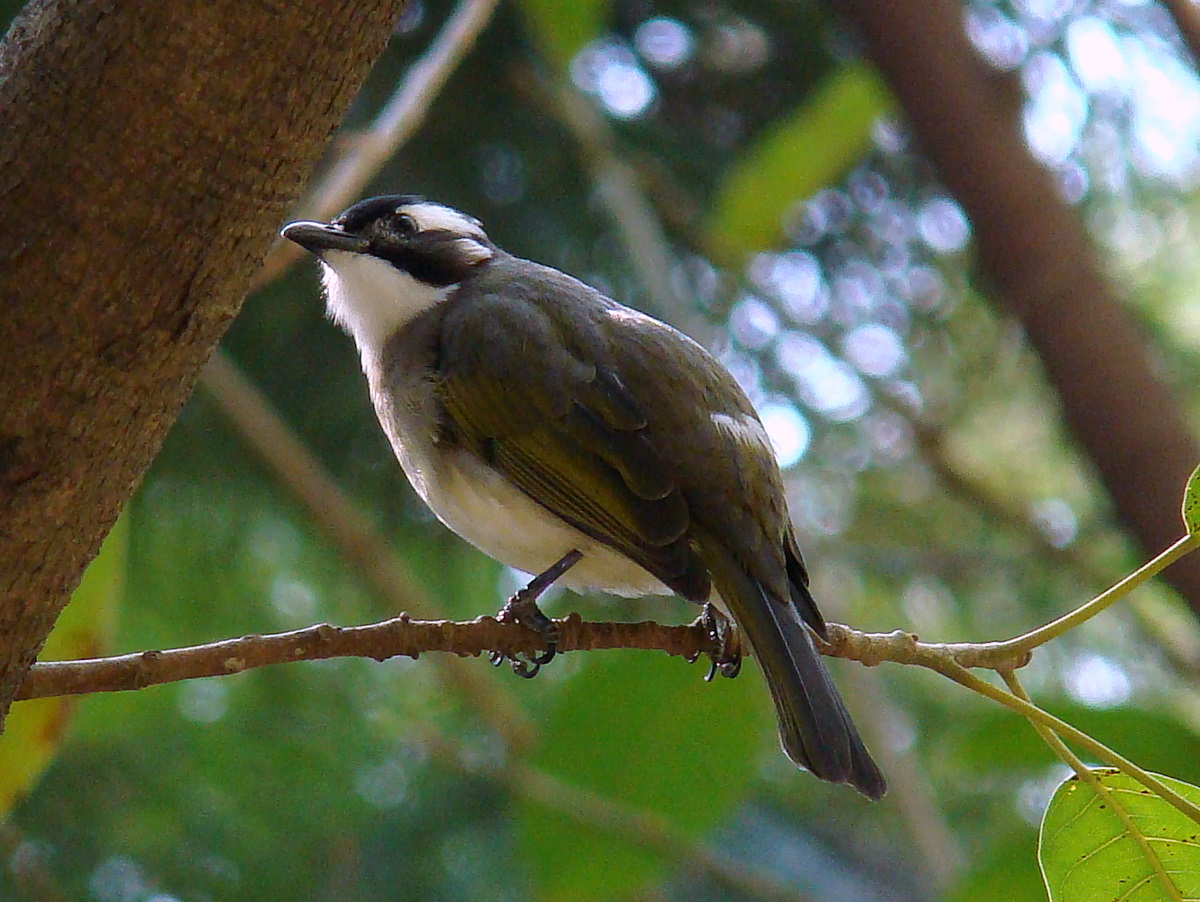
The Light-vented Bulbul is one of the most common and spirited birds found along the Tiaoshui Ancient Trail. Its most distinctive feature is the patch of white feathers on the back of its head, resembling the silvery hair of an elderly scholar, which gives the bird its Chinese name, "White-headed Old Man." Near the trail entrance and within the adjacent orchards, these birds are frequently seen hopping lively among the branches in small, social groups.
In the ecosystem of the Tiaoshui Ancient Trail, the Light-vented Bulbul plays a vital role. With a broad diet ranging from small forest insects to ripe fruits, they act as natural "forest sowers" through seed dispersal. During our field observations, we noted that their rhythmic, liquid chirping is most vibrant in spring when the trail is lush with greenery. Their adaptability and proximity to human habitats symbolize the harmony between people and nature on this land. By documenting the Light-vented Bulbul, we aim to show that the trail is not just a historical site, but a thriving sanctuary where wildlife and humans coexist in peace.
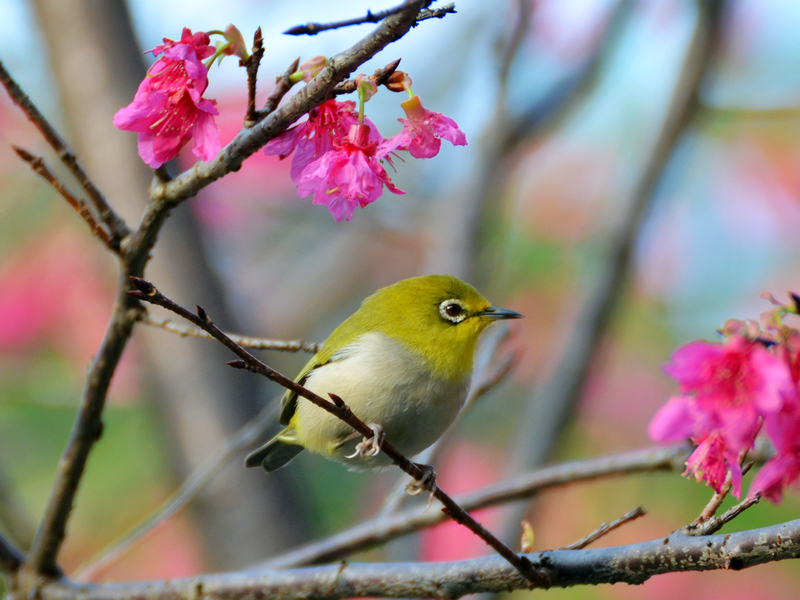
The Japanese White-eye is the most exquisite ecological highlight along the Tiaoshui Ancient Trail. Sporting olive-green plumage and a bright yellow throat, its most enchanting feature is the delicate ring of white feathers around its eyes, resembling a pair of elegant white-rimmed spectacles. Among the dense mistletoes and fruit trees lining the trail, these birds move in small, social flocks, flitting gracefully while emitting faint, rhythmic "zee-zee" chirps.
Within the ecological web of the Tiaoshui Ancient Trail, the Japanese White-eye acts as a hardworking "blossom dancer." Its slender beak is perfectly adapted for sipping nectar from deep within flowers, playing a crucial role in the pollination of Tung blossoms and other native plants. Observing these birds has taught us about the immense contribution tiny creatures make to forest regeneration. Documenting these "green pixies" not only adds vibrant color to our project but also conveys the vital importance of protecting the micro-habitats along this historic path.
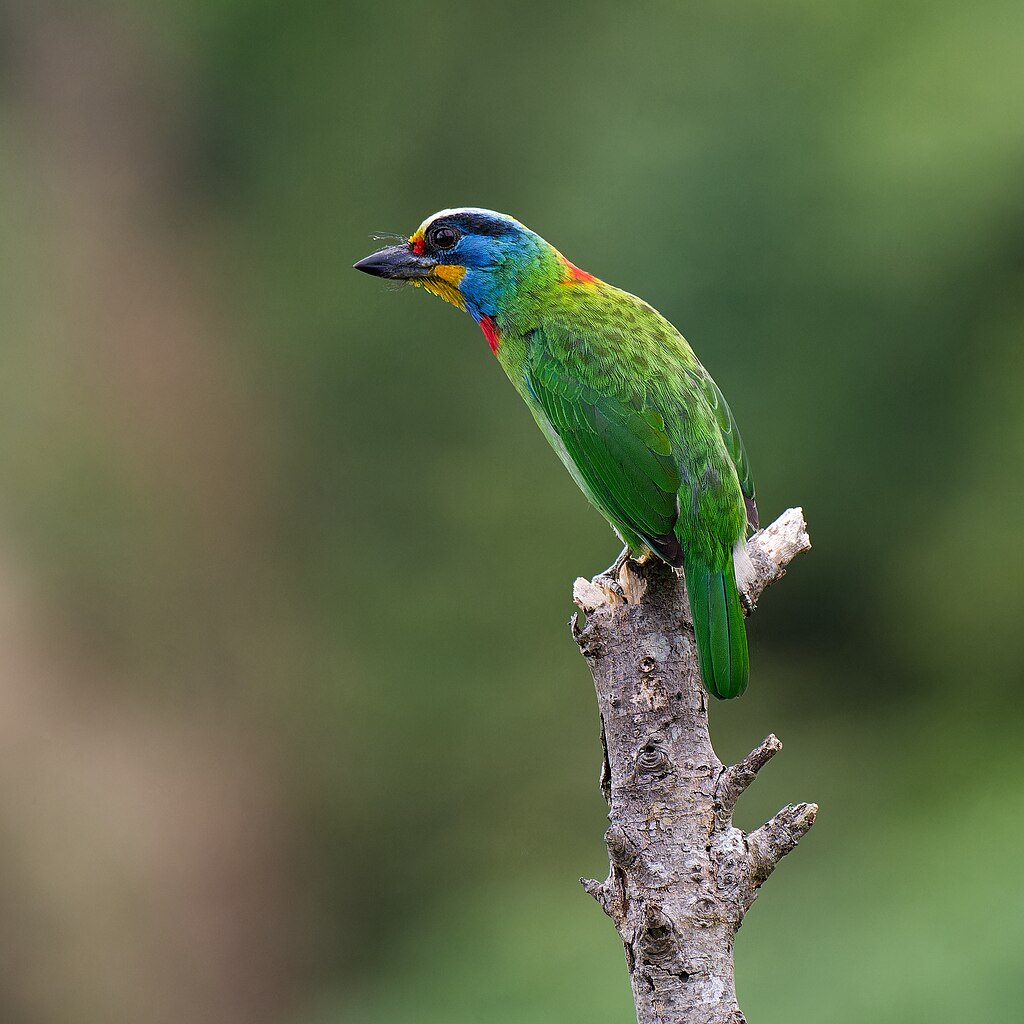
The Taiwan Barbet, an endemic species of Taiwan, is a living masterpiece of nature, adorned with five vibrant colors: green, red, yellow, blue, and black. Along the Tiaoshui Ancient Trail, it is affectionately known as the "Forest Percussionist" due to its rhythmic, hollow "guo-guo-guo" call, which resembles the sound of a wooden fish (a traditional ritual instrument). Despite their brilliant hues, their predominantly emerald plumage provides perfect camouflage within the dense canopy, making them a bird that is "often heard but rarely seen."
Within the ecosystem of the Tiaoshui Ancient Trail, the Taiwan Barbet acts as a "Forest Architect." They prefer to excavate nesting holes in standing deadwood or decaying trees. Once abandoned, these hollows become essential homes for other small birds and insects, playing a crucial role in maintaining local biodiversity. By documenting the Taiwan Barbet, we have come to realize that this trail is not just a recreational site for humans, but a sanctuary where precious endemic species can thrive and endure.
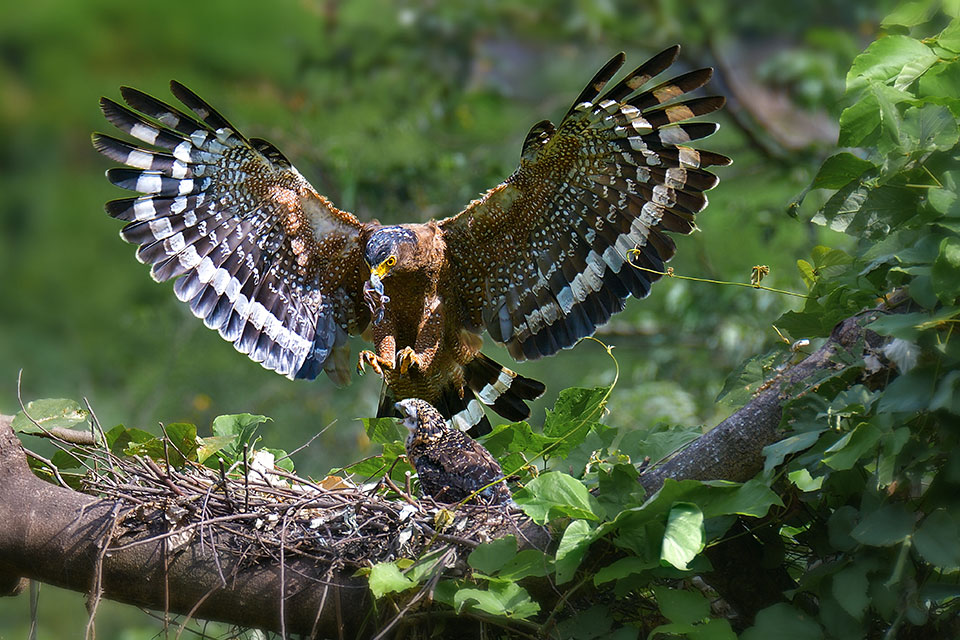
The Crested Serpent Eagle is the most awe-inspiring ecological landmark of the Tiaoshui Ancient Trail. As a majestic bird of prey, it boasts dark brown plumage and a massive wingspan reaching over one meter. Its most defining features are the black-and-white speckled crest behind its head and the prominent white band along the trailing edge of its wings during flight. On sunny afternoons, hikers can often hear a clear, long-drawn whistle—"hoo, hoo-yee, yee"—echoing from the clouds as the eagle patrols its territory.
Because the Tiaoshui Ancient Trail preserves pristine secondary forests and abundant reptile populations, it serves as an ideal hunting ground for these eagles. They are often spotted perched silently on treetops, scanning the forest floor for snakes or lizards. To us, the presence of the Crested Serpent Eagle is the ultimate indicator of a healthy ecosystem, representing a complete and stable food chain. By observing these giants of the sky, we have learned to view environmental conservation from a broader perspective, understanding that protecting this forest is protecting the eagle’s right to soar proudly over the mountains.
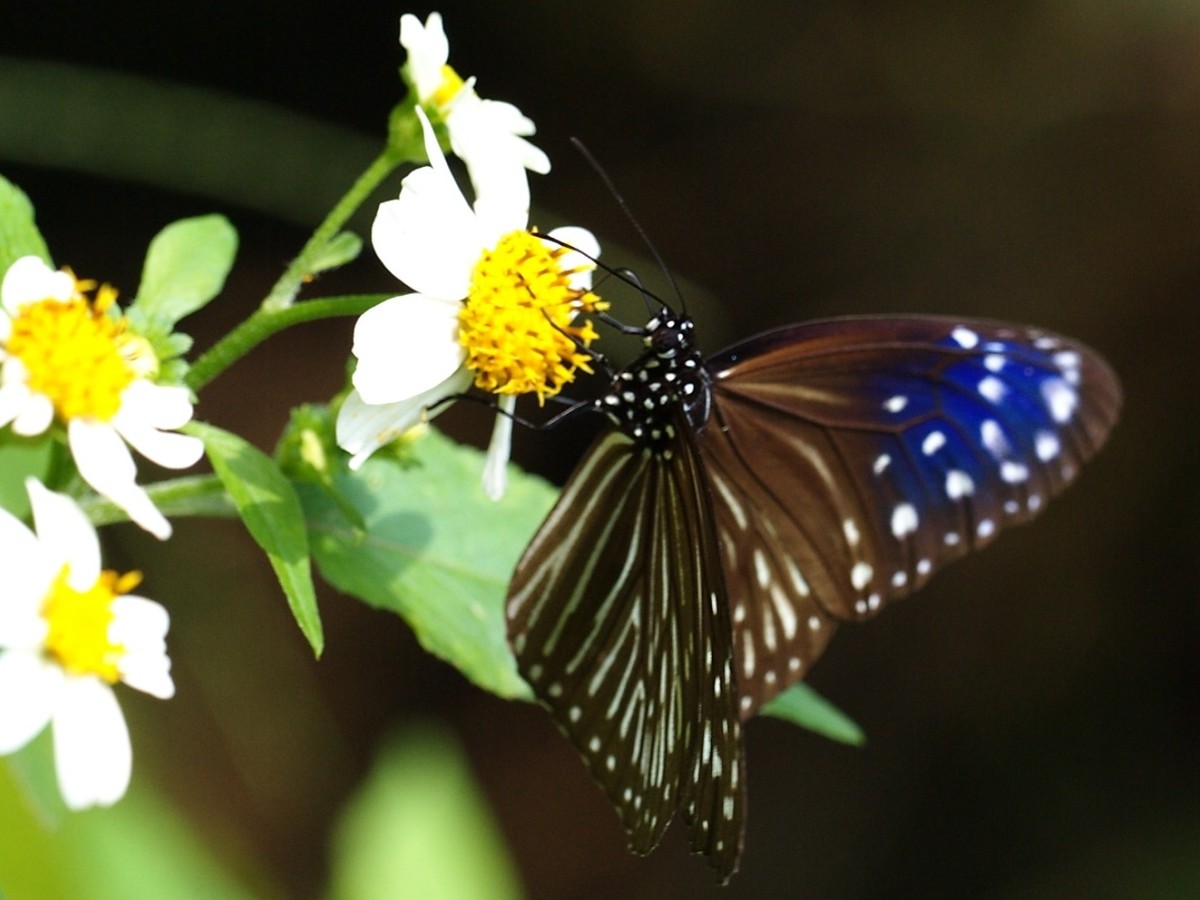
Every spring, as the Tung blossoms begin to bud along the Tiaoshui Ancient Trail, another magnificent symphony of life unfolds in the sky. The Purple Crow Butterfly is one of the few butterfly species known for long-distance migration. Every year between March and April, hundreds of thousands of these butterflies journey northward along their established "butterfly paths."
Due to its unique geographical location and abundance of nectar-rich plants, the Tiaoshui Ancient Trail serves as a vital "rest stop" on their migratory route. Visitors can often witness swarms of Purple Crow Butterflies dancing through the forest, their wings shimmering with a dreamlike, iridescent purple luster as they catch the light. This location is not only a premier spot for ecological observation but also highlights the critical role of the Bagua Mountain Range as an ecological corridor. Through events like the "Butterfly Dance Carnival," participants can witness the resilience of these "sky travelers" up close, adding a dash of moving purple romance to the trail's snowy white scenery.
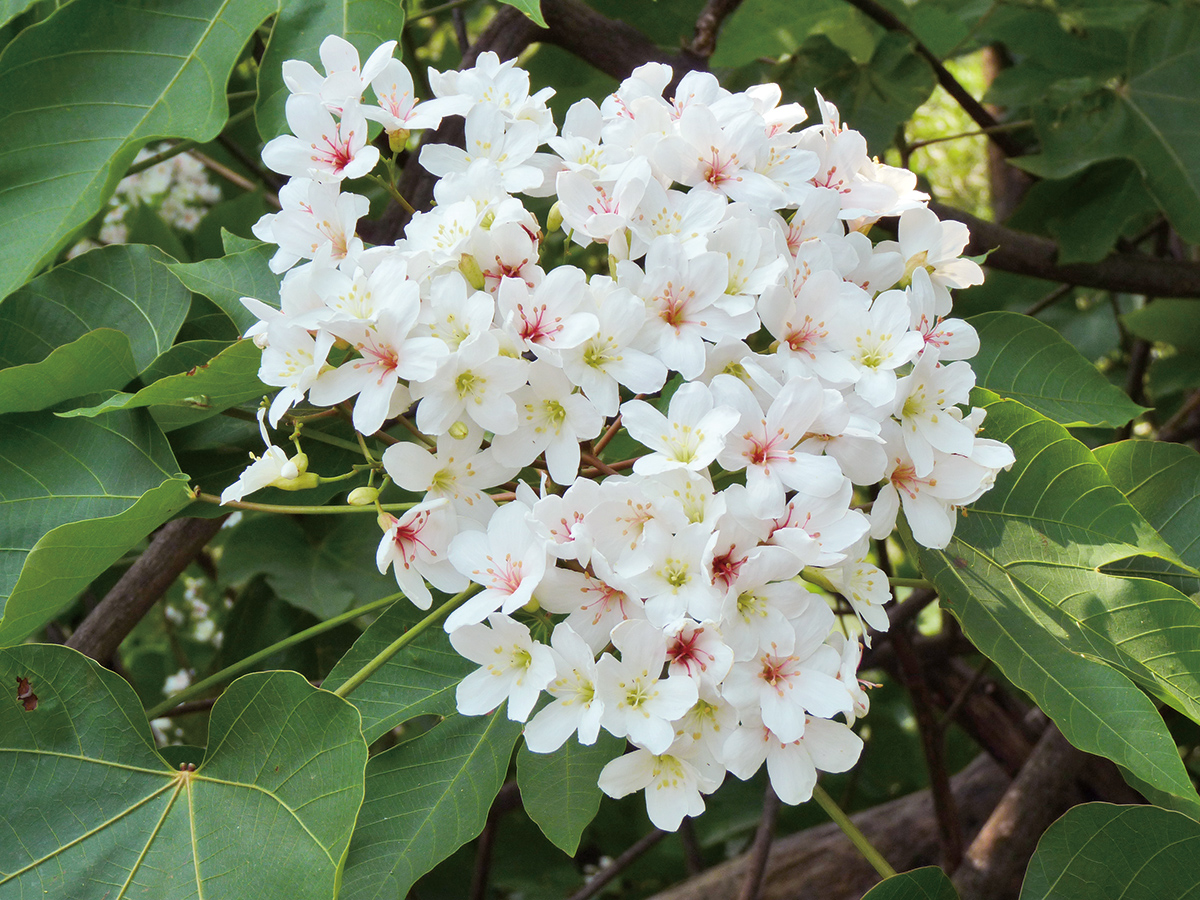
Every year from April to May, the Tiaoshui Ancient Trail in Fenyuan, Changhua, enters its most enchanting season. Known as "May Snow," the pristine white Tung blossoms bloom along both sides of the path. As they drift down with the breeze, they resemble falling snow, covering the winding stone steps in a dreamlike white carpet.
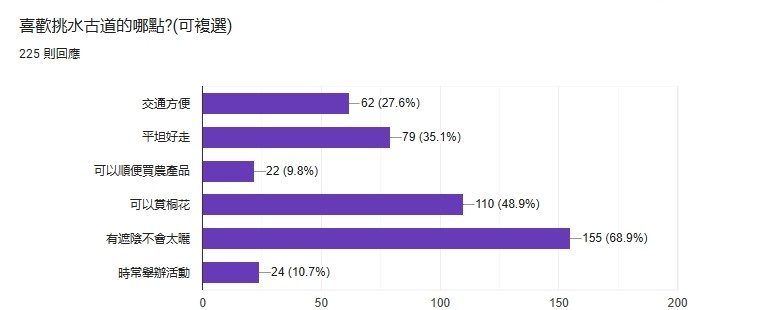
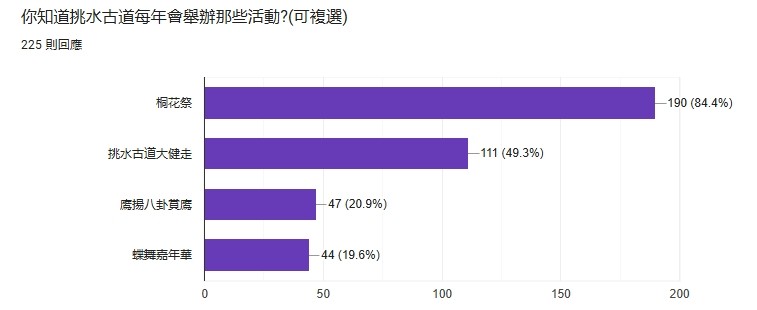
At Tiaoshui Ancient Trail, Tung blossoms are more than just a visual feast; they are woven into local history. While ancestors once carried water through these woods, today the blossoms remain a favorite feature among visitors. Our survey shows that 48.9% of visitors are drawn here specifically for "Tung blossom viewing", and the famous "Tung Blossom Square" boasts an impressive 84.4% awareness rate. These flowers coexist with dense vegetation that provides a 68.9% shade rate, allowing hikers to enjoy the falling "snow" in a cool and comfortable environment.
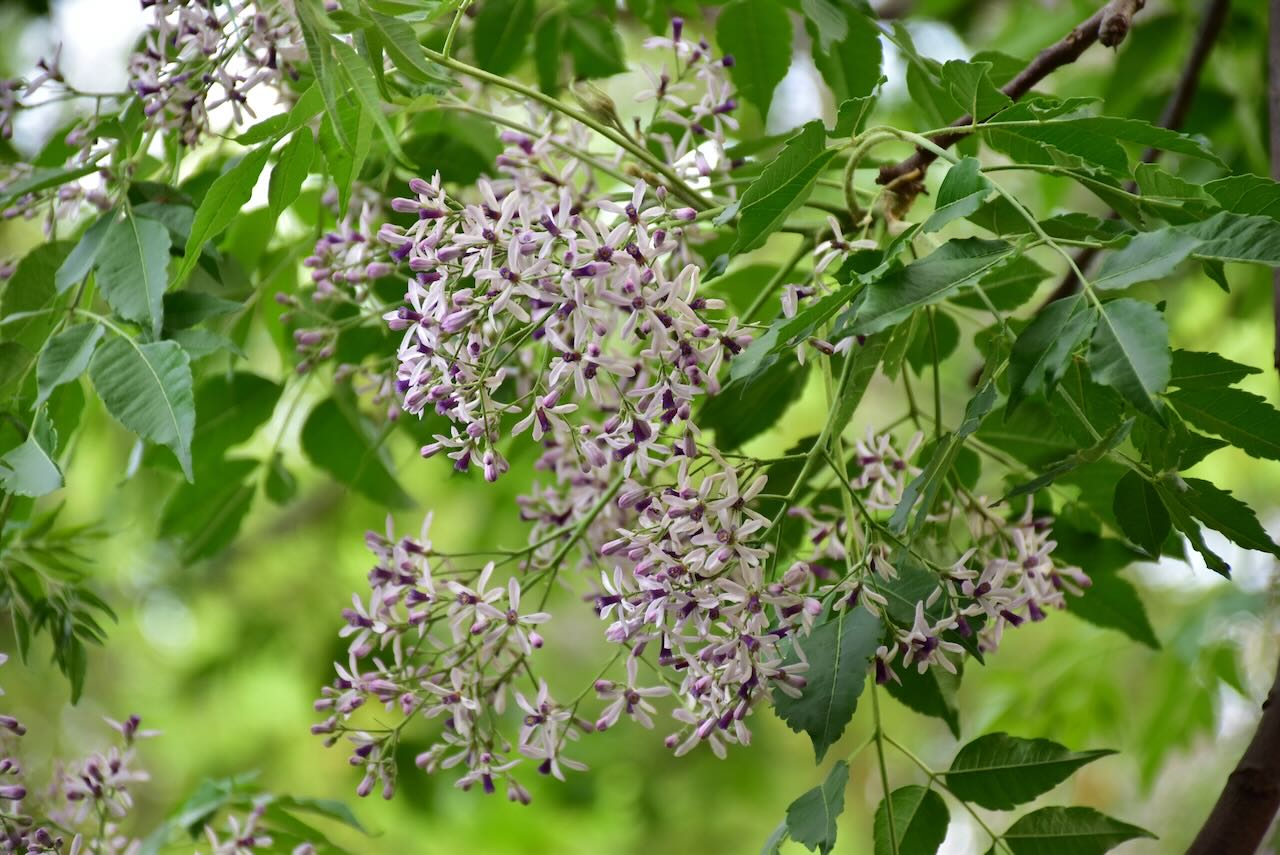
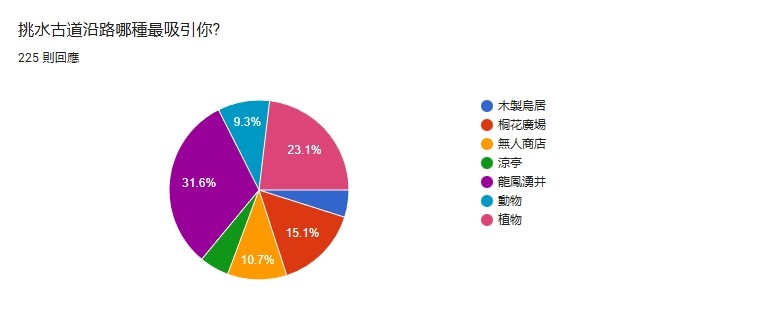
Beyond the famous "May Snow" (Tung blossoms), the Chinaberry trees (also known as Persian Lilac) blooming in spring are a natural treasure on the Tiaoshui Ancient Trail. These trees showcase the trail's ecological diversity, with 23.1% of visitors identifying "plants" as one of the most attractive features along the path.
From March to April, Chinaberry trees produce small, delicate purple flowers with a faint, elegant fragrance, creating a misty purple haze when viewed from afar. The tall canopies of these trees interweave with other forest flora to form the natural corridors that Tiaoshui is proud of. This extensive vegetation cover provides an excellent 68.9% shade rate, a quality highly appreciated by respondents who find the trail "shaded and not too sunny". While Chinaberry trees might not have the same fame as the Tung Blossom Festival, they coexist with historical relics like the Longfeng Spring Wells, witnessing the fusion of ancestral history and the local natural environment.
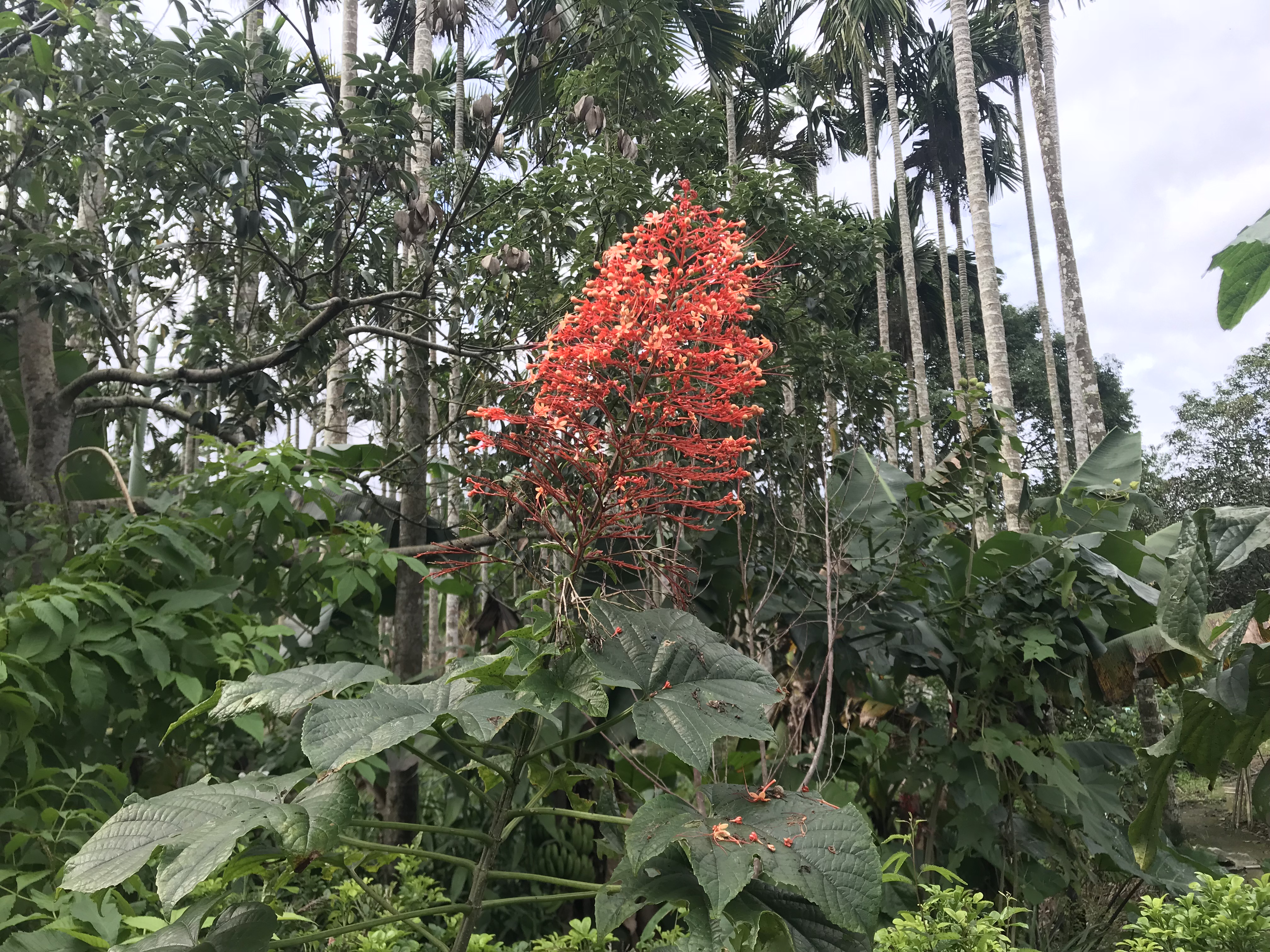
While walking the Tiaoshui Ancient Trail in Fenyuan, Changhua, the vibrant Dragon Boat Flower (Clerodendrum paniculatum) blooming along the path is an ecological highlight that rivals the famous spring blossoms. Named for its blooming season coinciding with the Dragon Boat Festival, its fiery red, pagoda-like inflorescences stand out brilliantly against the lush green forest. This native species enriches the trail's biodiversity, aligning with the 23.1% of visitors who appreciate the trail's "flora and fauna".
Dragon Boat Flowers prefer semi-shaded, humid environments, and the excellent canopy cover of Tiaoshui Ancient Trail, which provides a 68.9% shade rate, serves as an ideal habitat. Although it lacks the 84.4% awareness rate enjoyed by the Tung Blossom Festival, its long blooming period of nearly half a year fills the visual gap between major seasons. For hikers who enjoy the "flat and easy" terrain (35.1%) while seeking natural beauty, this flower offers sustained ecological value.
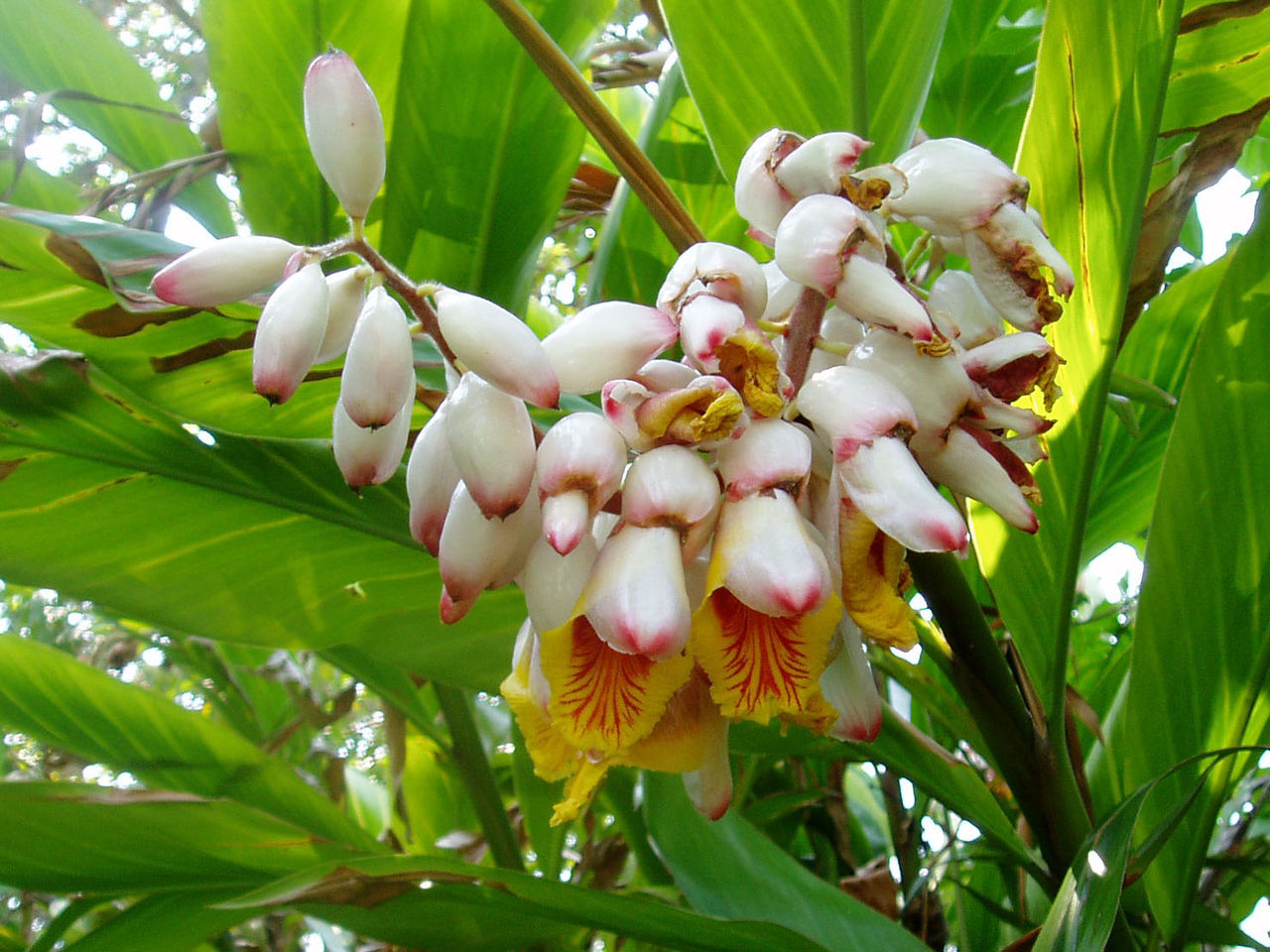
While exploring the Tiaoshui Ancient Trail, you can often find clusters of Shell Ginger (Alpinia zerumbet) growing along the path. This plant is not only a common sight in Taiwan's low-altitude mountains but is also deeply connected to local traditional culture. Its broad, lush green leaves and pearly, drooping flower buds bloom in early summer, with red and yellow hues that perfectly complement the trail's rustic charm. Such native flora is a key reason why 23.1% of visitors appreciate the trail's natural ecology.
The trail's impressive 68.9% shade rate provides a cool, moist environment that is ideal for Shell Ginger to thrive. Although it might not share the same 84.4% awareness rate as the "Tung Blossom Festival", its versatile uses—such as leaf weaving or wrapping zongzi—align perfectly with the trail's rich historical heritage. For the 35.1% of hikers who enjoy the "flat and easy" terrain while valuing scenic beauty, the elegant presence of Shell Ginger offers a delightful visual experience, showcasing the trail's diverse and stable ecosystem beyond the peak flowering seasons.
SunnyHills (Nantou Original Store) After completing your journey through the natural scenery and historical charm of the Tiaoshui Ancient Trail, the SunnyHills Nantou original store is undoubtedly the best next stop for a rest! Emerging from the trail, you are welcomed by a quaint traditional Sanheyuan (three-sided courtyard) building tucked away along County Highway 139. Here, they offer more than just a free sample of their famous pineapple cake and hot tea; you will also experience warm local hospitality and a rustic atmosphere that helps you relax and recharge instantly.
While the Tiaoshui Ancient Trail attracts hikers with its serene forest paths and rustic wells, sitting in the courtyard of SunnyHills to enjoy tea and snacks is the most delightful way to unwind after a challenging hike. With its fresh air and beautiful surroundings, it’s also a fantastic spot for "Instagrammable" photos—a perfect blend of outdoor activity and cultural experience.
In addition to their signature indigenous pineapple cakes, various other specialty desserts and souvenirs are available for purchase, adding a sweet memory to your trip. Whether it’s a family outing, a romantic date, or a hiking trip with friends, this itinerary is both fulfilling and relaxing—a must-do combination when visiting Nantou.
Furong Temple (The "Instant Noodle" Earth God Temple) After trekking the Tiaoshui Ancient Trail in Fenyuan, many visitors head to Furong Temple on County Highway 139. This Tudigong (Earth God) temple has gained fame not only for its spiritual significance but also as the "Instant Noodle Earth God Temple." Noticing a lack of dining options within a 5-kilometer radius, the temple management thoughtfully provides free instant noodles and hot water for hikers, cyclists, and pilgrims. This has fostered a unique local culture where visitors "eat instant noodles for wealth and donate noodles for blessings."
The temple is surrounded by several century-old banyan trees, offering refreshing shade and pavilions for relaxation. Additionally, the temple features adorable, stylized "Q-version" Earth God statues and dedicated photo spots, adding a sense of fun and interactivity. Every year, from the first to the sixth day of the Lunar New Year, the temple also offers "Fortune Money" (Fa Chai Jin) loans, attracting crowds of believers seeking blessings for prosperity.
Located just a few minutes' walk from the Tiaoshui Ancient Trail, the path to Furong Temple offers pleasant scenery that beautifully blends nature and culture. Whether you want to recharge your energy, pray for safety, or experience authentic local traditions, Furong Temple is an unmissable highlight of any Tiaoshui trail itinerary.
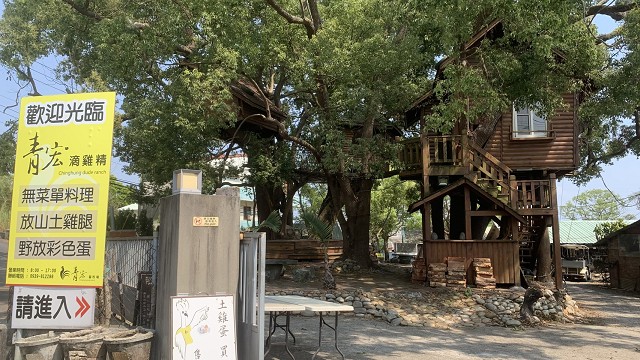
Ching-Hong Poultry Farm After exploring the nature and history of the Tiaoshui Ancient Trail, many visitors choose to head to the nearby Ching-Hong Poultry Farm for a unique experience that blends rural charm with authentic cuisine. Located along the Bagua Mountain Range in Nantou, this long-standing poultry farm has a history of over 60 years and has recently transformed into a popular leisure farm, attracting crowds of tourists.
The farm's most distinctive feature is its dining area, which is situated within repurposed chicken coops. This design preserves the original rustic look, making guests feel as if they are truly immersed in rural farm life. The menu highlights indigenous chicken (Tu-Ji) cuisine, featuring signature dishes such as chicken oil vermicelli, sesame oil chicken gizzards/testis, and the famous Golden Roasted Whole Chicken—all known for their unique flavors and generous portions. Additionally, the farm features a traditional area for making chicken essence, which is slow-cooked over longan wood fires for hours, filling the air with a rich, smoky aroma.
For families, Ching-Hong Poultry Farm offers an open-access area where children can observe the chickens up close and experience the joys of farm life. With simple playground facilities available on-site, it is an ideal destination for families to enjoy a relaxing day together.
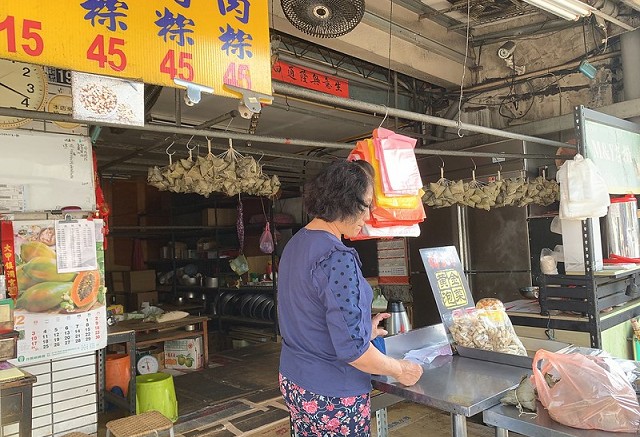
Xitou Traditional Rice Dumplings After exploring the natural beauty of the Tiaoshui Ancient Trail, many visitors head to the "Zongzi Street" near the trail entrance to savor local delicacies. These established shops, with over twenty years of history, are renowned for their traditional handmade rice dumplings and are favorites among both locals and tourists. The shops offer three distinct flavors: Original, Peanut, and Rice Bean. The glutinous rice is perfectly chewy, encasing a rich filling of fried shallots, small dried shrimp, and succulent pork belly, creating a truly unique flavor profile. Additionally, the aromatic tea eggs sold on-site are a customer favorite.
As these shops do not offer indoor seating, many hikers choose to buy their Zongzi before heading up the trail as an energy-boosting snack, or purchase them after their hike to share with family at home. During weekends or the period leading up to the Dragon Boat Festival, long queues are a common sight, so it is recommended to arrive early to avoid missing out. Located just a few minutes' walk from the Tiaoshui Ancient Trail, the stroll to these shops offers pleasant scenery that blends nature with local culture. Whether as fuel for your climb or a delicious reward after your hike, these traditional rice dumplings are an unmissable highlight of the Tiaoshui trail experience.
Events & Activities
To introduce the natural beauty of the Tiaoshui Ancient Trail to a wider audience and showcase the precious flora and fauna found along its path, the Changhua County Government has organized a series of promotional activities. Beyond its scenic charm, the trail serves as a vibrant habitat for diverse wildlife, holding significant educational and conservation value.
To deepen public understanding of the ecosystem, we collaborated with the butterfly association to host the "Butterfly Dance Carnival," allowing participants to experience the beauty of fluttering butterflies through guided observation. Simultaneously, the "Eagles Soar over Bagua" event was held to introduce the Gray-faced Buzzards that migrate through the area annually, leading visitors to witness this spectacular raptor migration. Furthermore, we proudly served as volunteer guides, personally leading school groups on field trips through the trail. This hands-on experience allows students to learn about ecology while walking and feeling the allure of nature.
Through these diverse initiatives, we hope to show that the Tiaoshui Ancient Trail is more than just a place for exercise—it is a premium route rich in ecological education, deserving of our appreciation and preservation.
Tung Blossom Festival Series Events
Starting every April during the peak blooming season, the Tung blossoms in Changhua are often the first to flourish in Taiwan. Among the six most famous Tung blossom viewing regions in the country, Changhua proudly hosts three, showcasing its rich floral landscape. Among them, the Tiaoshui Ancient Trail in Fenyuan Township is an unmissable hotspot.
The trail is approximately two kilometers long, taking about an hour for a round trip. Its gentle slope makes it an ideal destination for families. During the festival, white petals drift down like snow, carpeting the path in a dreamlike "May Snow" scenery. Along the way, two ancient wells with clear, sweet spring water provide a perfect spot for hikers to rest and quench their thirst. At the base of the hill, the famous "Zongzi (Rice Dumpling) Street" offers local delicacies to enjoy after your hike.
Upon reaching the summit, the trail connects to County Highway 139, offering panoramic views of Caotun in Nantou and the vast mountain ranges. Visitors can also stop by the renowned Furong Temple (the "Instant Noodle" Earth God Temple) to enjoy a bowl of noodles and soak in the unique atmosphere.
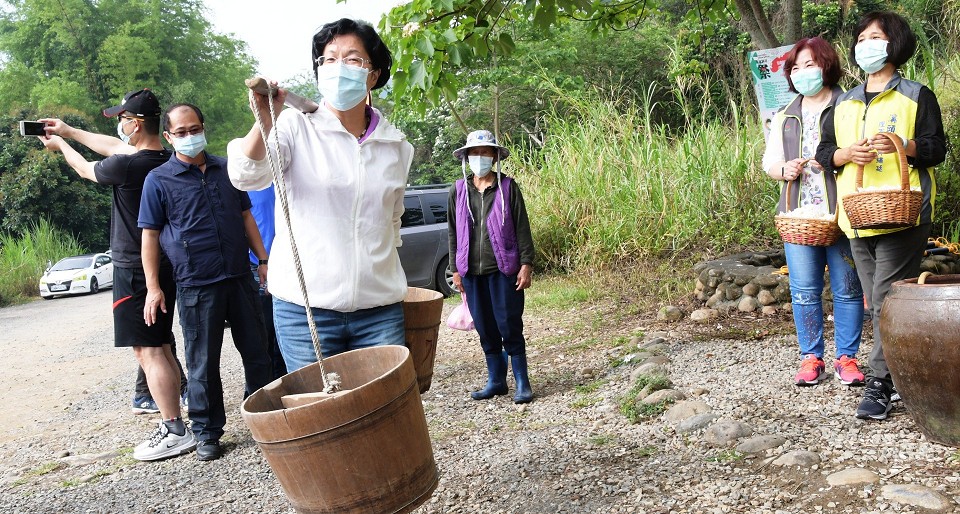
A special highlight of the annual festival is the "Water-Carrying Experience." Participants are invited to carry shoulder poles and buckets to simulate the daily life of ancestors. Those who successfully carry the water to the summit will receive a mysterious small gift—an activity that is both educational and full of fun.
Promotional Poster for the Tung Blossom Festival
Water-Carrying Experience (Source: Changhua County Government)
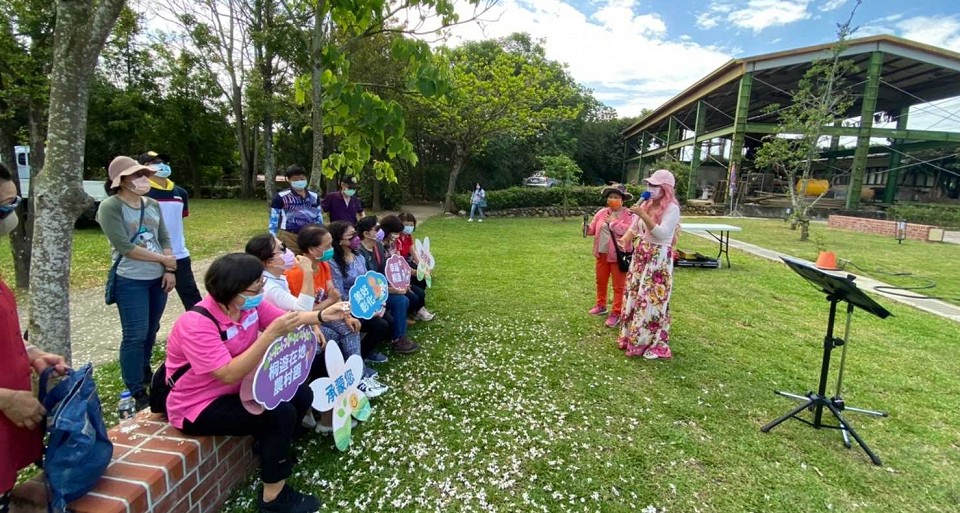
Concert at Tung Blossom Square (Source: Changhua County Government)
Tung Blossom Square
Hiking the New Bagua Mountains: A Walk through Nature and History
Located in Fenyuan Township, Changhua County, the Tiaoshui Ancient Trail is a hiking path that beautifully combines natural scenery with historical and cultural significance. The trail is lush with greenery, winding gracefully through the landscape without being steep. Its flat and manageable surface makes it a favorite for both families and hiking enthusiasts. During the peak bloom of Tung blossoms in April and May, the white petals drift down like snow on both sides of the path, creating a poetic "May Snow" landscape that attracts crowds of visitors for spring outings.
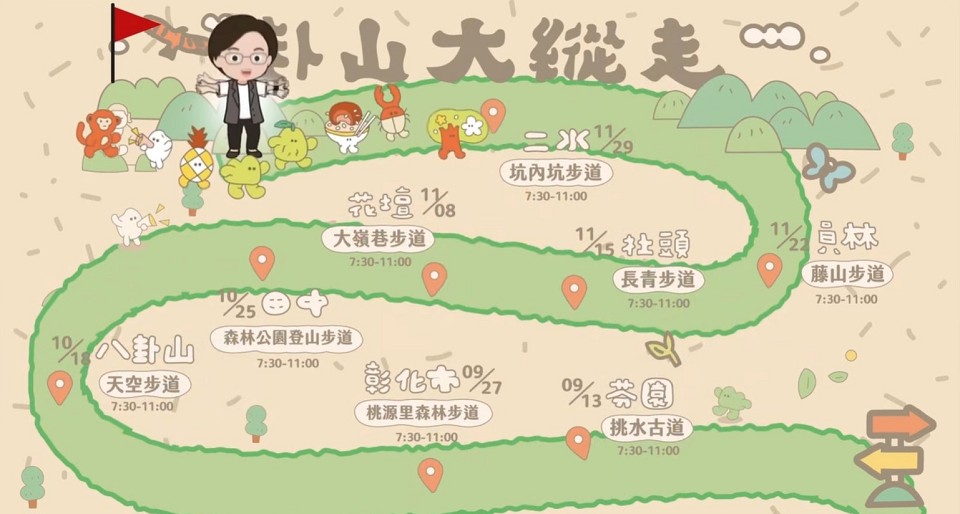
Due to its unique natural features and abundant ecological resources, the Tiaoshui Ancient Trail was honored as the No. 1 "Top Ten Tung Blossom Viewing Spots in Taiwan" in 2020, becoming a landmark tourist destination for Fenyuan Township. To promote local scenery and encourage healthy living, the Fenyuan Township Office hosts the "Ancient Trail Hike: Fenyuan on the Move" event every December. This event invites people from across the country to step into nature and enjoy the beautiful vistas of Fenyuan. In addition to the well-planned hiking routes, the event also features guided tours, ecological briefings, and displays of local agricultural products, allowing participants to deeply experience the culture and charm of Fenyuan while they hike.
Promotional Poster for the Hiking Event
Hiking Route of the Tiaoshui Ancient Trail
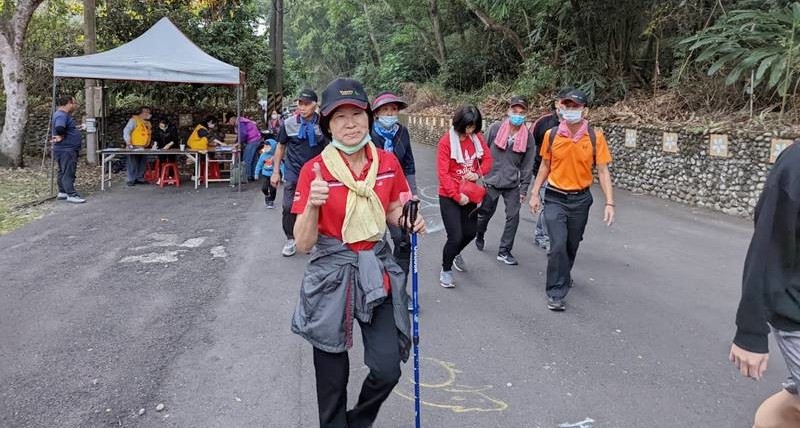
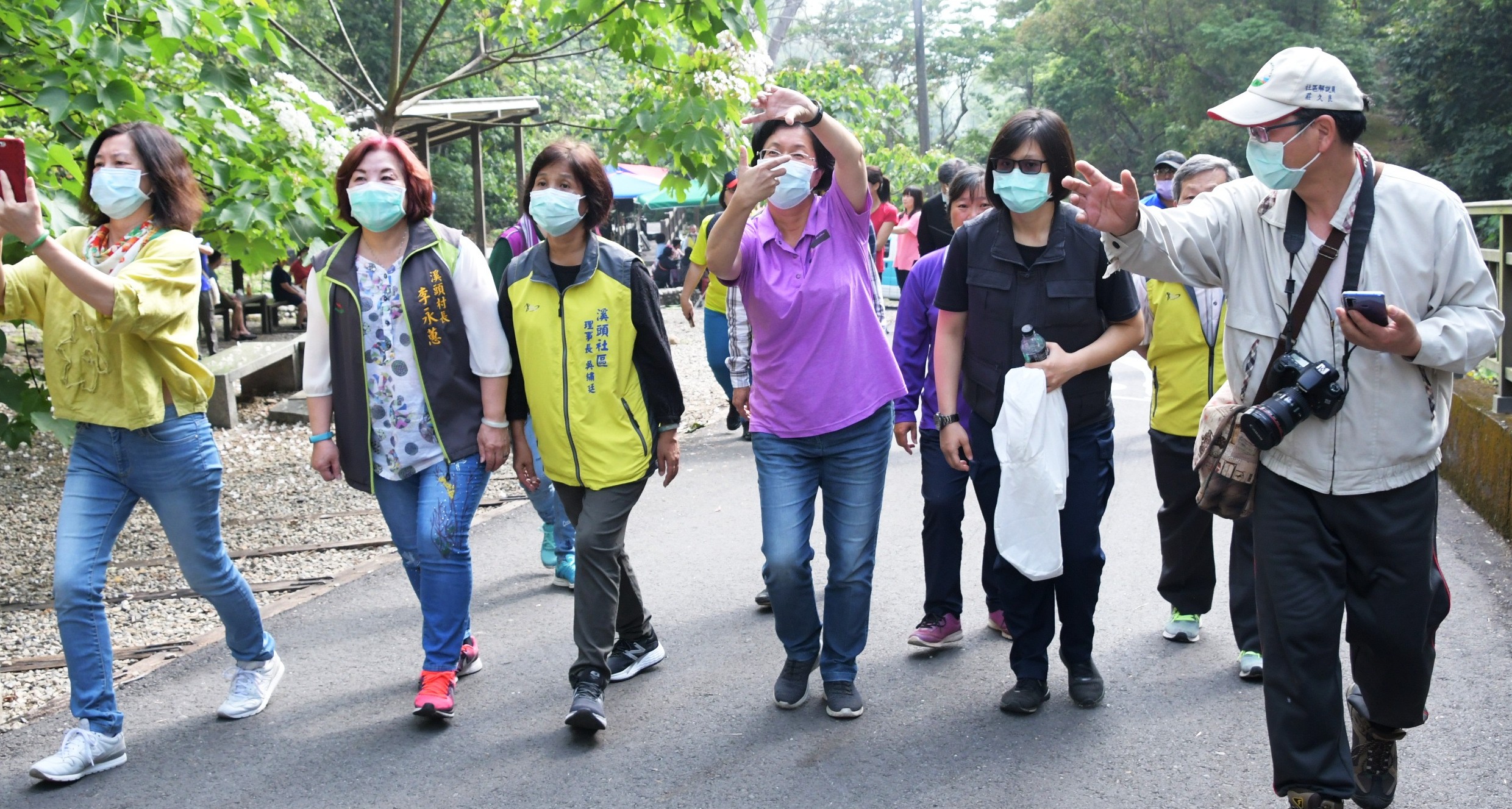
Snapshot of the Hiking Event (Source: Changhua County Government)
Snapshot of the Hiking Event (Source: Changhua County Government)
Eagles Soar over Bagua: The Gray-faced Buzzard
The Gray-faced Buzzard, also known locally as the Gray-faced Hawk, is a seasonal traveler in Taiwan's springtime skies. It is named for the distinct grey plumage on the male's face. As these birds typically arrive around the Bagua and Dadu mountain ranges during the Qingming Festival, locals affectionately call them the "Qingming Bird" or "Tomb-Sweeping Bird." Furthermore, because they migrate from the south, they are also known as the "Southern Route Eagle."
The Gray-faced Buzzard is the official county bird of Changhua, symbolizing the local spirit of keeping promises, integrity, and honoring one's ancestors (filial piety). It is also recognized as a rare and precious protected wildlife species. Every spring from March to April, these raptors journey north from Southeast Asia, passing through the Bagua Mountain Range. Their arrival creates the spectacular "Eagle Wave"—a breathtaking sight that attracts countless birdwatchers and wildlife photographers.
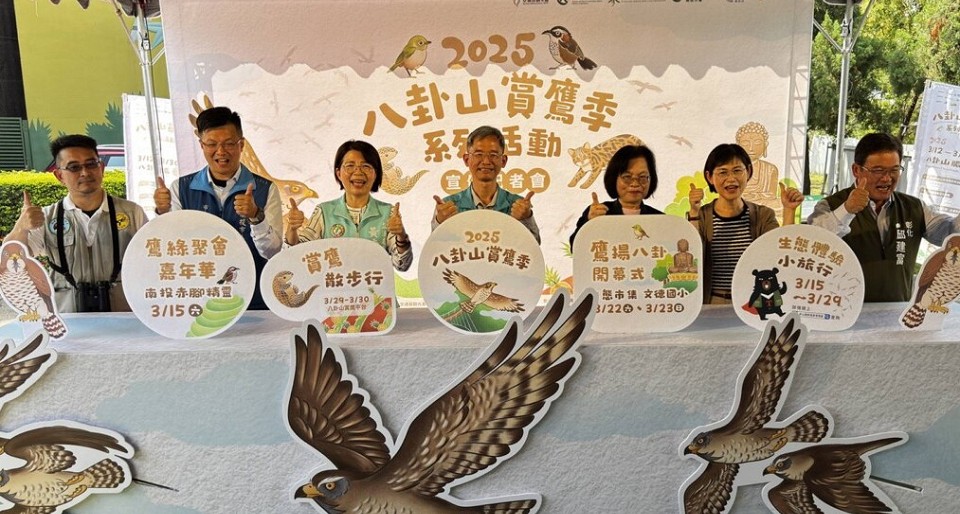
The "Eagles Soar over Bagua" event has been held for over 30 years. Beyond offering the public a chance to witness the magnificent migration, it carries a vital mission of ecological conservation and environmental education. Through guided tours, lectures, and interactive activities, the event encourages more people to understand and protect these "travelers of the sky," cherishing the precious life within our natural world.
"Eagles Soar over Bagua" Opening Press Conference (Source: Changhua County Government)
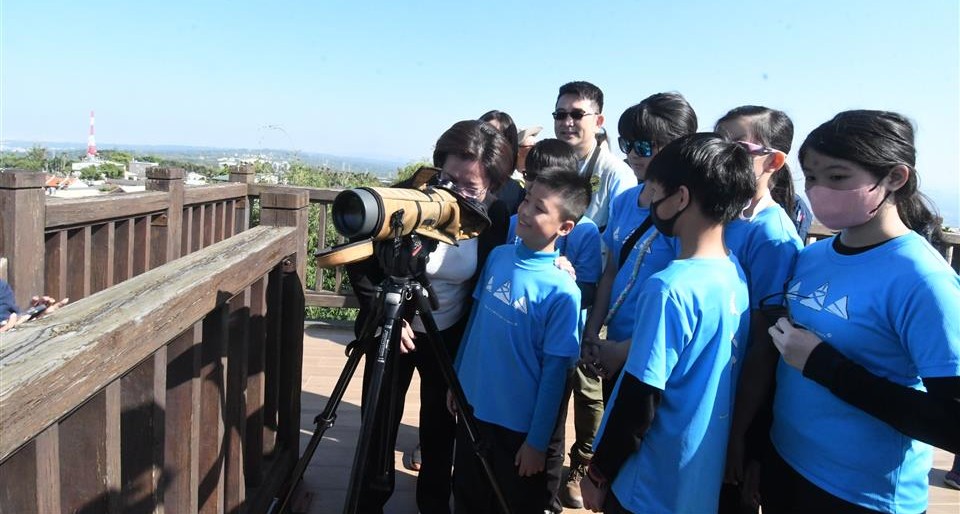
Students Participating in the Eagle Watching Activity (Source: Changhua County Government)
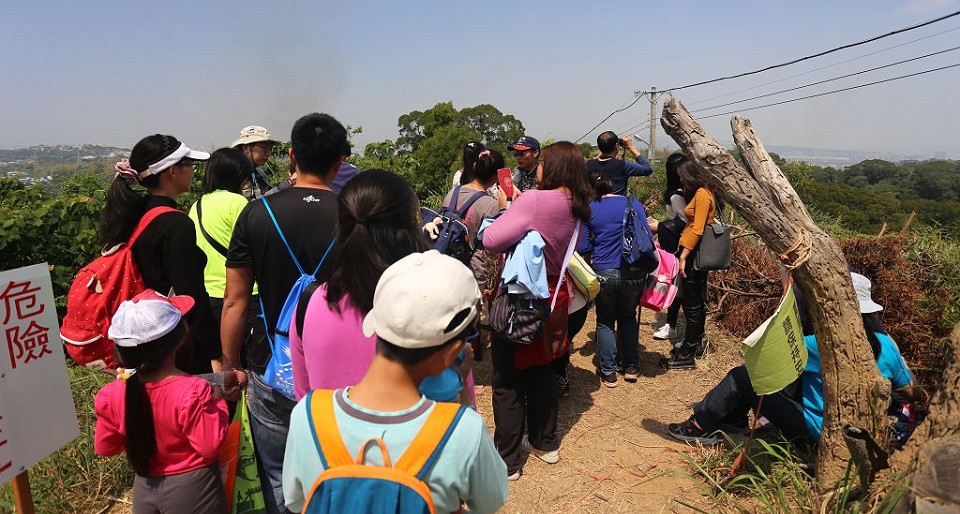
Visitors Participating in the Eagle Watching Activity (Source: Changhua County Government)
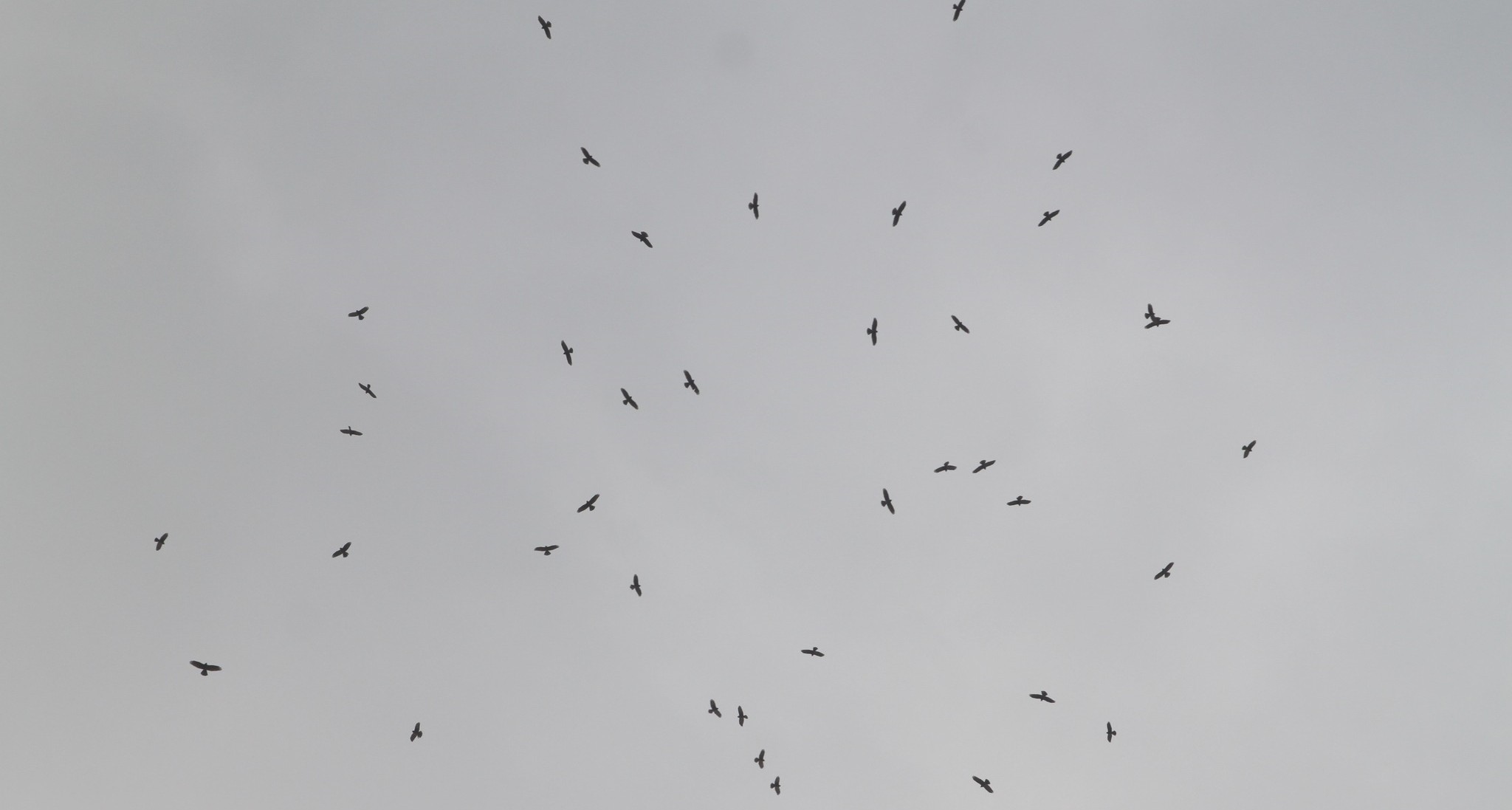
Flocks of Gray-faced Buzzards Circling in the Sky
Swarms of Gray-faced Buzzards soar and circle majestically in the sky.
Butterfly Dance Carnival
To allow more people to appreciate the beauty of butterfly ecology and to promote the concept of conservation, the Butterfly Conservation Society of Taiwan regularly hosts the "Butterfly Dance Carnival" promotion events across the country. These activities combine ecological "challenge games" with outdoor guided tours. By using an educational yet entertaining approach, participants can learn about the ecological habits of butterflies through interaction and hands-on experience, thereby raising awareness for conservation.
Among these events, the Purple Crow Butterfly ecological activity held at the Changhua Success Camp is a major annual highlight. Every spring, tens of thousands of Purple Crow Butterflies depart from Linnei in Yunlin and migrate northward along the Tiaoshui Ancient Trail, creating a spectacular migration scene along the way. Along the route of the Tiaoshui Ancient Trail, one can often witness large swarms of these butterflies fluttering past, providing the public with a precious opportunity for observation and learning, while showcasing the wonders and vitality of the natural world. Every spring, massive swarms of Crow Butterflies migrate north along the Bagua Mountain Range, passing over the Tiaoshui Trail. Interestingly, our school is also located on this "butterfly highway," allowing us to witness this spectacular natural migration right from our campus!
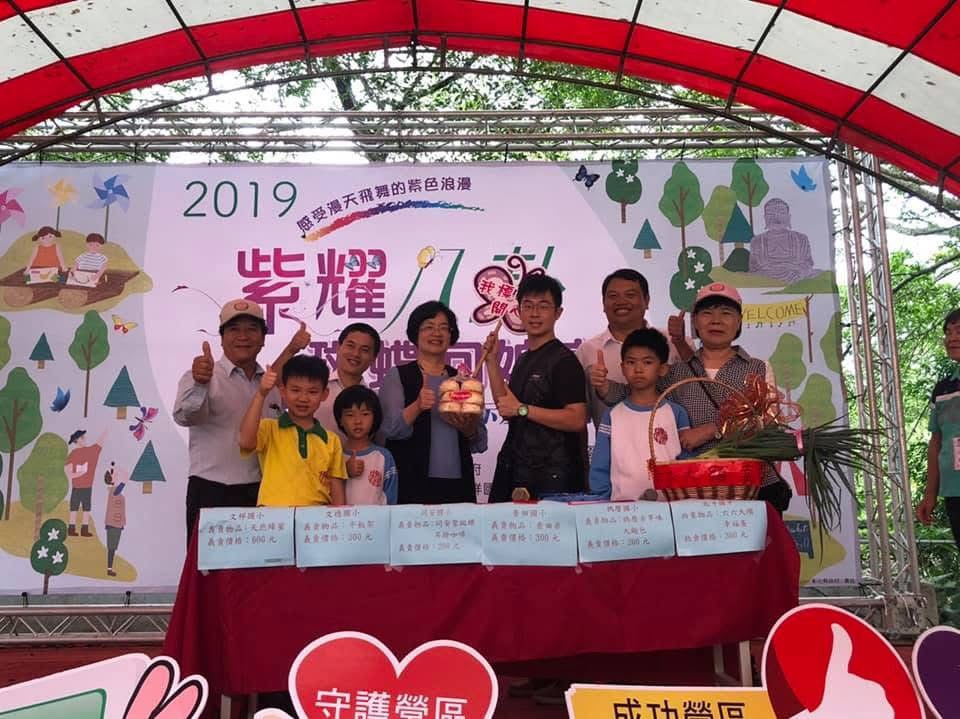
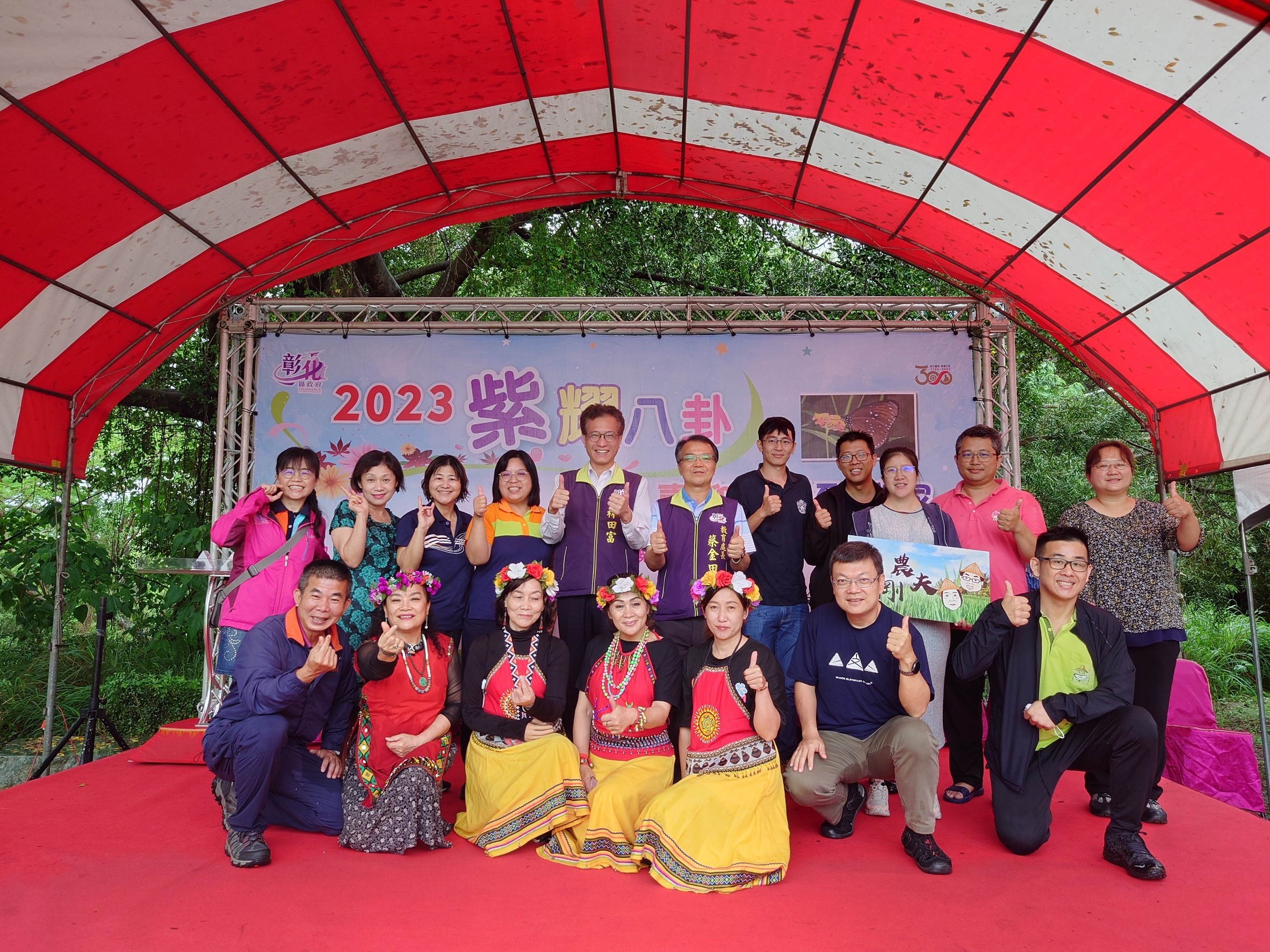
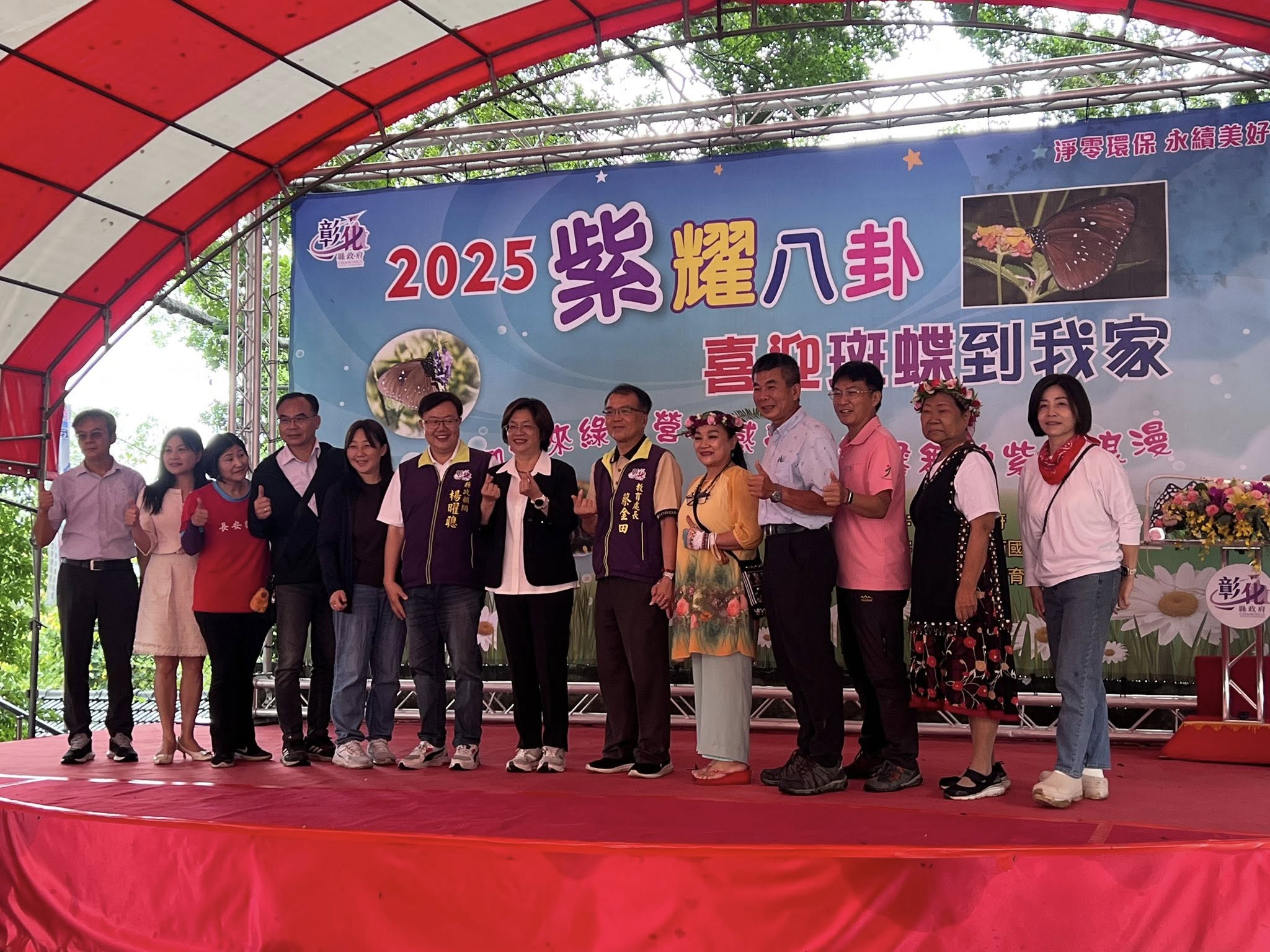
Butterfly Discovery Event organized by the County Government
Butterfly Discovery Event organized by the County Government
Butterfly Discovery Event organized by the County Government
Butterfly Discovery Event organized by the County Government
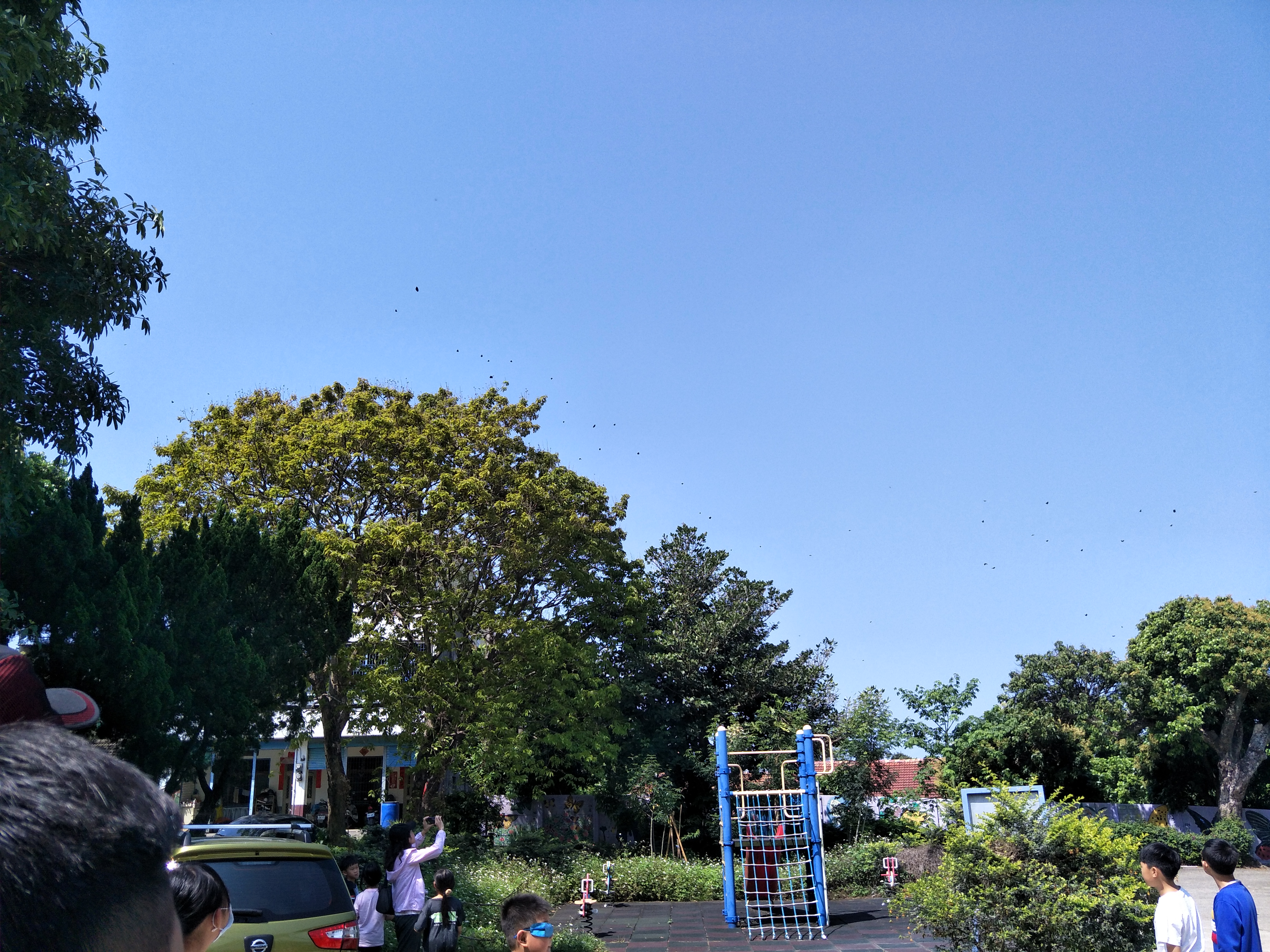
Massive swarms of Crow Butterflies migrate north along the Bagua Mountain Range, passing directly over the Tiaoshui Trail.
During their migration, these Crow Butterflies also pass through our school campus.
Questionnaire
To gain insights into the visitor experience, we conducted a comprehensive survey focused on the Tiaoshui Ancient Trail. The participants included hikers, family groups, and photography enthusiasts. The questionnaire focused on facility satisfaction, transportation accessibility, and the appeal of organized cultural events.
The analysis revealed that over 85% of respondents gave exceptionally high ratings to the "May Snow" Tung blossom scenery. Furthermore, the itinerary combining the trail with Furong Temple (Instant Noodle Earth God Temple) and SunnyHills was recognized as the most attractive travel combination. However, the data also reflected a strong demand for more parking spaces during peak blooming seasons. Regarding cultural experiences, over 70% of visitors expressed high satisfaction with the "Water-Carrying Experience" and the volunteer guide services, noting that these activities added significant educational depth to their journey. This analysis not only confirms the potential of the trail as a premier eco-tourism destination but also provides valuable data for future trail maintenance and event planning.
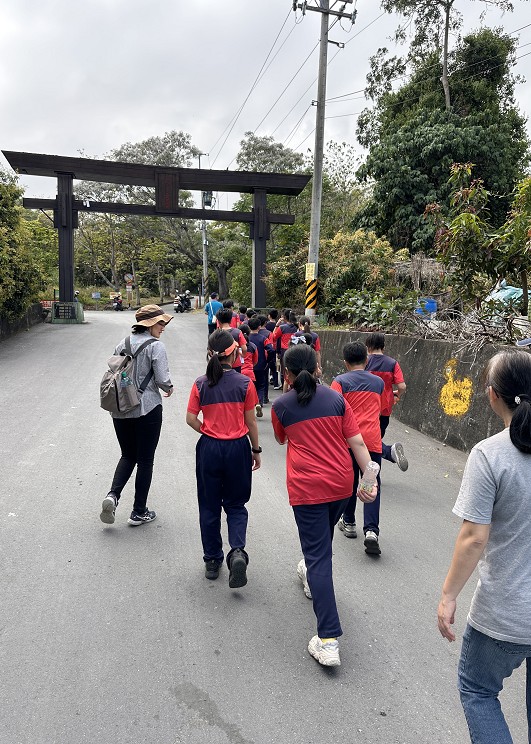
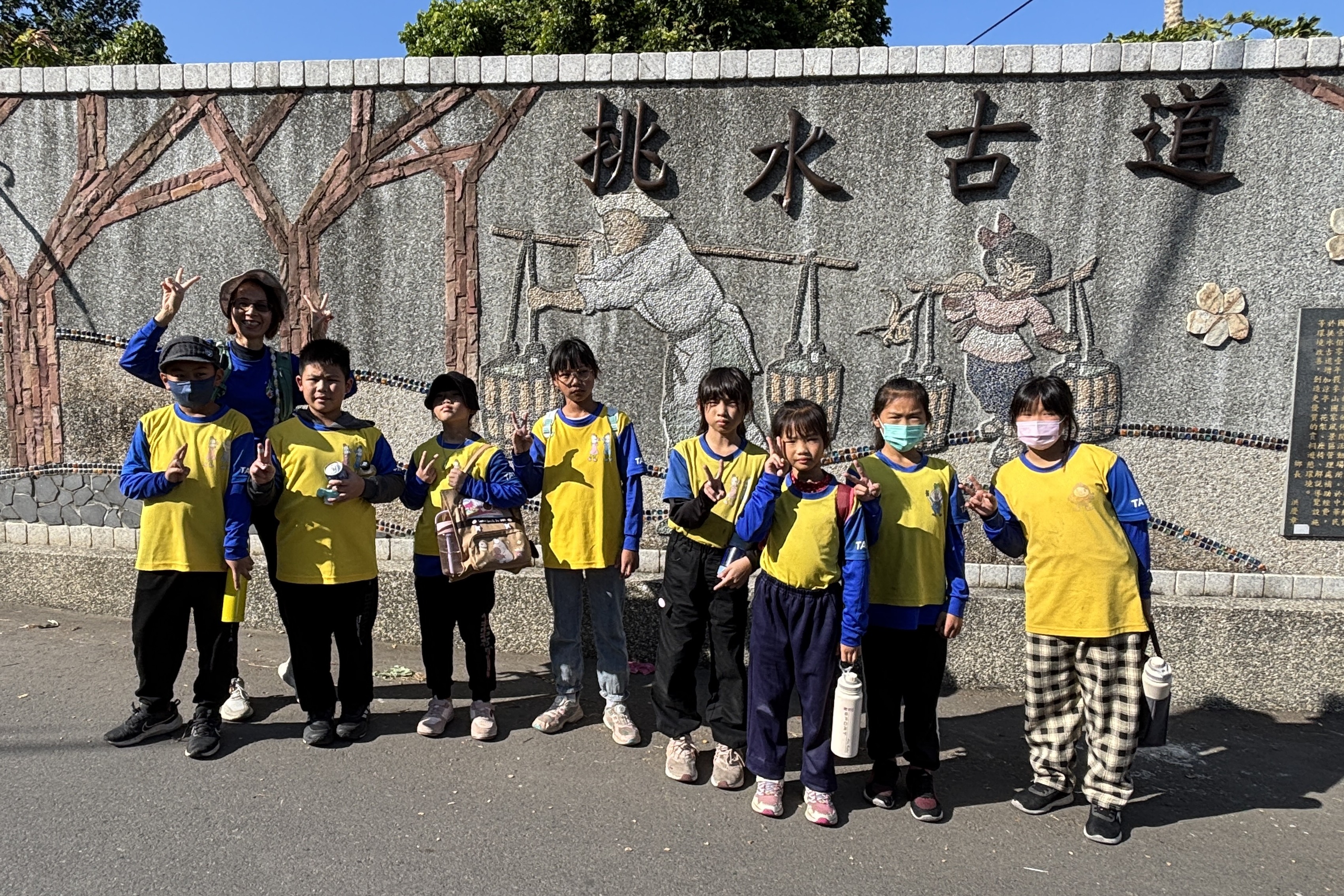
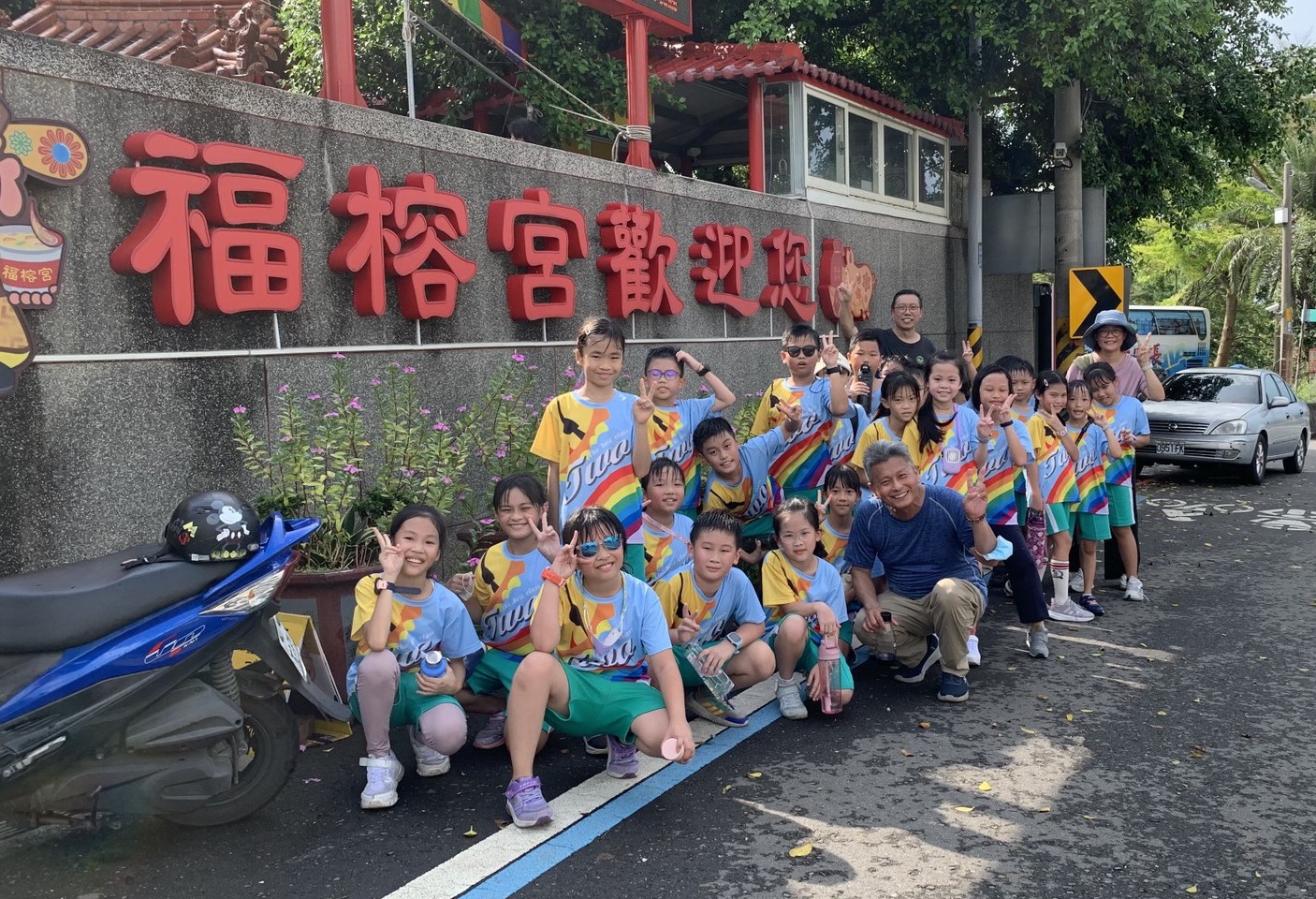
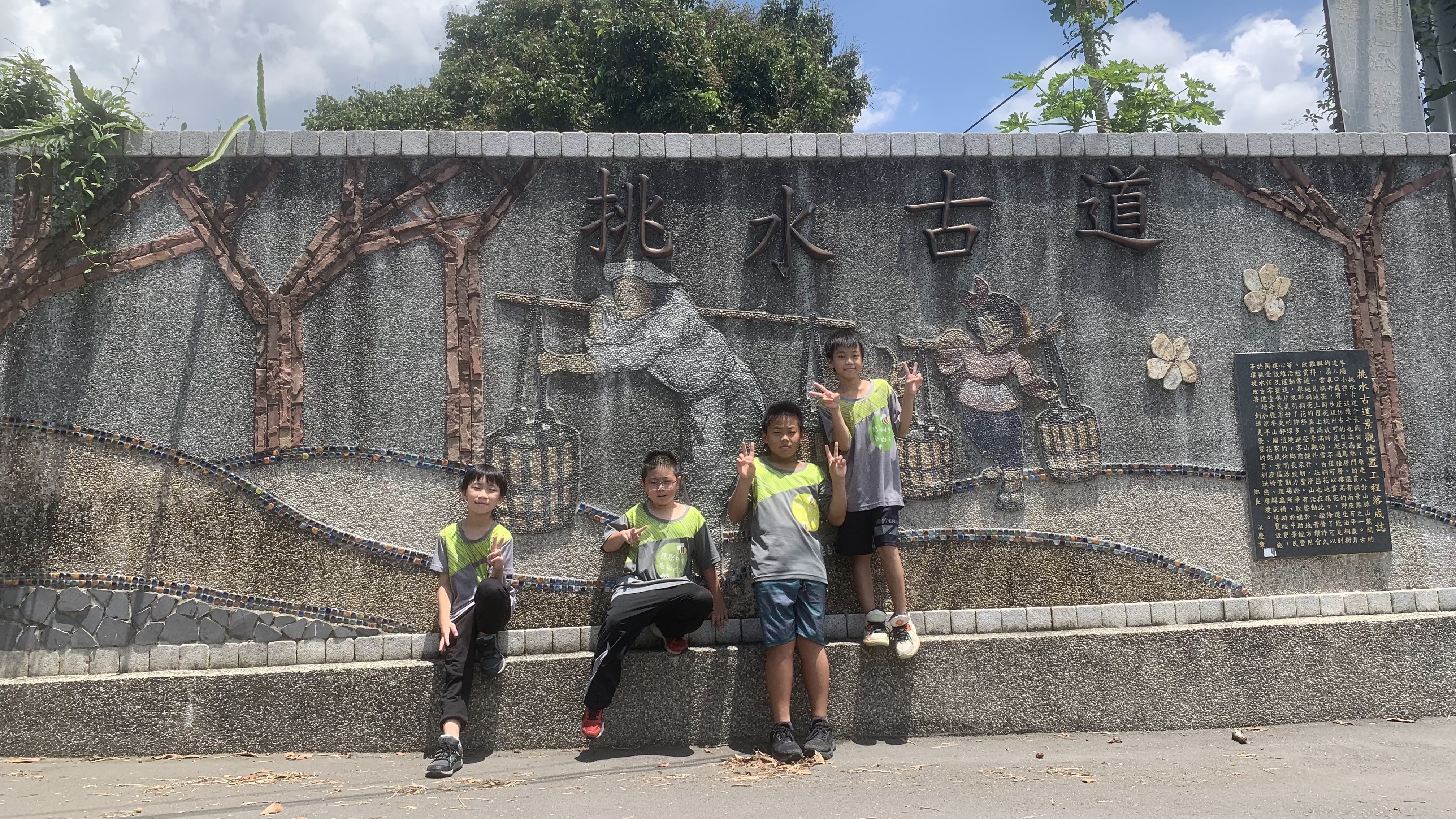
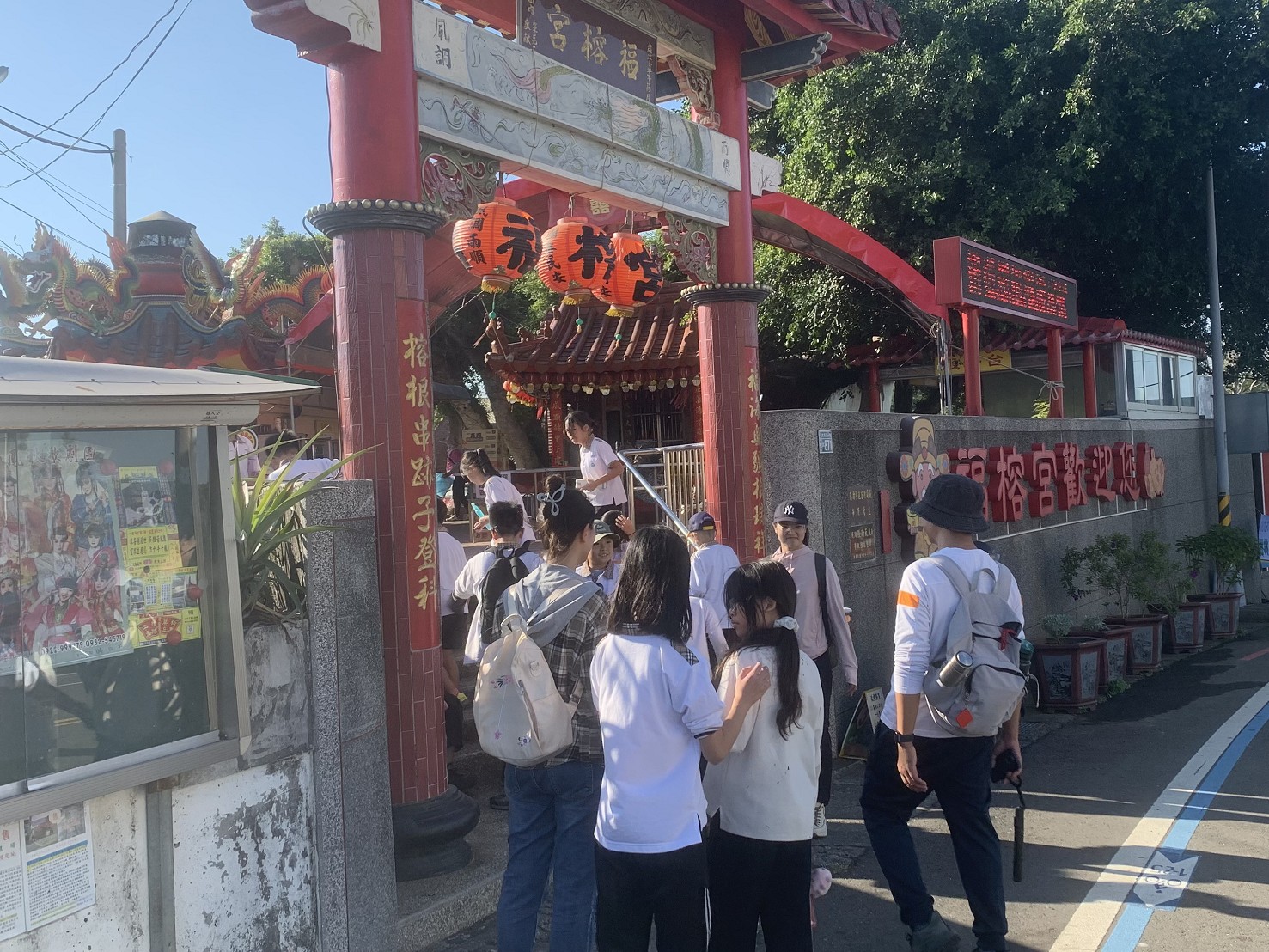
We gathered at the Tiaoshui Ancient Trail in Fenyuan on a sunny day to conduct field surveys. This iconic entrance wall marks the starting point of our journey to explore local history and natural beauty.
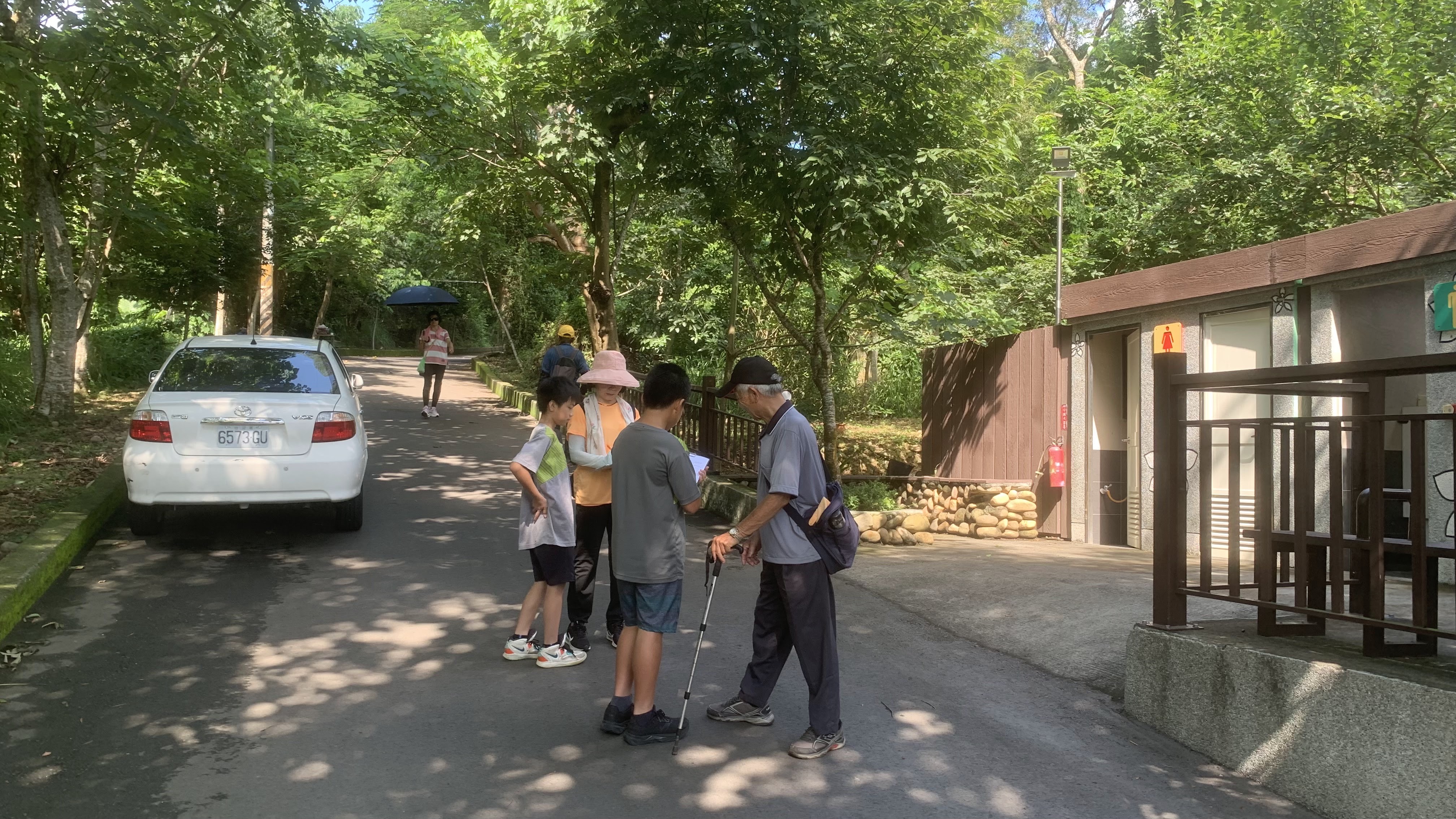
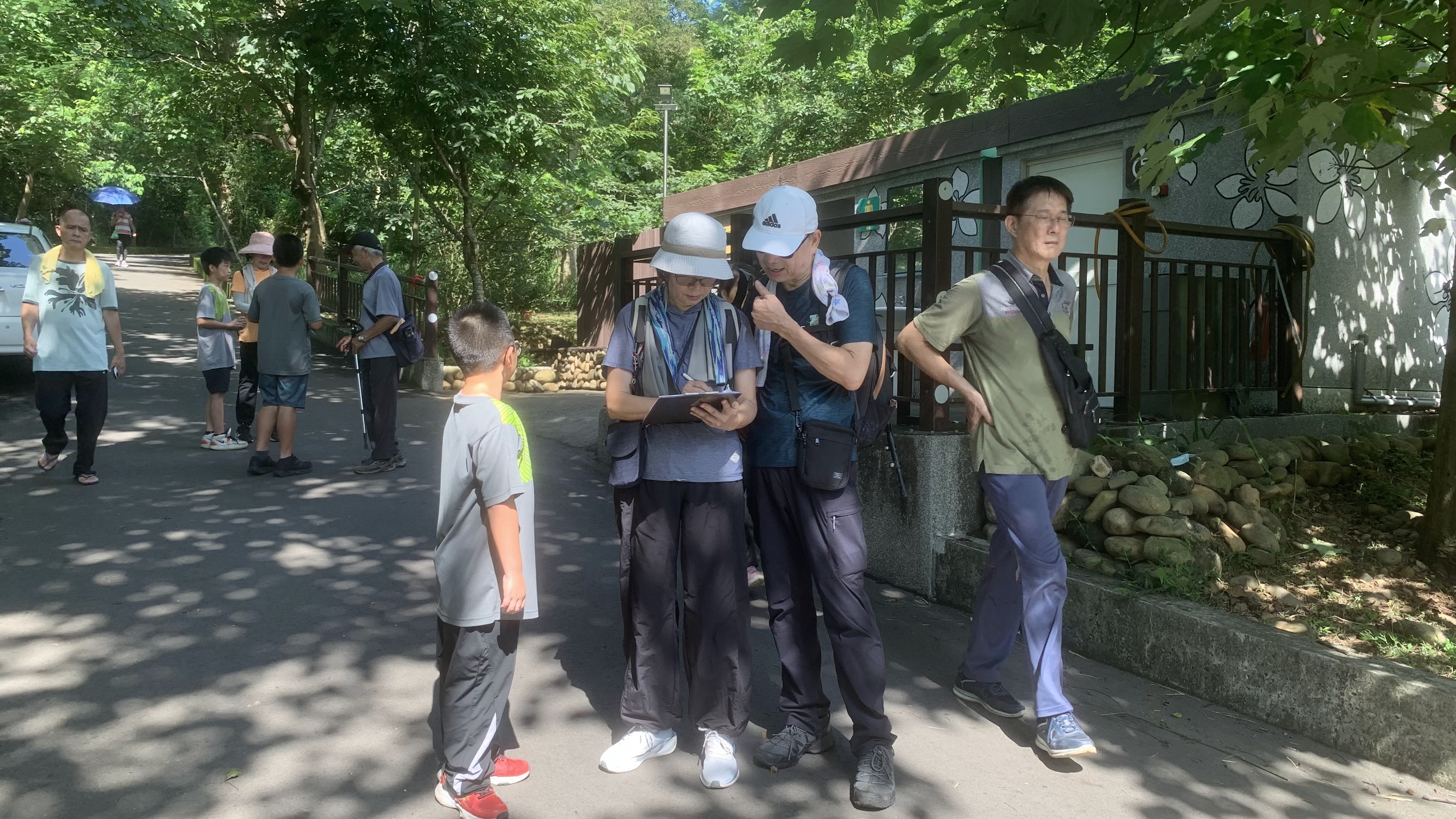
To gather authentic data, we conducted surveys with visitors of various ages along the Tiaoshui Ancient Trail. This fieldwork showcased our team's initiative and allowed us to gain deep insights into public perceptions of the trail's environment, history, and culture through direct interaction.
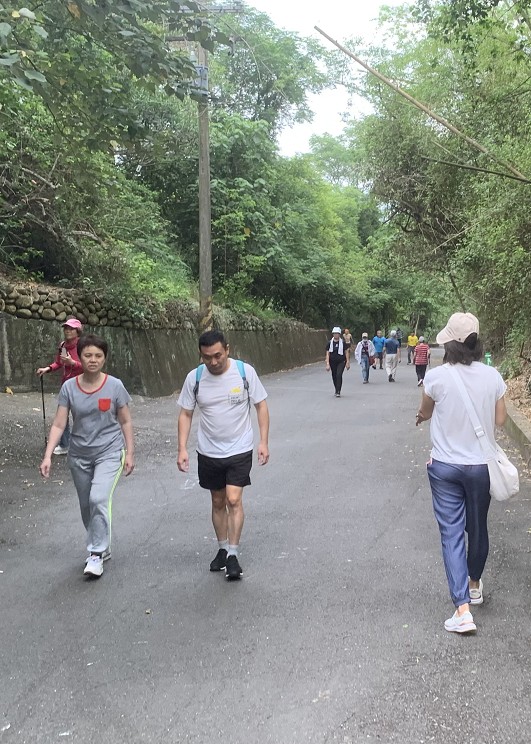
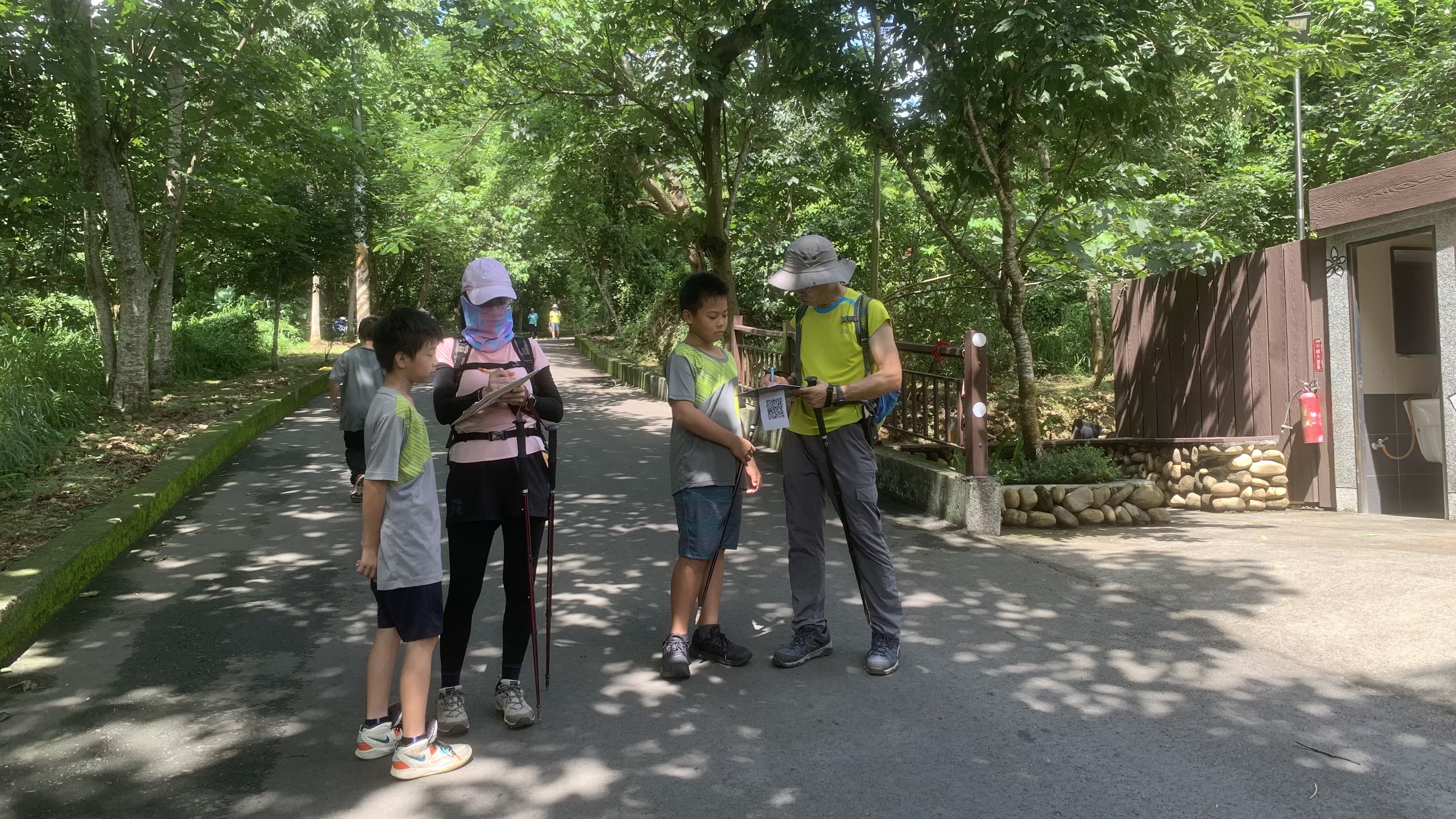
Team members spread out along the shaded trail, actively engaging with visitors to conduct our survey. Through this fieldwork, we not only practiced our communication skills but also personally felt the deep connection visitors have with this forest.
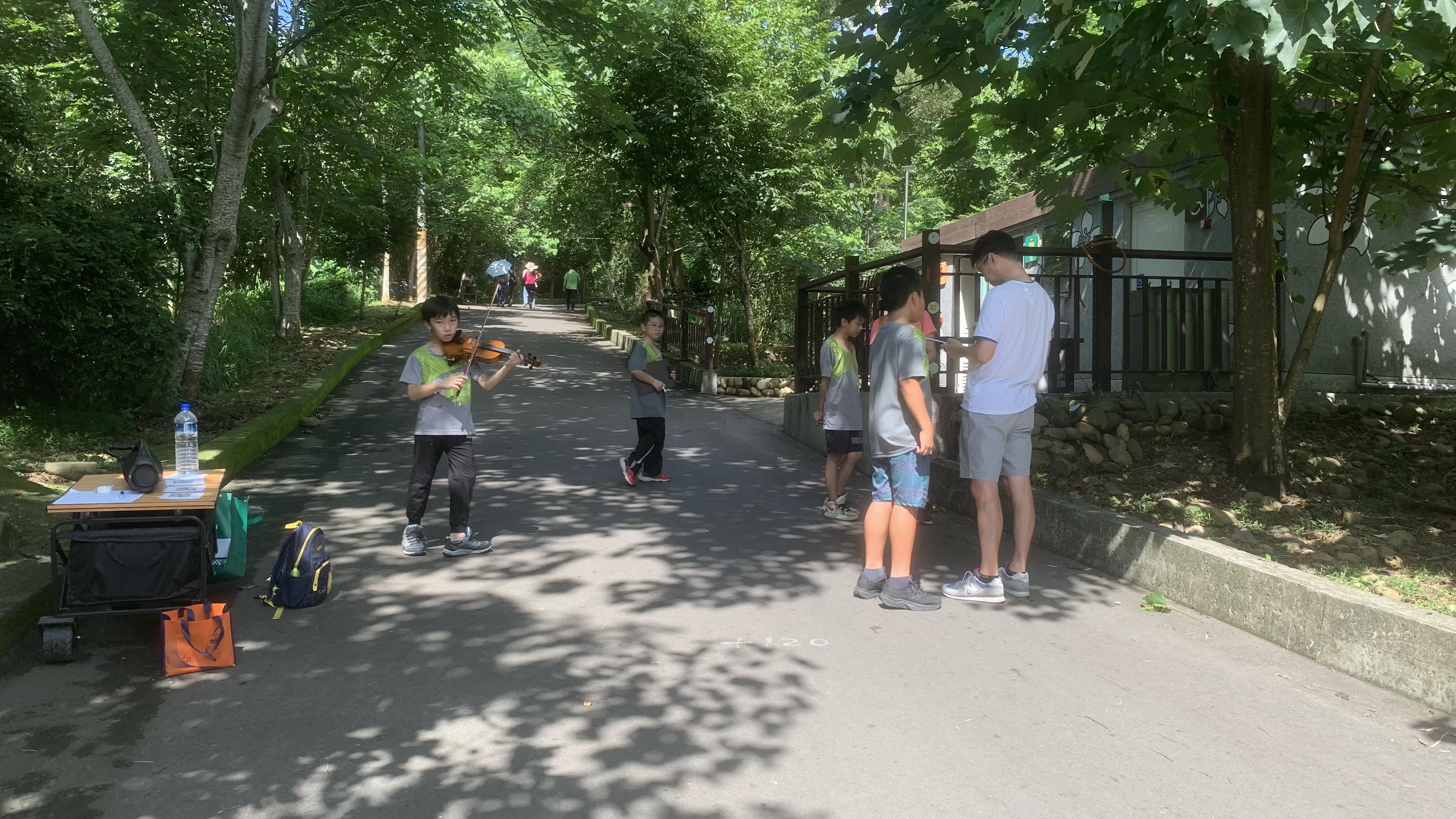
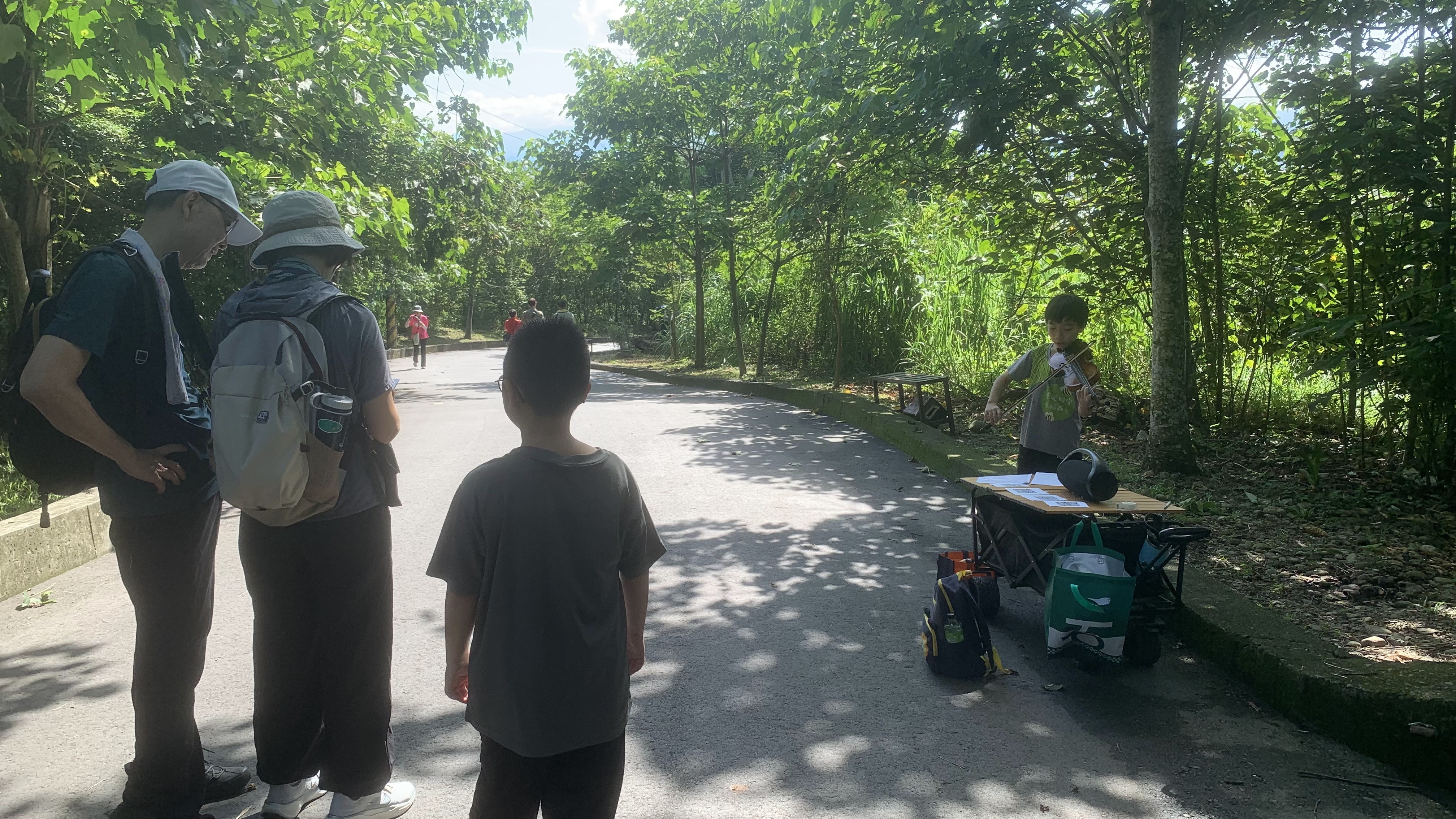
On the lush green trail, we played the violin to capture the attention of hikers with beautiful melodies. This creative approach helped break the ice, allowing us to engage with visitors through music and gain a deeper understanding of their genuine feelings and suggestions for this land.
On the lush, green ancient trail, we cordially invited hikers to help us complete our questionnaires. Through this direct interaction, we not only collected a vast amount of precious data but also gained a deeper understanding of the visitors' true feelings and suggestions for this land.
On the lush trail, we played the violin to capture the attention of hikers with beautiful melodies. This creative approach helped break the ice, allowing us to engage with visitors through music and gain a deeper understanding of their genuine feelings and suggestions for this land.
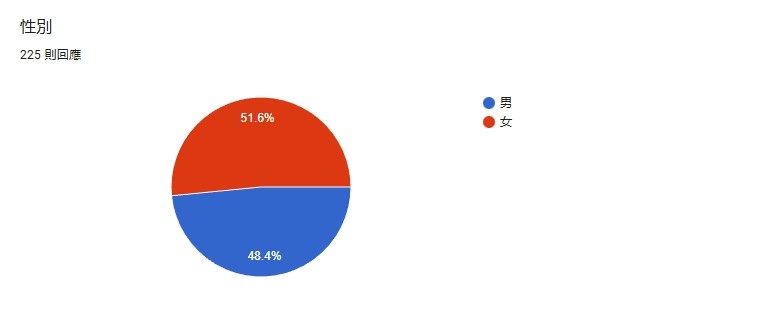
Based on the survey results for the Tiaoshui Ancient Trail, the gender distribution among the 225 respondents is remarkably balanced. Female respondents account for 51.6%, while males make up 48.4%. This data indicates that the trail, as a nature-based leisure destination, appeals equally to all genders. Such a balanced distribution suggests that the trail's difficulty level and scenic features—such as the "May Snow" Tung blossoms and ecological birdwatching—align well with general outdoor preferences. For future promotion, this all-gender participation profile allows us to design more inclusive guided activities, further enhancing the diversity of community tourism.
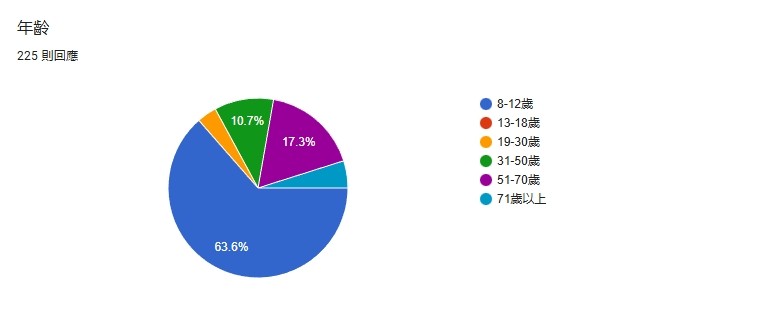
Out of 225 valid responses, the gender distribution is nearly equal, with females at 51.6% and males at 48.4%, showing the trail's broad appeal. Regarding age demographics, the 8-12 years old group represents the largest segment at 63.6%, highlighting the trail's role as a premier site for field trips and family education. This is followed by the 51-70 (17.3%) and 31-50 (10.7%) age groups. These findings suggest that the Tiaoshui Ancient Trail is not only a favorite for students but also a top choice for middle-aged and senior hikers. Ultimately, the data supports our view of the trail as a vital platform for intergenerational connection and local ecological education.
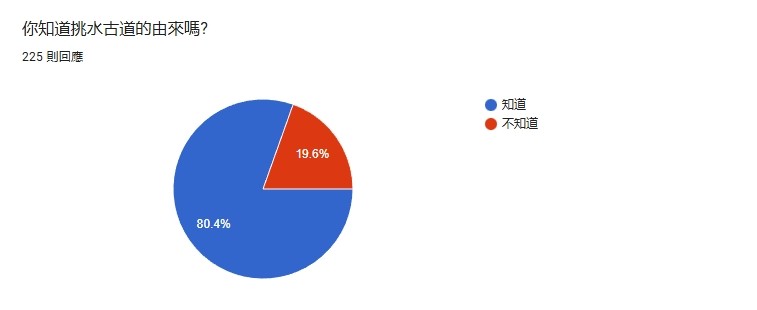
Based on the 225 valid responses, the data reveals the level of public awareness regarding the historical background of the Tiaoshui Ancient Trail. A significant 80.4% of respondents indicated that they "know" the origin of the trail, while only 19.6% were "unaware." These encouraging results suggest that the trail is recognized not only as a popular hiking destination but also for its profound historical significance among the majority of visitors. Such a high level of awareness reflects the success of local government and organizations in cultural preservation and education. For our project, these findings provide a solid foundation to further transform these well-known historical memories into digital content, sharing this cultural resilience with the world.
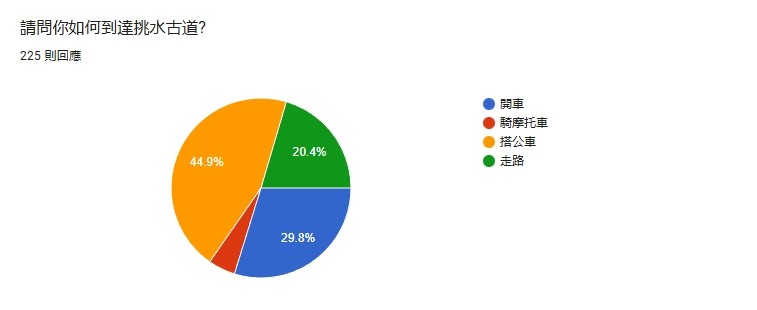
Based on 225 valid responses, the transportation methods used to reach the Tiaoshui Ancient Trail show a diverse distribution. The most common method is taking the bus, accounting for 44.9%, which indicates that the convenience of public transport is a key factor in attracting visitors. This is followed by driving (29.8%) and walking (20.4%), reflecting the trail's dual appeal as a destination for self-driving tourists and a daily exercise spot for local residents. Motorcycles account for the smallest portion. Overall, the data shows that the trail has excellent public transport accessibility and pedestrian-friendliness. These findings help us promote eco-friendly low-carbon tourism on our website and encourage visitors to utilize the convenient bus services.
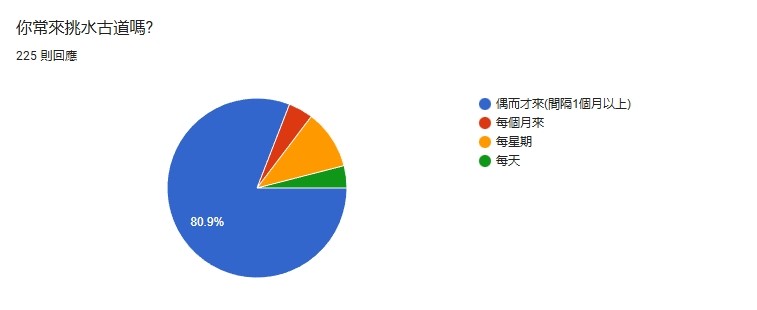
Among the 225 valid responses, the data regarding "visiting frequency" reveals a prominent trend. The vast majority of respondents (80.9%) are "occasional visitors" (with intervals of over a month), indicating that the Tiaoshui Ancient Trail primarily serves as a destination for specific seasons (such as the Tung blossom period) or holidays. Nevertheless, approximately 19% of respondents maintain a habit of visiting regularly, including those who come "every week" or "every day." This data reflects the trail's dual identity: it is both a seasonal attraction for tourists and an essential daily exercise space for local residents. Through our website, we aim to encourage "occasional visitors" to become frequent patrons who actively support long-term ecological and cultural preservation.
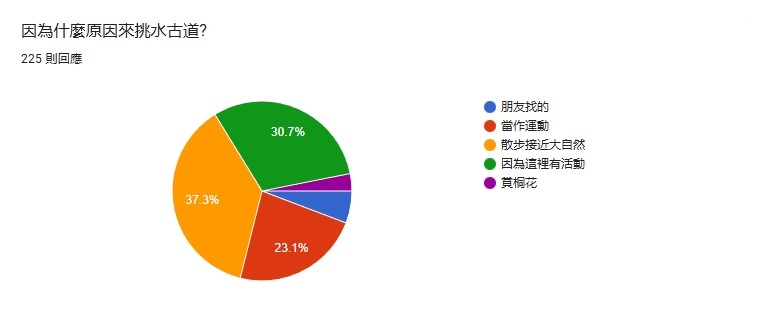
According to the 225 valid responses, the primary motivations for visiting the Tiaoshui Ancient Trail are "Walking to get closer to nature" (37.3%) and "Attending local activities" (30.7%). This indicates that the trail's natural environment and organized community events (such as eagle watching or guided tours) are the two main pillars of its appeal. Additionally, 23.1% of respondents visit for "exercise," confirming its steady role as a daily fitness spot for the community. Interestingly, "Invited by friends" and "Tung blossom viewing" account for smaller portions in this specific survey. Overall, the data suggests that the trail has successfully evolved into a multi-functional space for ecological education, leisure, and culture. Future efforts should continue integrating natural scenery with immersive activities to sustain its unique community charm.
Based on 225 valid responses, visitors' preferences for attractions along the Tiaoshui Ancient Trail are highly diverse. The "Longfeng Spring Wells" emerged as the top attraction with 31.6% of the votes, highlighting the immense charm of the trail's unique water-fetching culture. This is followed by "Plants" (23.1%) and "Tung Blossom Square" (15.1%), proving that the natural ecological landscape holds a significant place in visitors' hearts. Other features like the "Unmanned Store" and "Wooden Torii Gate" also garnered support. The data demonstrates that the trail's appeal lies in a harmonious blend of historical heritage (the wells) and natural beauty (flora).
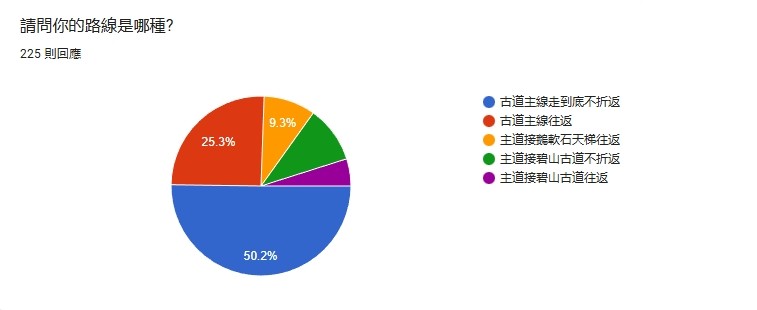
Among the 225 valid responses, the data clearly illustrates visitors' preferences for hiking routes on the Tiaoshui Ancient Trail. Half of the respondents (50.2%) choose to "walk the main trail to the end without turning back," suggesting a preference for a complete, point-to-point trail experience. Another 25.3% prefer "round-trip on the main trail," indicating that the primary path is well-designed and accessible. Furthermore, about 20% of visitors explore advanced options like the "Cobblestone Sky Stairs" or the "Bishan Trail" connections. These findings show that the trail caters to various fitness levels and adventurous spirits
Based on 225 valid responses (multiple choice), the survey highlights that the most appealing aspect of the Tiaoshui Ancient Trail is its comfortable environment. A significant 68.9% of respondents appreciate that the trail is "shaded and not too sunny," indicating that excellent canopy cover is a core strength. Other popular reasons include "Tung blossom viewing" (48.9%) and the trail being "flat and easy to walk" (35.1%), proving it offers both scenic beauty and accessible difficulty. Additionally, convenience and diverse activities were also recognized. Overall, the data shows the trail has established a strong reputation for being comfortable, beautiful, and accessible, which remains the primary draw for families and hikers alike.
Based on 225 valid responses (multiple choice), visitors have a high level of awareness regarding the various annual events held at the Tiaoshui Ancient Trail. The "Tung Blossom Festival" tops the list with an overwhelming 84.4% awareness rate, confirming its status as the trail's signature event. This is followed by the "Tiaoshui Ancient Trail Grand Hike" at 49.3%, indicating strong public interest in sports and leisure activities. In contrast, awareness for "Eagle Watching in Bagua" and the "Butterfly Dance Carnival" is relatively lower, at 20.9% and 19.6%, respectively. These findings suggest that future ecological conservation efforts could be cross-promoted with the popular Tung Blossom Festival to enhance participation in diverse events, showcasing the trail's natural charm beyond just the flowering season.
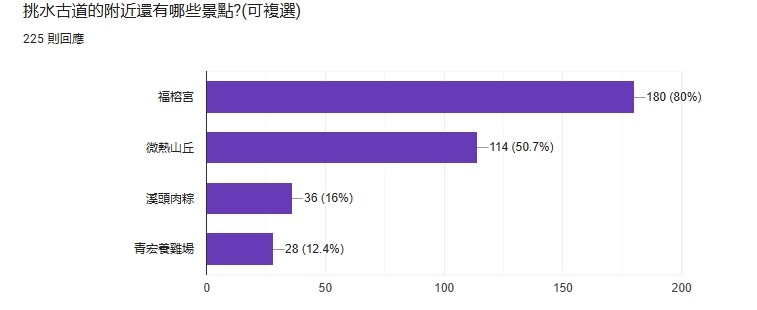
Based on 225 valid responses (multiple choice), visitors' awareness of attractions near the Tiaoshui Ancient Trail is highly concentrated. Furong Temple ranks first with a staggering 80% awareness rate, indicating that this temple, famous for its free instant noodles and proximity to the trail, has become an essential landmark for visitors. This is followed by the renowned pineapple cake brand SunnyHills (50.7%), reflecting a strong synergy between local famous brands and trail tourism. In contrast, awareness of Xitou Zongzi and Qinghong Chicken Farm is lower. This data suggests that the trail has successfully integrated with iconic nearby sites to form a mature tourism route.
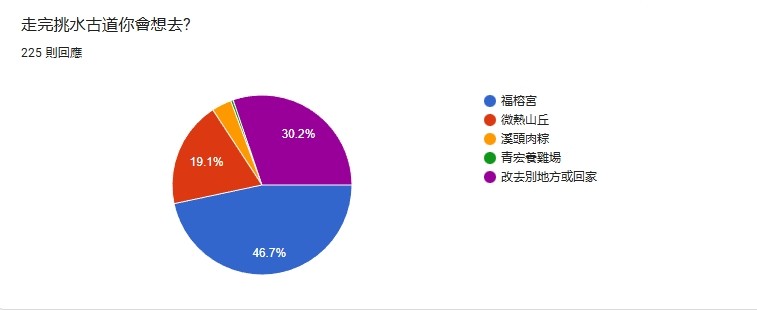
Based on 225 valid responses, visitors' choices after completing the Tiaoshui Ancient Trail show a high degree of local concentration. Nearly half of the respondents (46.7%) choose to visit Furong Temple, further confirming that the combination of "trail hiking and eating instant noodles at the temple" has become the most iconic experience in the area. Meanwhile, 30.2% of visitors choose to "go elsewhere or go home," indicating the trail serves as a standalone destination for some. Additionally, the famous SunnyHills attracts 19.1% of hikers, showcasing the potential of cross-industry tourism alliances. The data suggests that strengthening the link between the trail, Furong Temple, and local businesses could create a more comprehensive half-day or full-day eco-cultural itinerary.
This project conducted a specific survey for visiting students from six different schools. Analysis shows that the fresh air and comfortable forest environment of the Tiaoshui Trail left the deepest impression. Most visitors were amazed by the cool spring water at "Long-Feng Spring" and enjoyed natural surprises like finding fallen starfruits. These sensory experiences significantly boosted the visiting students' interest in ecological guidance, transforming a traditional hike into a vivid outdoor classroom for nature exploration.
Regarding learning outcomes, many visiting students mentioned their initial fear of "rock climbing" but gained a great sense of achievement after bravely trying it on the Tiaoshui Trail. Additionally, the friendly atmosphere, such as warmly greeting strangers along the path, left a lasting impression. This indicates that the trail provides not only physical exercise but also a vital venue for building courage and social etiquette, allowing visitors from different schools to gain significant personal growth despite the physical exertion.
In this project, we not only explored the Tiaoshui Trail in depth but also utilized our computer classes to learn how to integrate technology into our final presentation. Under our teacher's guidance, we used video editing techniques to transform 151 real visitor feedbacks from our surveys into vivid Chinese and English "danmaku" (bullet comment) effects, overlaid onto our guided tour video.
This interactive design allows the audience to see real-time reactions and feelings from visiting students—such as their thoughts on "Long-Feng Spring"—while watching us explain the local landscape, raptors, and butterflies. Through this technological experiment, we didn't just make the video more interactive; we successfully turned cold data into warm, relatable stories, helping more people experience the unique charm of the Tiaoshui Trail.
Promotional Activities
To showcase the natural splendor and precious ecosystem of the Tiaoshui Ancient Trail, we have actively engaged in a series of promotional initiatives organized by the Changhua County Government and the Fenyun Township Office. As youthful ambassadors of the trail, we have not only mastered the knowledge of its rich biodiversity but have also taken on the vital role of educational interpreters, striving to inspire public passion for nature conservation.
During the "Butterfly Dance Carnival," we served as co-organizers, guiding participants through butterfly habitats to experience their beauty firsthand. For the "Eagles Soar over Bagua" event, we translated professional ecological data into accessible stories, introducing visitors to the spectacular migration of Gray-faced Buzzards.
Most significantly, we embraced the spirit of service-learning by serving as volunteer guides, personally leading visiting school groups along the trail. Through our engaging narration, students learn ecological concepts while walking, allowing them to truly feel the allure of nature. For us, the Tiaoshui Ancient Trail is more than just a path for exercise; it is a stage where we practice ecological education. Through our dedicated guidance and promotion, we hope to inspire more people to appreciate and cherish this invaluable natural resource.
Butterfly Dance Carnival
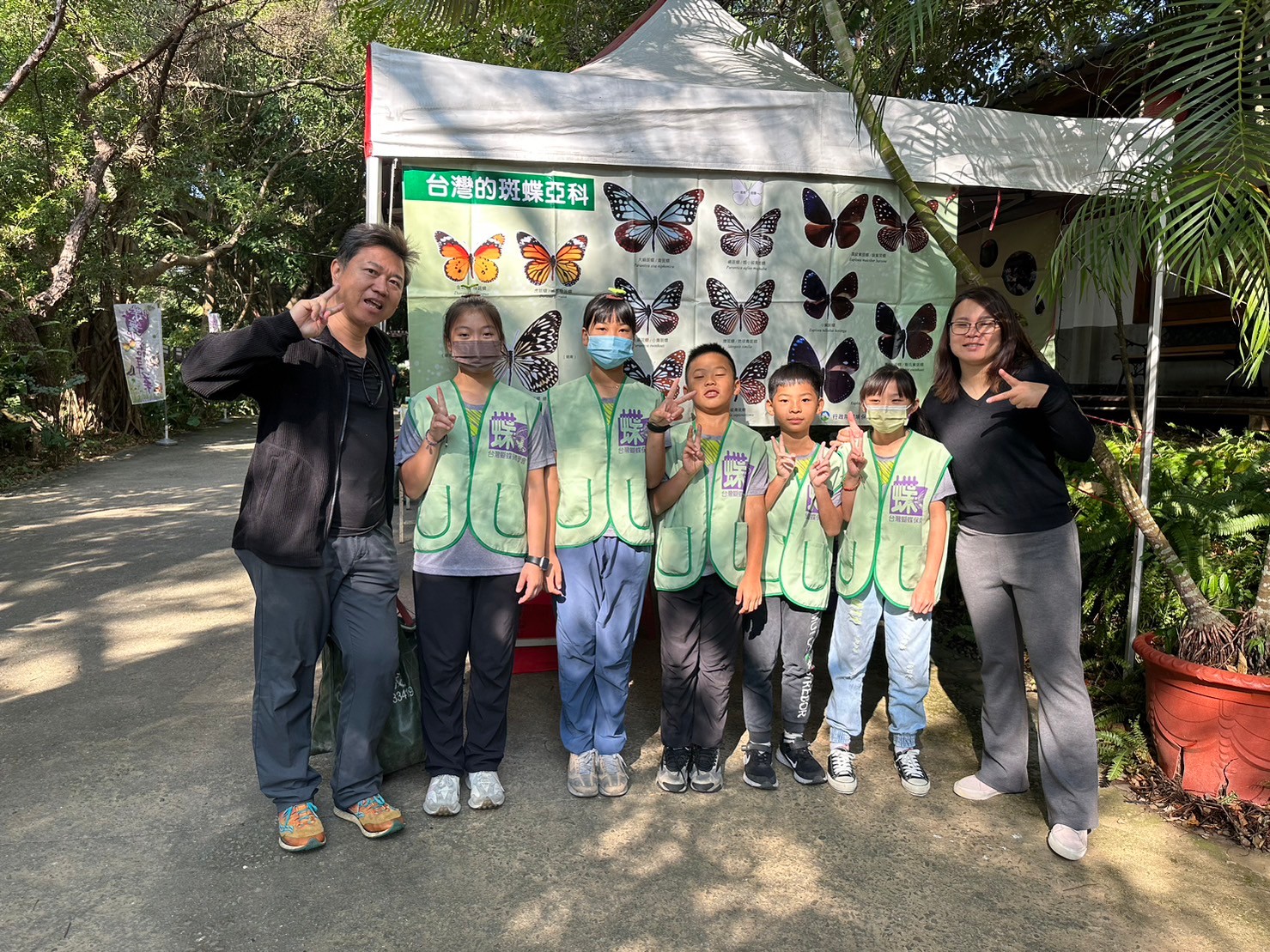
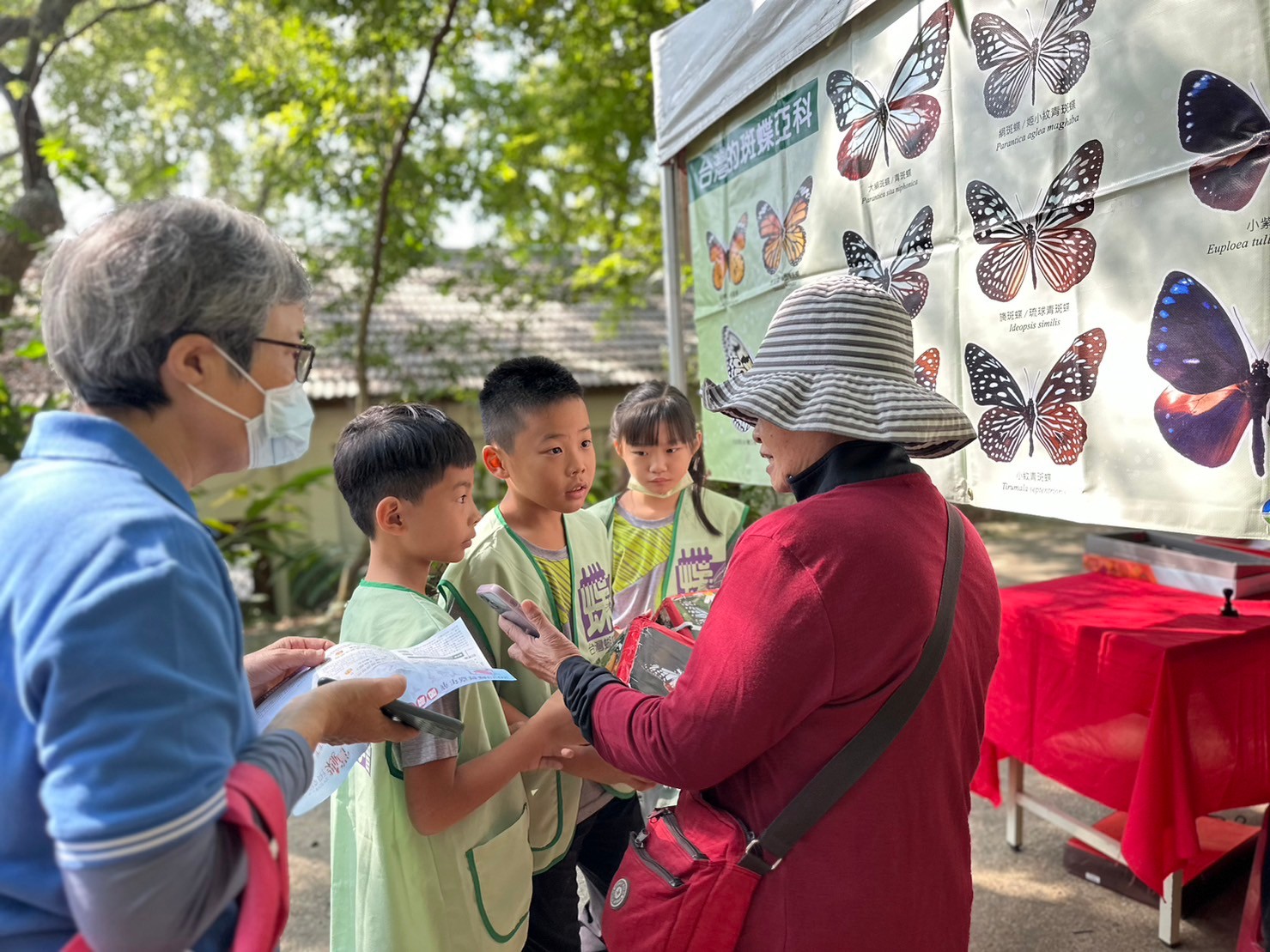
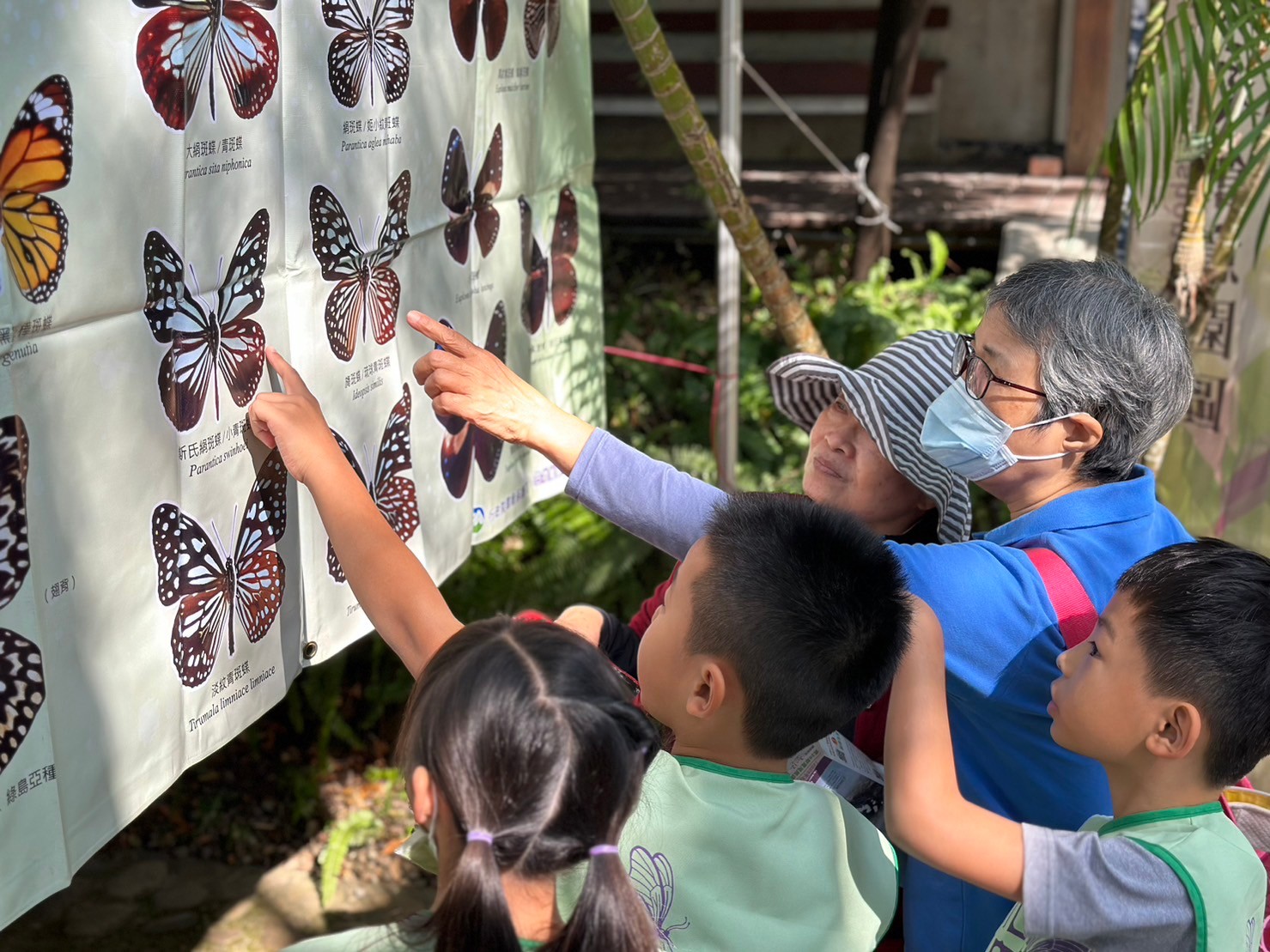
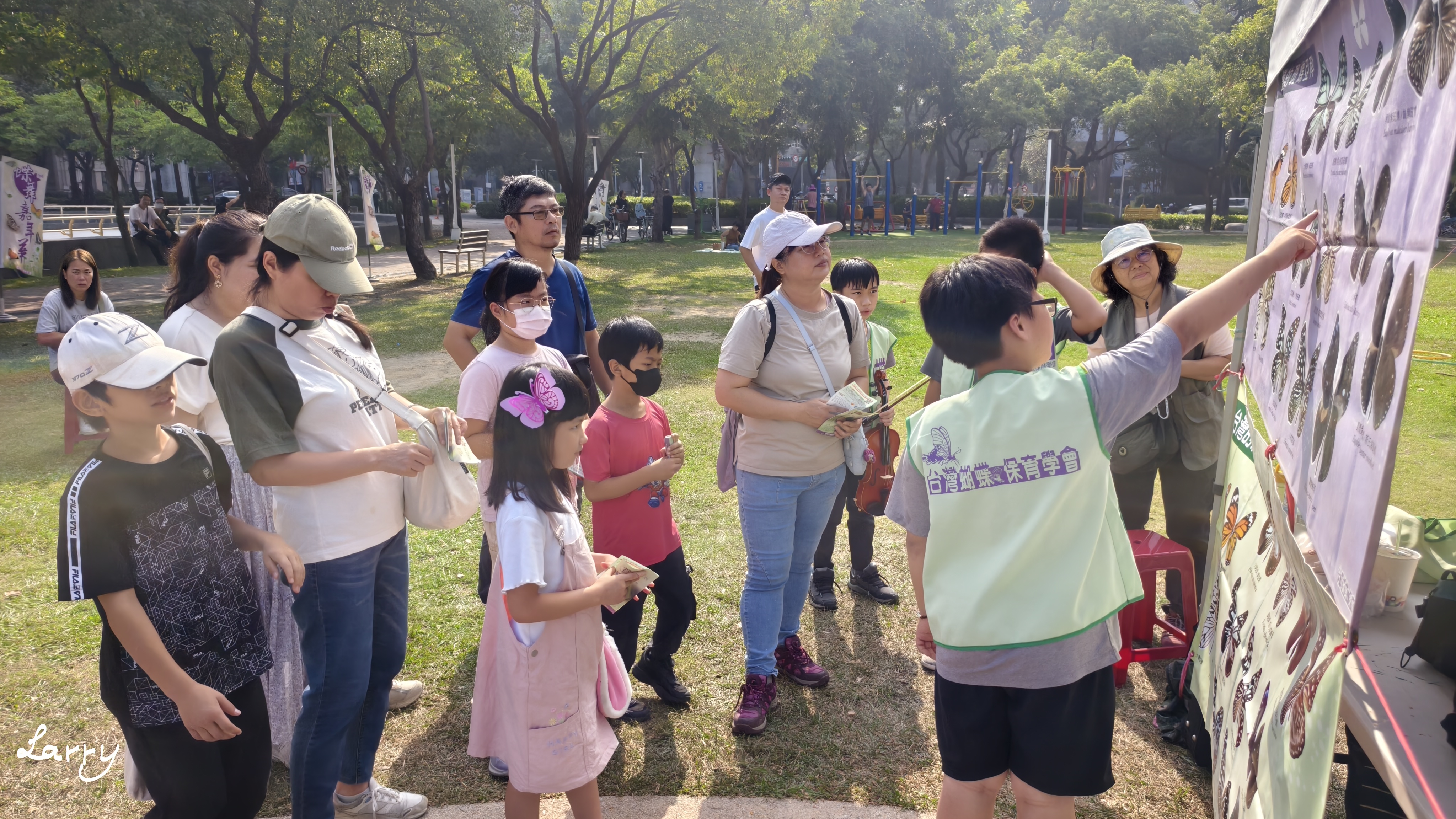
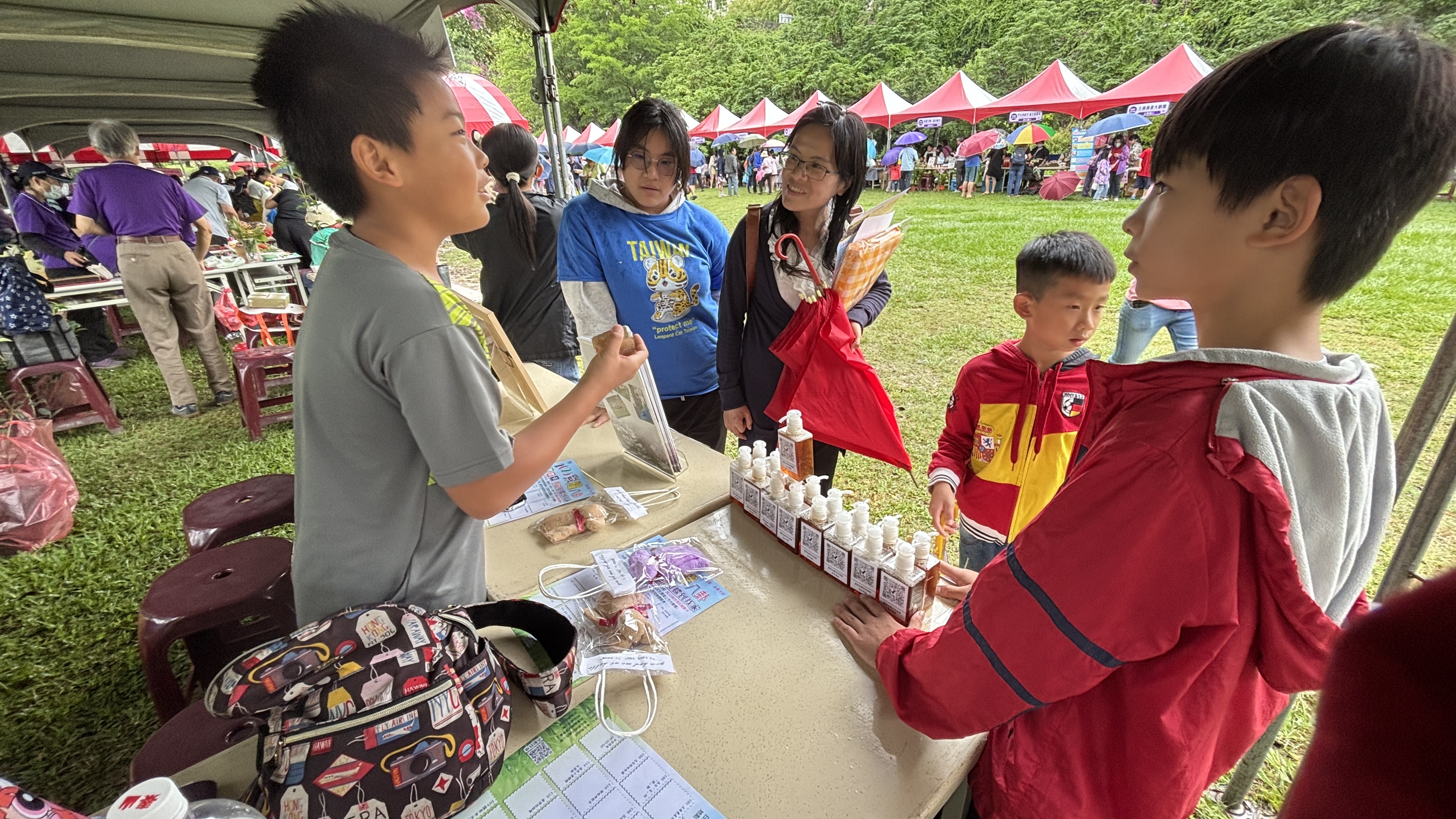
Every year, the Forestry and Nature Conservation Agency (FANCA) and the Changhua County Government collaborate to host the "Butterfly Dance Carnival." During this event, our student team specifically set up a dedicated booth, serving as eco-interpreters to promote the mission of "Endless Fluttering: Butterflies and Biodiversity."
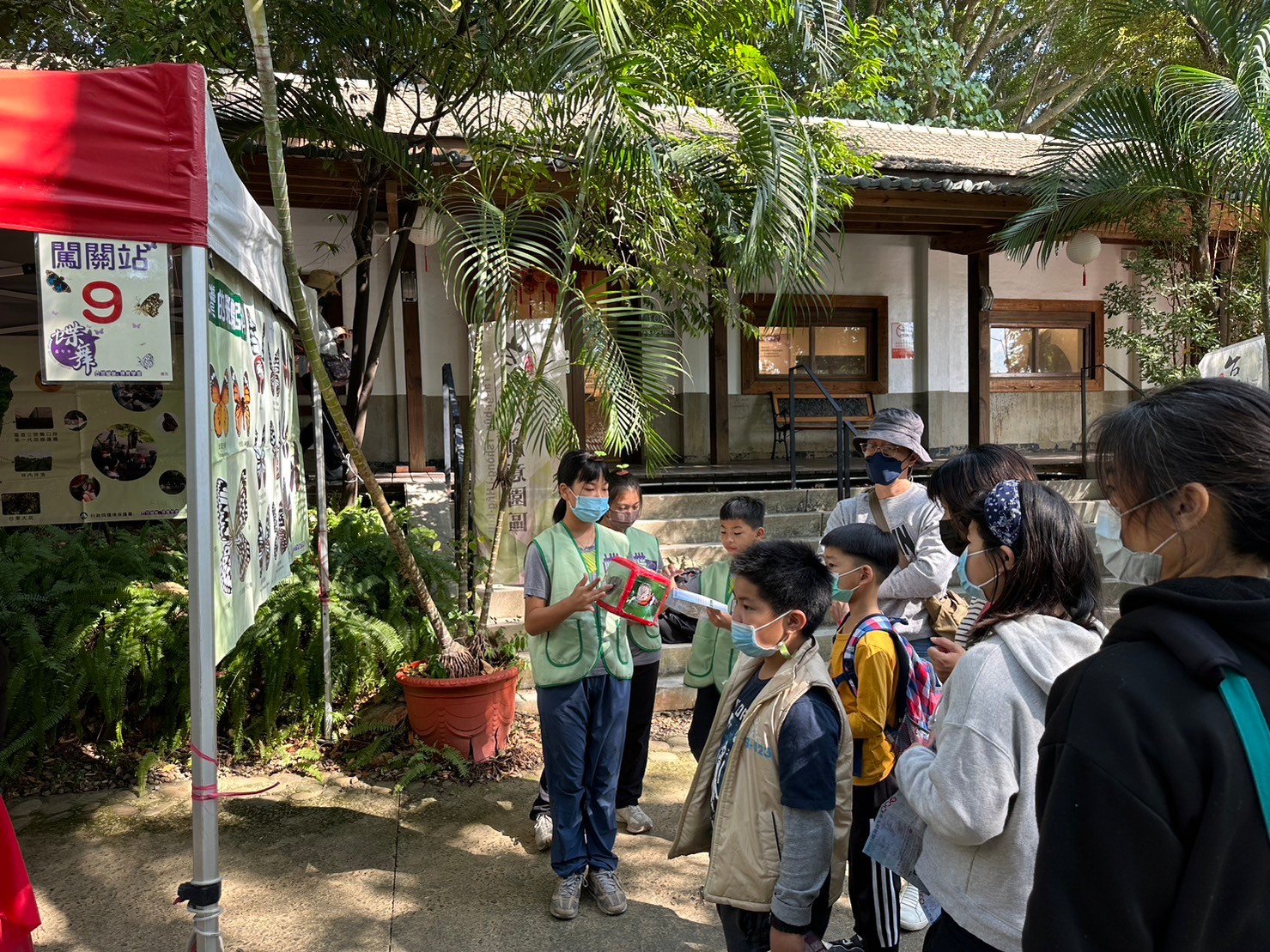
On the event day, we took the initiative to introduce various butterfly species found along the Tiaoshui Ancient Trail to visitors, parents, and children. We provided detailed explanations of their ecological habits, helping the public understand the deep connection between these colorful insects and their environment. In addition to our booth presentations, the carnival featured interactive games and DIY workshops.
Through our student-led, accessible explanations, we aimed to inspire participants to care for the natural world while enjoying their hike. For us, this experience was more than just volunteering—it was about building a bridge between the community and nature. We hope our passion leads more people to cherish and protect Taiwan’s precious ecological home.
Running our booth to introduce the butterflies of Tiaoshui Trail.
Introducing various butterfly species to visitors.
Introducing various butterfly species to visitors.
Introducing various butterfly species to visitors.
Introducing various butterfly species to visitors.
Introducing various butterfly species to visitors.
Getting to Know the Gray-faced Buzzard
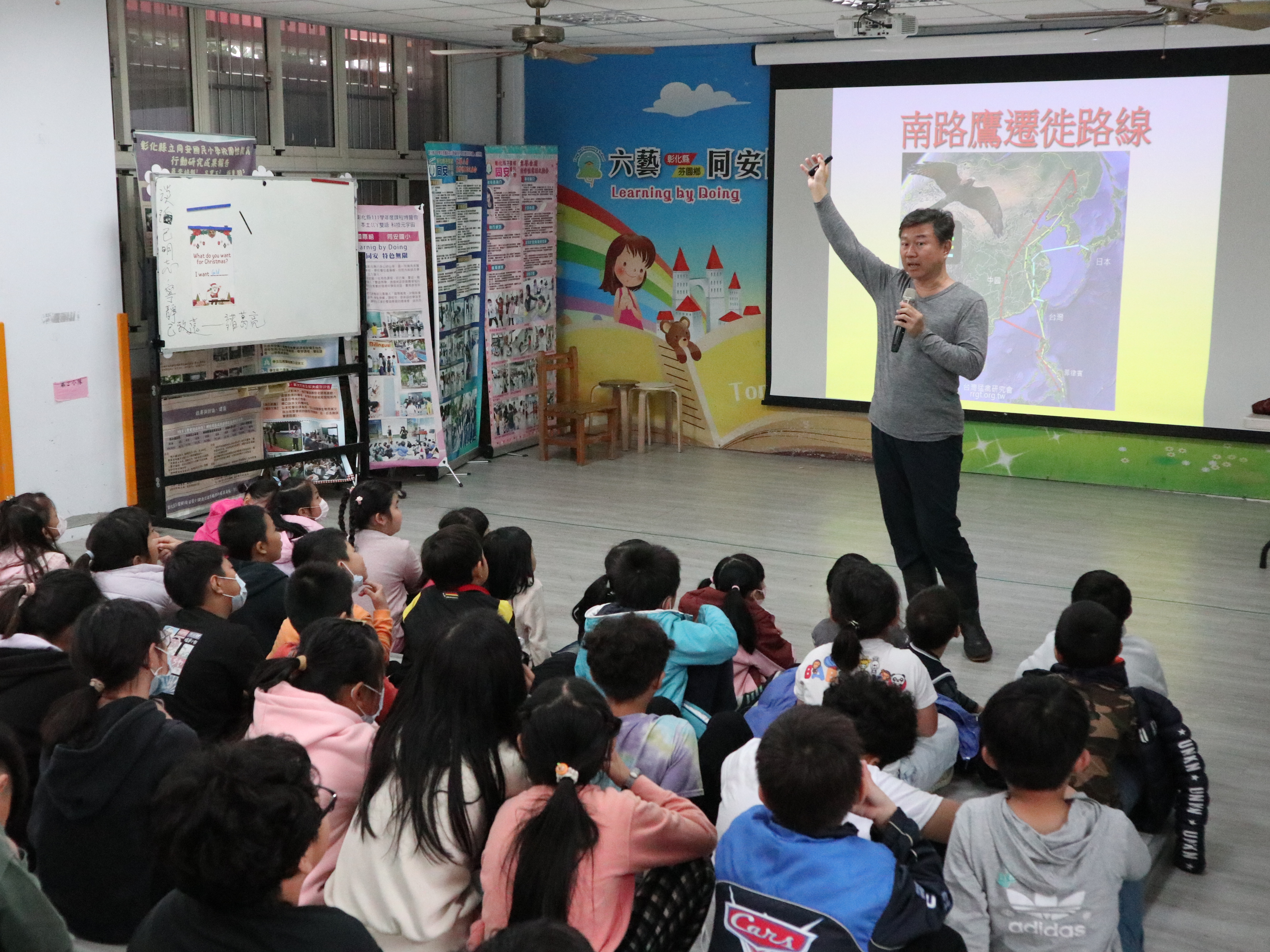
The Gray-faced Buzzard, known locally as the "Qingming Bird" or "National Day Bird," is the star of the Tiaoshui Ancient Trail during migration seasons. To promote this natural wonder, our student team takes the lead as tour guides, helping the public observe and understand these majestic raptors at the eagle-watching platform and during hiking events.
Before each tour, we undergo rigorous training with our instructors to master the characteristics, flight patterns, and ecological roles of these birds. On the day of the event, we personally lead visitors on hikes along the trail, sharing insights into the buzzards' migratory behavior. The most rewarding moment for us is seeing the look of awe on people's faces as they look up and spot a soaring buzzard under our guidance. Through our student-led narration, this journey becomes more than just a hike—it is an educational mission to deepen public understanding of biodiversity. This sense of fulfillment in sharing knowledge is what drives our passion for ecological conservation.
Our instructor explaining the ecology of Gray-faced Buzzards.
Our instructor explaining the ecology of Gray-faced Buzzards.
Leading visiting students on a Gray-faced Buzzard watching tour.
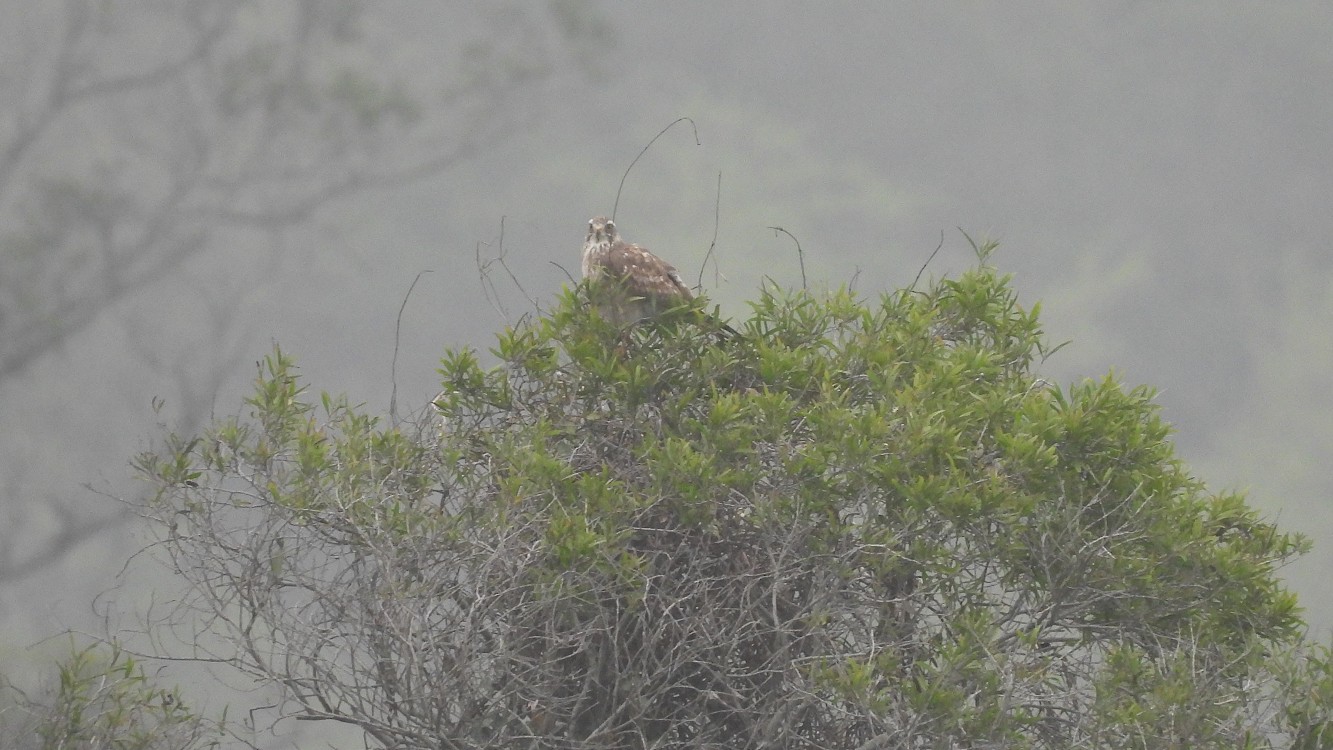
A Gray-faced Buzzard perching and resting on a treetop.
Serving as Tour Guides: Exploring the Tiaoshui Ancient Trail
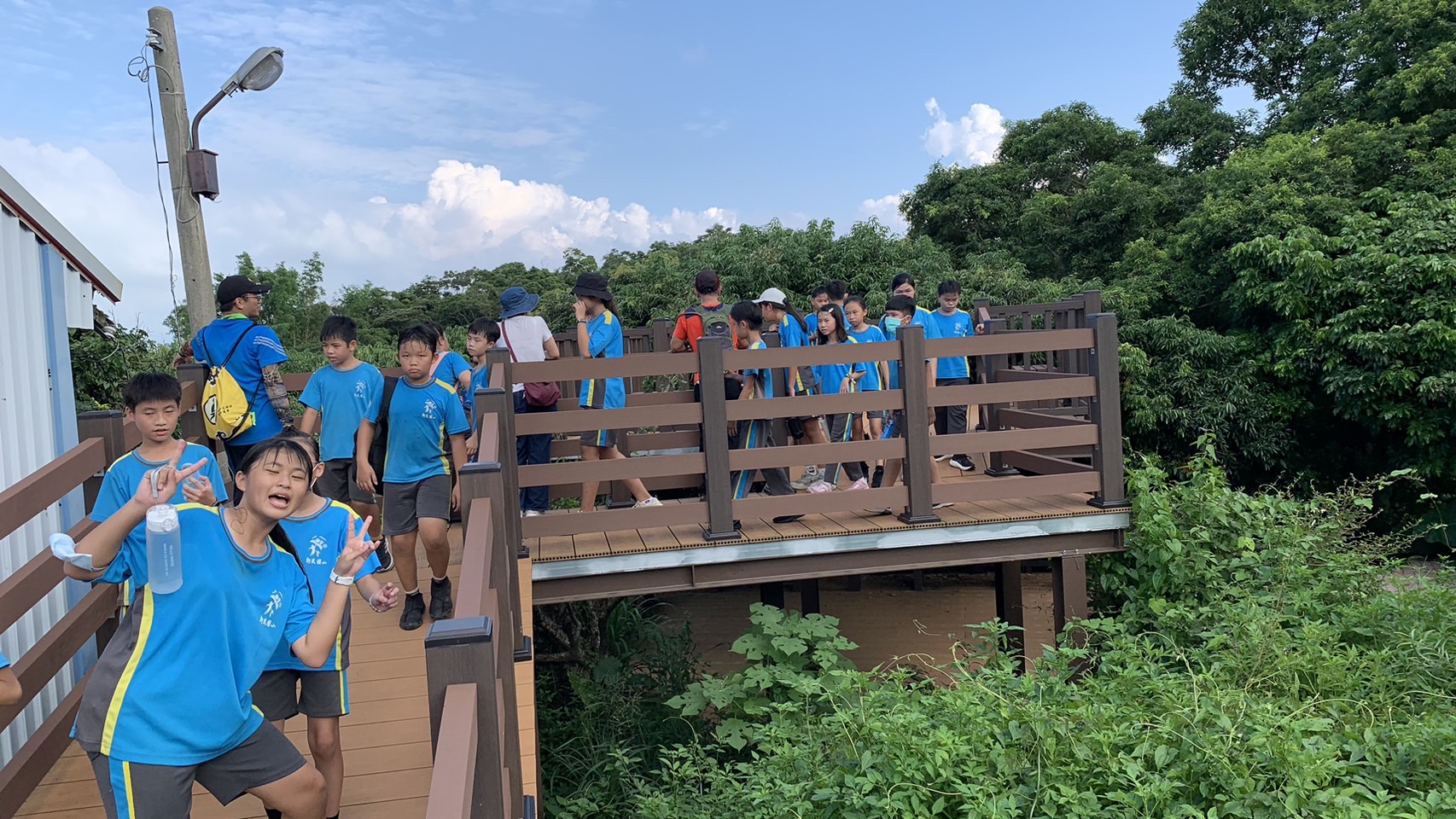
Our school offers a unique curriculum featuring courses such as coffee brewing, rock climbing, and wilderness exploration. These rich, hands-on programs have made us a popular destination for school visits and study tours. Nearly every month, we welcome teachers and students from various regions for exchange and learning. To provide our visitors with a truly memorable experience, we specially designed a "Tiaoshui Ancient Trail Journey," where we serve as guides to personally lead them through this path steeped in nature and history.
Starting from the trail entrance, we hike along while introducing the local topography, historical ruins, and the flora and fauna we observe. Sometimes it’s butterflies dancing through the trees; other times, it’s tiny insects hidden among the leaves. The constant soundtrack of birdsong makes everyone feel as though they have stepped into a "natural classroom." When we reach the famous Longfeng Spring, visiting students always excitedly pump the water to wash their faces, using the cool spring water to rinse away their sweat—a refreshing and joyful moment for everyone.
The entire journey provides a great workout and deepens everyone's understanding and interest in nature. By the end of the hike, everyone is usually famished. At that moment, enjoying a steaming bowl of instant noodles at Furong Temple becomes the simplest yet most satisfying delicacy, bringing the Tiaoshui Ancient Trail journey to a perfect conclusion.
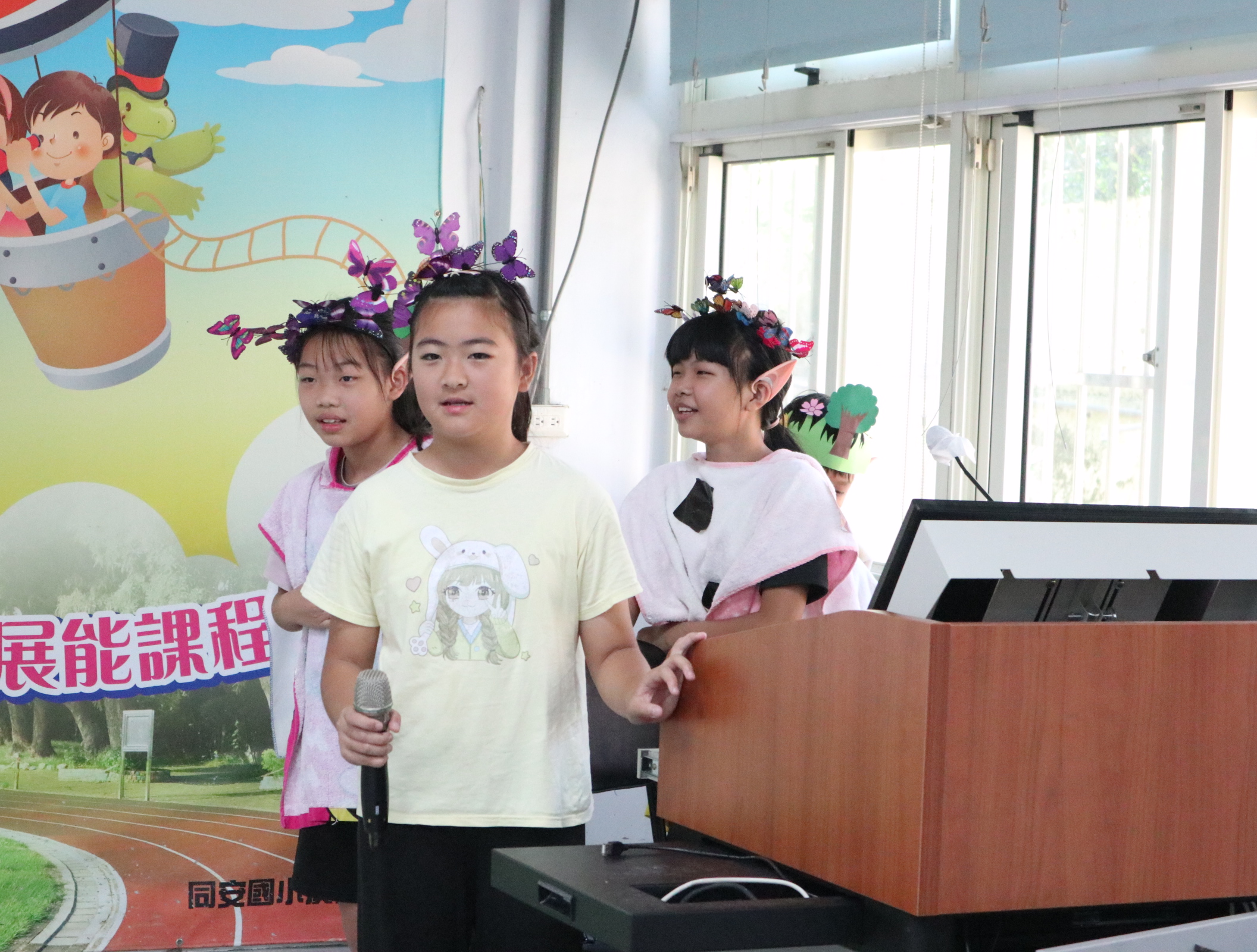
Presenting the Tiaoshui Ancient Trail at the School Assembly.
Presenting the Tiaoshui Ancient Trail at the School Assembly.
Serving as guides to lead tours through the Tiaoshui Ancient Trail. Ludong Elementary School, Changhua County
Walking along a path carpeted with fallen Tung blossoms. Qiaotou Elementary School, Changhua County
Cooling off at the refreshing Longfeng Spring. Zhonghe Elementary School, Changhua County
Follow the ancestral water-carrying path as you hike uphill. Yuandou Junior High and Elementary School, Changhua County
Finally, you will arrive at Furong Temple. Yongfeng Elementary School, Changhua County
Enjoying instant noodles at Furong Temple. Yuanlin Elementary School, Changhua County
SDGs
The Tiaoshui Ancient Trail is more than just a recreational hiking path; it is a premier venue for practicing the United Nations' Sustainable Development Goals (SDGs). By preserving the rich biodiversity along the trail, we are dedicated to protecting the vital habitats of the Purple Crow Butterfly and the Gray-faced Buzzard.
Simultaneously, through our volunteer guiding programs and field-based curriculum, we transform nature and culture into a "mobile classroom." Furthermore, by promoting the Tung Blossom Festival and local delicacies, we strengthen the community's cultural heritage and economic resilience, directly echoing Goal 11: Sustainable Cities and Communities. Stepping onto the Tiaoshui Ancient Trail is not only about connecting with nature but also about taking concrete action for the sustainable future of our environment and society.
SDG 3: Good Health and Well-being
The Tiaoshui Ancient Trail has evolved into an outdoor path that blends hiking, recreation, and nature experiences. It provides a sanctuary for people to escape the urban bustle and connect with nature, encouraging physical activity that promotes health and stress reduction. With moderate slopes, well-maintained steps, and clear signage, the trail is accessible to all age groups—particularly families and seniors—fostering intergenerational inclusion and family interaction.
Rest areas and observation platforms along the trail allow visitors to slow down their pace and achieve a balance of body and mind. These facilities and designs directly address SDG 3: Good Health and Well-being for All. In an era where mental health concerns and chronic disease risks are rising, the accessibility of green spaces has become a critical factor in health promotion. By combining natural beauty, historical significance, and safe infrastructure, the Tiaoshui Ancient Trail offers both locals and tourists an accessible "natural health sanctuary," embodying the practical path toward a "healthy lifestyle" and a "healthy city."
SDG 6: Clean Water and Sanitation
The historical origins of the Tiaoshui Ancient Trail are deeply intertwined with the "Longfeng Springs." These two spring wells have long provided clean water for local residents and were essential assets for the community's survival in earlier times. The stone-stepped path, originally paved by residents for the purpose of carrying water, formed the prototype of the trail we see today. This history not only reflects the past community's reliance on water resources but also demonstrates how humans adapt to local conditions, respect nature, and manage water use.
This aligns with the core philosophy of SDG 6: "Ensure availability and sustainable management of water and sanitation for all." As natural springs, the Longfeng Springs maintain a stable and crystal-clear flow year-round, echoing the concept of a sustainable water source. Today, through guided tours and educational programs, this history has been transformed into a vital component of environmental education. It helps more people understand the preciousness of water and the importance of its sustainable use. By preserving this landscape and its stories, we promote public awareness of the value of clean water, contributing to a modern consensus on water conservation and management.
SDG 11: Sustainable Cities and Communities
The transformation of the Tiaoshui Ancient Trail is a microcosm of local sustainable development. Originally built as a functional path for the convenience of carrying water, it has evolved—through improvements in road infrastructure and flood control—into a multi-functional trail that integrates recreation, ecology, and history. This transition not only preserves local memories and the cultural landscape but also creates green public spaces for urban residents. This directly echoes the core spirit of SDG 11: "Make cities and human settlements inclusive, safe, resilient, and sustainable."
Located on the Bagua Mountain Plateau and near metropolitan areas, the trail offers easy accessibility and well-equipped facilities. This allows citizens to immerse themselves in nature and enjoy excursions within a short time, fostering a balanced relationship between the city and the natural world. Furthermore, by preserving and revitalizing the traditional water-carrying culture, the trail ensures that urban development does not come at the expense of cultural heritage. Instead, through adaptive reuse and integrated design, it has become a public space that balances functionality, aesthetics, and cultural value. This represents the practical direction of sustainable community development, emphasizing the harmonious coexistence between people and their environment.
SDG 13: Climate Action
The Tiaoshui Ancient Trail was constructed along the mountain streams and valleys of the Bagua Mountain Plateau. Its original functions inherently included soil and water conservation, such as channeling water flow and preventing flash floods. Through collaboration between the local government and the community, flood control facilities were integrated with trail improvement projects, creating infrastructure that serves the dual purposes of disaster prevention and recreation. This design and management approach directly responds to the goal of SDG 13: "Strengthen resilience and adaptive capacity to climate-related hazards."
In an era where climate change leads to increasingly frequent extreme weather events, the trail's functions in drainage and water retention not only protect downstream settlements from flash flood threats but also enhance the region's self-regulatory capacity against climate risks. Furthermore, the conservation of secondary forests and native vegetation surrounding the trail contributes to carbon sequestration and surface temperature regulation. The layout of this "green infrastructure" is a prime example of Nature-based Solutions (NbS), demonstrating how a community can proactively respond to climate challenges by combining ecological engineering with disaster prevention design.
SDG 15: Life on Land
The Tiaoshui Ancient Trail is located at the heart of the Bagua Mountain ecological corridor. It serves as a vital resting stop for migratory birds and provides a habitat for rare protected species, including the Gray-faced Buzzard, Oriental Honey-buzzard, Fairy Pitta, and Crested Serpent Eagle. Although the surrounding forest has experienced past human interference, parts of it have recovered into secondary forests through natural succession. These areas preserve native tree species such as the Red-nanmu, Blue Japanese Oak, and Camphor Tree, forming a diverse habitat structure that supports rich biodiversity.
These features embody the core philosophy of SDG 15: "Protect, restore, and promote sustainable use of terrestrial ecosystems." The Tiaoshui Ancient Trail is not just a hiking path but an ecological education corridor. Through community guiding, observation activities, and birdwatching events, it increases public awareness and participation in nature conservation. Meanwhile, the presence of invasive species like Beggarticks (Bidens pilosa) and Mile-a-minute Weed serves as a reminder that ecosystems require continuous monitoring and management. Conservation efforts here demonstrate that human activity and the natural environment can coexist through information transparency, local participation, and long-term stewardship.
Conclusion
The evolution and natural characteristics of the Tiaoshui Ancient Trail fully demonstrate the diverse values and practical implications of the United Nations' Sustainable Development Goals (SDGs). From its origins as a functional path built to solve residents' water needs to its current form as a multi-functional trail integrating recreation, ecology, disaster prevention, and cultural preservation, the trail addresses the fundamental requirements of SDG 3: Good Health and Well-being and SDG 6: Clean Water and Sanitation.
Through infrastructure improvements and the planning of surrounding green spaces, the trail provides urban residents with a healthy and safe recreational area, embodying the spirit of SDG 11: Sustainable Cities and Communities. Amidst the increasing challenges of climate change, the trail’s capacity for drainage, disaster prevention, and soil conservation directly echoes SDG 13: Climate Action. Furthermore, the abundant native vegetation and wildlife habitats surrounding the trail highlight its contribution to SDG 15: Life on Land. The Tiaoshui Ancient Trail serves as a meeting point for local history, culture, and nature. It stands as a successful model of connecting a local community with global sustainability goals, showcasing the possibility of a harmonious coexistence between humanity and the natural world.
About Us
This specialized project on the Tiaoshui Ancient Trail was collaboratively planned and completed by a group of passionate students. Throughout the production process, each of us leveraged our unique strengths to transform academic knowledge into practical action. Some members acted as "ecological detectives," recording butterfly shadows and birdsongs; others served as "word magicians," weaving complex documents into touching narratives. Our photographers and technical specialists captured breathtaking moments and built this exquisite website.
More importantly, we are not just recorders; we are frontline guides and promoters. During various events, we personally served as eco-interpreters, standing at birdwatching platforms and booths to share the ecological mysteries of the trail with visitors. We also reached out to the campus community through public presentations and awareness campaigns, planting the seeds of nature conservation in the hearts of our peers. This project is more than a compilation of data—it is a collective gift to our hometown, created through our combined efforts and active community engagement. We invite you to experience the vitality of the Tiaoshui Ancient Trail through our eyes and our voices.
Hi! I'm Jun-Yuan, a 6th grader who loves nature. In this project, I served as the eco-interpreter for the Tiaoshui Trail, raptor watching, and the Butterfly Carnival. Cyberfair taught me that ecology isn't just in textbooks; the joy of sharing stories about butterflies is priceless. Seeing visitors' happy faces during my tours gave me a huge sense of achievement!
Lan, Guo-Xin
Eco-Interpreter, Web Designer & Survey Assistant
I’m Guo-Xin. I might be younger, but I had many roles! I analyzed surveys, built web pages, and explained butterfly ecology. Cyberfair made me grow up fast and taught me many tech skills. The best part was when visitors smiled at my explanation—it felt amazing and made me love my hometown even more!
Huang, Hsin-Ning
Content Writer & Web Designer
I’m Hsin-Ning. I love capturing life through writing. My role was transforming our research into engaging content for our website. Cyberfair was an unforgettable experience! I learned how to turn raw data into a digital story. Though writing is hard work, I feel so proud to represent our school and introduce the Tiaoshui Trail to the world.
Huang, Guan-Jie
Survey Execution & Web Designer
I’m Guan-Jie. My task was turning survey feedback into beautiful web pages. This was my first time trying web design, and I find the digital world so fun! Cyberfair taught me the power of teamwork—whenever I got stuck with coding, my teammates helped me. Seeing our ideas go online for the whole world to see is a huge achievement.
Liang, You-Lun
Illustrator & Web Designer
I’m You-Lun, and I love drawing! This year, I used AI to create a comic about the origins of the Tiaoshui Trail, hoping to help people understand its history easily. Cyberfair showed me that merging art and technology makes old stories exciting. Seeing my work on the website feels like magic, helping everyone fall in love with our trail!
Chang, Yi-Fan
Violin Performer & Data Analyst (Survey)
I’m Yi-Fan. My violin was our project's "secret weapon"! I performed to attract visitors during our surveys, and later helped with data analysis. Cyberfair taught me something cool: music can be a research tool! Seeing graphs show how much people love the trail made me realize that combining art and science is truly magical.
Lin, Yu-Ching
Eco-Interpreter & Content Writer
Hey! I’m Yu-Ching, and I know everything about our local Gray-faced Buzzards and butterflies. I was a writer and campus guide for this project. Cyberfair made me braver; I used to be shy, but now I can confidently speak about conservation. To me, this isn't just a competition; it’s a mission to protect our environment.
Hsu, Chen-Han
Content Writer & Web Designer
I’m Chen-Han, and writing is my specialty. I turned the trail’s history and scenery into readable articles. Before Cyberfair, I didn't know our hometown had so many touching stories. I learned how to organize my thoughts logically. Completing this international website with my team feels like accomplishing an "impossible mission"—it's awesome!
Chen, Kai-Chung
Survey Execution & Data Analysis
I’m Kai-Chung, the "logic expert" of the team. I conducted surveys and analyzed the data. Although interviewing strangers was nerve-wracking, I learned the importance of politeness and patience. Cyberfair taught me that a great project needs accurate data, which made me more detail-oriented and taught me how to find ways to improve the trail.
Hsu, Chia-Yu
Content Writer, Web Designer & Eco-Interpreter
I’m Chen-Han, and writing is my specialty. I turned the trail’s history and scenery into readable articles. Before Cyberfair, I didn't know our hometown had so many touching stories. I learned how to organize my thoughts logically. Completing this international website with my team feels like accomplishing an "impossible mission"—it's awesome!
Mr. Shih serves as the navigator of our project. He meticulously designed the curriculum for the Tiaoshui Trail, guiding us through its historical context and the ancestral footprints left behind. Under his guidance, we traveled through time to understand the cultural heritage and origins of the trail, learning how to tell the stories of our hometown through every plant and stone.
Mr. Jung-Jen Yeh
Instructor: Ecological Advisor & Tour Guide Trainer
With extensive expertise in natural ecology, Mr. Yeh is responsible for teaching us about the biodiversity of the Tiaoshui Trail, with a focus on Gray-faced Buzzards and Crow Butterflies. More importantly, he personally mentored us in professional interpretation skills, helping us transform from shy students into confident guides who can reveal the mysteries of nature to visitors.
Mr. Wen-Hsiung Chiang
Instructor: IT & Digital Media Instructor
Mr. Chiang is the chief engineer of our digital outcomes. With his superb IT skills, he provided comprehensive guidance ranging from the initial survey design and scientific research methods to the final website design and multimedia editing. He taught us how to use digital tools to visualize data and transform our research findings into a stunning international web project.
Bibliography
The Origins of Tiaoshui Trail
1.Fenyuan Township Chronicle (1998). Tsai, Hsiang-hui. (芬園鄉志)
2.Changhua County Monument Guide Series: Fenyuan Tiaoshui Ancient Trail (2011). Changhua County Cultural Affairs Bureau.
(彰化縣古蹟導覽叢書:芬園挑水古道)
3.PeoPo Citizen Journalism: The Origins of Tiaoshui Ancient Trail – Perfect Time for Tung Blossom Viewing. https://www.peopo.org/news/110854
(PeoPo 公民網:挑水古道由來~賞桐花正是時候)
4.Hiking Biji (Hiking Notes): Tiaoshui Ancient Trail. https://hiking.biji.co/index.php?q=trail&act=detail&id=284
(健行筆記:挑水古道)
5.Tiaoshui Ancient Trail. UDN Blog. https://blog.udn.com/bbnews2011/177711573
(UDN 網路城邦:挑水古道)