| The Legend of Nüwa Patching the Sky |
|
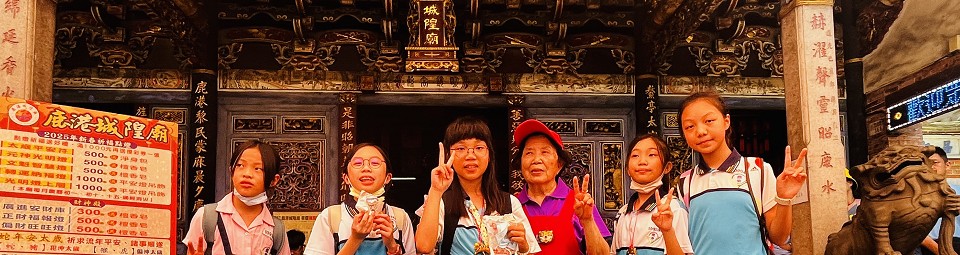
The year 2025 is the Year of the Snake, and Lukang's most special Dragon Boat Festival custom, "Jian Dui," is surprisingly related to Goddess Nüwa, who patched the sky! Jian Dui (饘䬾), a custom known only to Lukang locals, is said to "patch the sky" around the rainy Dragon Boat Festival. It is made by adding leeks, bean sprouts, and other ingredients to a flour batter, or it can be made sweet with sugar, offering a thick, soft, and chewy texture. Usually, no shops sell it; only local temples in Lukang fry and distribute Jian Dui for free on the day of the Dragon Boat Festival, allowing everyone to taste this special festive flavor.
I.Who is Nüwa?
 |
According to legend in ancient times, Nüwa created this delicacy, Jian Dui, to patch the broken sky. In Lukang, the older generation often says "Jian Dui patches the sky," meaning that when the rainy season arrives, eating this fragrant, chewy round pancake made of a mixture of flour, glutinous rice flour, scallions, and garlic is like helping to patch holes in the sky, praying for favorable weather. |
| |
|
 |
 |
| Source: Taiwan Panorama Magazine |
Source: Taiwan Panorama Magazine |
 |
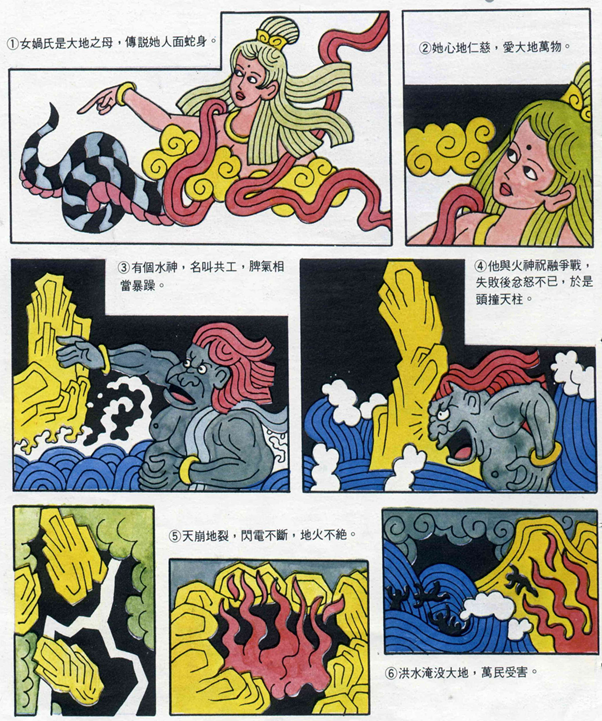
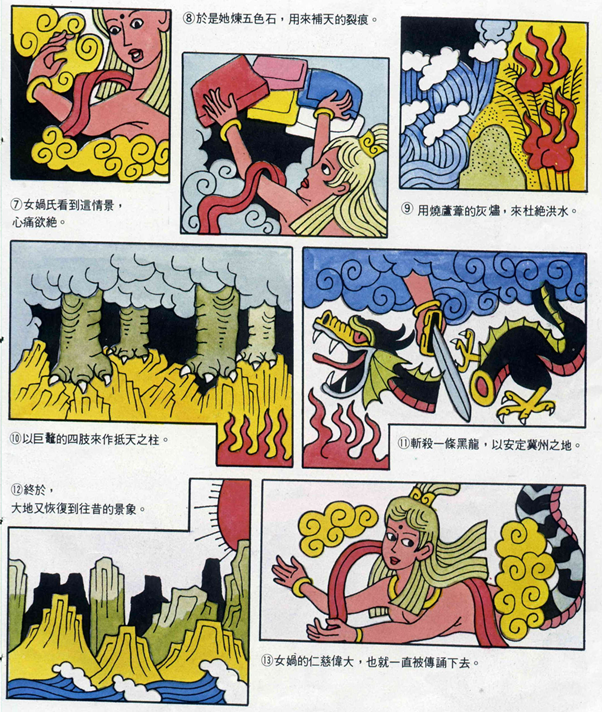
Nüwa is a creator goddess in ancient Chinese mythology. She molded yellow clay in her own image to create human beings. When the sky collapsed and the earth sank, she smelted five-colored stones to patch the sky, cut off the legs of a giant turtle to establish the four poles, and instituted marriage to define human relationships. She is worshipped by the folks as an orthodox deity who blesses the state, representing a female guardian deity of wisdom and creation. |
II.The Lantern Festival features Nüwa with a human head and snake body as the main lantern.
 |
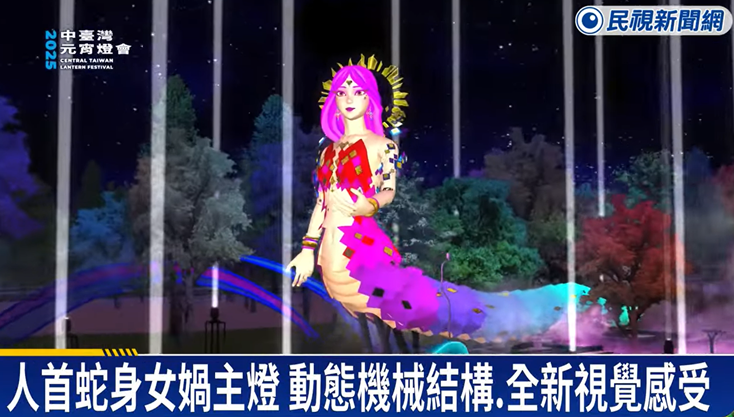
This year is the Year of the Snake, but the Lantern Festival held in Taichung took a novel approach instead of following the tradition of using the zodiac "Snake" as inspiration. The main lantern of the 2025 Central Taiwan Lantern Festival recreated the posture of the creation myth goddess "Nüwa." Besides being ingenious, it is the first and only mobile exhibition main lantern design in Taiwan, bringing a brand-new immersive visual experience. |
 |
I am deeply moved by her spirit of protecting all living beings. Facing the despair of the sky collapsing and the earth sinking, Nüwa did not choose to escape but instead shouldered the heavy responsibility of saving the world, working tirelessly to smelt stones to patch the sky. This taught me that when we encounter huge difficulties or setbacks in life, we shouldn't just complain, but rather learn from her perseverance and courage to bear responsibility. Although we do not have divine powers, as long as we are willing to put in the effort to solve problems and not give up easily, we can also become "sky-patchers" for ourselves and those around us. |
III.The same Nüwa patching the sky ~ celebrated on different festivals
 |
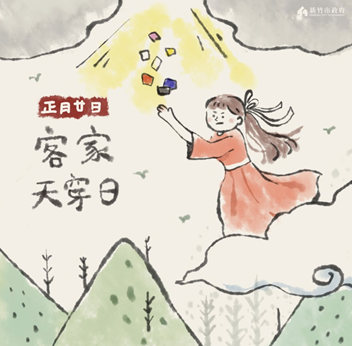
The Hakka Tianchuan Day (the 20th day of the first lunar month) also originates from the legend of "Nüwa Patching the Sky." To commemorate Nüwa's grace and let the earth rest, the Hakka people put down their work on this day ("Whether there is work or not, rest until Tianchuan is over") and pan-fry sweet rice cakes (Nian Gao) for worship, symbolizing "patching the sky." This day is also designated as "National Hakka Day." |
 |
Therefore, the Hakka proverb says, "The new year is not over until Tianchuan." On this day, farming must be set aside for rest, and sweet rice cakes (Nian Gao) are deep-fried to patch the sky. To show gratitude for Nüwa's help, every year on "Tianchuan Day," everyone puts down their work—men do not plow the fields, and women do not weave. They pan-fry rice cakes for worship to express gratitude for Nüwa's grace in patching the sky, while also allowing the earth to recuperate. "Whether there is work or not, rest until Tianchuan is over" demonstrates the Hakka people's spirit of revering heaven and earth and respecting natural rhythms. From a modern perspective, it also carries the significance of environmental protection and sustainable development.
|
 |
Lukang people believe that "you haven't celebrated the Dragon Boat Festival until you've eaten Jian Dui." This is related to the fact that most Lukang people are immigrants from Quanzhou, Minnan. In the Minnan region, the Dragon Boat Festival coincides with the plum rain season, and excessive rain affects harvests. Therefore, a blessing ceremony to "patch the sky" is held at this time. Lukang people do not necessarily want to commemorate Nüwa on the Dragon Boat Festival, but rather borrow Nüwa's divine power for the sky-patching ritual.
|
 |
It turns out that the same story of "Nüwa Patching the Sky" has evolved into such different customs due to different living environments!The Hakka Tianchuan Day emphasizes "gratitude and rest," and eating sweet rice cakes to patch the sky is to let the earth rest, which is a very eco-friendly concept. In contrast, Lukang people eat "Jian Dui" on the Dragon Boat Festival to pray for the rain to stop during the plum rain season, showcasing the practical wisdom of adapting to the climate. This taught me that culture is not rigid; our ancestors adjusted their customs according to "mythical time" or "climate time," which is the most precious philosophy of life.
|
|